How to manage a child's fever
Common questions about fevers answered, including what to do about medication dosing
8:50 AM
Author |
What is a fever?
A fever is often the body’s response to a bacterial or viral infection.
Fevers activate the body’s immune system and act as one of the body’s protective mechanisms.
Most fevers between 100°F and 104°F (38°C to 40°C) can be good for sick children to have and help their body fight the infection.
The exception for this is in babies less than two months of age. They should be seen by a health care provider right away if they have a fever in the range mentioned above.
A fever is generally harmless, but your child may not feel well because of the infection causing the fever.
An important thing to know is fevers with infections don’t cause brain damage; only body temperatures over 108°F (42°C) can do that.
A person’s body temperature only goes this high when experiencing extreme environmental temperatures (for example, if a child is left in a car during hot weather.)
What temperature is considered a fever?
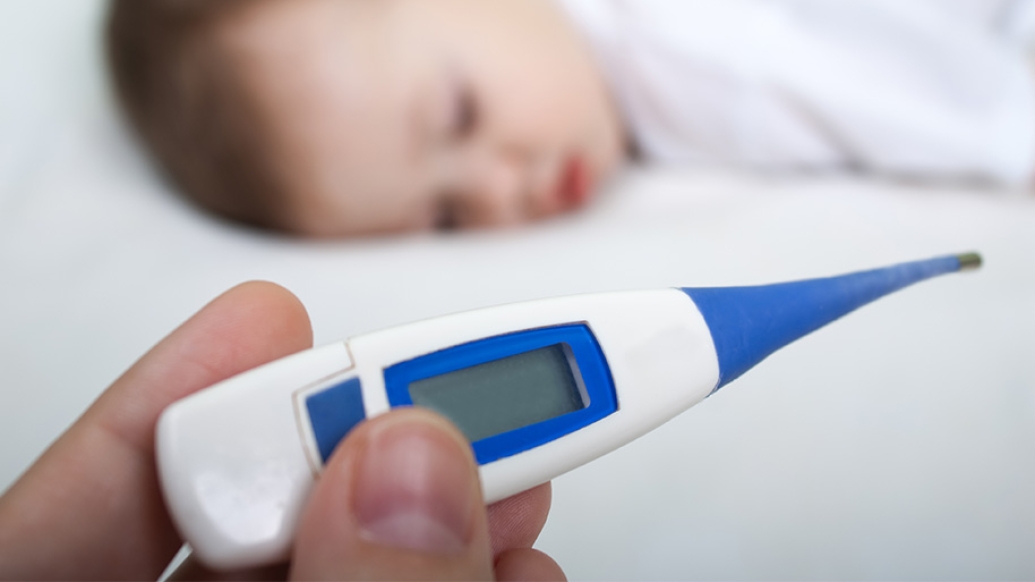
If your child has a rectal or oral temperature over 100.4 ˚F (38.0˚C), this is considered a fever.
For a baby, a rectal temperature is taken with the thermometer tip that’s inserted into your child’s bottom with a small amount of lubricating jelly.
An oral temperature is taken with a thermometer tip under your child’s tongue with their mouth closed.
How should you treat a child’s fever?
If your child is less than two months old, see a doctor urgently if they spike a fever, as this is considered an emergency.
For children over two months old, fevers only need to be treated if they’re causing discomfort.
This usually occurs with fevers over 102°F or 103°F (39°C or 39.4°C).
Because the brain has a thermostat, fevers from infections usually top out at 103°F to 104°F (39.4°C to 40°C). With treatment, fevers usually come down to 2 or 3°F (1.1° or 1.7°C).
It’s important to note that how the body responds to medication doesn’t indicate the seriousness of an infection.
If your child is older than two months you can treat a fever with acetaminophen (see a acetaminophen dosage chart).
But you only need to treat a fever if your child appears uncomfortable. For example, if they have difficulty sleeping, are crying and/or not eating or drinking, it’s important to treat this symptom with medication.
The goal is to make your child comfortable, not necessarily to bring down the temperature.
If your child is older than six months you can give acetaminophen or ibuprofen (see ibuprofen dosing chart). Give medication only if they appear uncomfortable. Remember, do not use aspirin in children under 18 years old.
Other things you can do to make your child more comfortable include:
- Offering extra fluids (water, juice) in small but frequent amounts
- Giving lukewarm sponge baths
- Putting cool washcloths on their forehead and the back of their neck
Their fever will normally last for two or three days, which is the typical course of most viral infections.
Therefore, when the fever medicine wears off, know that the fever will most likely return and need to be treated again. Stay mindful of when you gave the last dose of medication and consult with your pediatrician for more guidance on appropriate dosing.
The fever should go away and not return once your child’s body overpowers the virus, which is usually by day four.
When should you call your doctor if your child has a fever?
Call your doctor if any of the following are true:
- Your child is two months old or younger
- Your child has had a fever for more than three days
- Your child develops other symptoms including:
- increased strain on breathing
- Cough
- Vomiting
- Diarrhea
- Difficult or painful urination
- Not responding normally to you
- Unwilling to eat or drink
When should you take your child to the emergency room for a fever?
Take your child to the nearest emergency room if they’re experiencing any of the following:
- Your child is two months or younger and has a fever
- Your child looks or is acting very sick with their fever and has other symptoms such as:
- Difficulty waking up
- A stiff neck
- Trouble breathing
- Unable to drink fluids
- Crying without tears
- Has dry diapers for at least eight hours or aren’t going to urinate
- Dry mouth with cracked lips
Written/reviewed by Sara Laule, MD
Updated March 2017

Health Lab
Explore a variety of health care news & stories by visiting the Health Lab home page for more articles.
Media Contact

Public Relations
Department of Communication at Michigan Medicine
Stay Informed
Want top health & research news weekly? Sign up for Health Lab’s newsletters today!
Featured News & Stories
Croup
Toddler’s Diarrhea
Sore Throat (Pharyngitis)
Vomiting and diarrhea in kids: symptoms, treatment and concerns
Stomachache