Thyroid Disorders
Thyroid Disorders
What is a thyroid disorder?
A thyroid disorder is a condition that affects the thyroid gland, which is a small butterfly-shaped gland located in the lower neck. It produces hormones (T3 and T4) which help with regulating the function of other organs. The thyroid helps regulate how your body metabolizes (processes) the food you eat and controls your body's overall temperature. Thyroid hormones are also important in maintaining the body's production and use of other hormones and chemicals.
Our Approach
University of Michigan Health endocrine surgeons perform their own thyroid ultrasounds. Their overall experience and insight into thyroid disease allows them to gather necessary information at the time of the first office visit so they can formulate a specific course of treatment. This approach supports streamlined patient care, avoidance of unnecessary visits and minimizing the time from diagnosis to treatment. For patients needing thyroid surgery, minimally invasive approaches are offered by some of our surgeons.
What are some types of thyroid disorders?
Thyroid nodules are very common. About 95% of nodules are benign (not cancer), and most do not require any treatment or surgery. While thyroid nodules can be found in up to 60% of patients, especially in older patients, only 5-8% are able to be felt by the patient or their physician. Most thyroid nodules are identified on imaging studies performed for reasons unrelated to the thyroid gland (carotid duplex, CT scans of the neck or chest).
Some common thyroid disorders include:
- Hyperthyroidism - the result of production of excess thyroid hormone. Hyperthyroidism can lead to weight loss, a fast heartbeat, sweating, feelings of nervousness, change in the skin, hair, or weight. If left untreated it can lead to serious heart, bone and other problems.
- Graves’ Disease - one of the main causes of hyperthyroidism. It is an autoimmune disease, more common in women than men, and can be associated with eye problems (Graves’ eye disease).
- Hypothyroidism - the result of inadequate production of thyroid hormone that may lead to changes in the hair, skin or weight, as well as cause fatigue, weakness, and/or other issues.
- Hashimoto’s Thyroiditis - an autoimmune disorder that may ultimately lead to hypothyroidism.
- Thyroid cancer - found in about 5% of thyroid nodules. The most common types of thyroid cancer are papillary and follicular. Long term outcomes from thyroid cancer are usually quite good. Hurthle cell cancers, medullary thyroid cancers (MTC), thyroid lymphoma, and anaplastic thyroid cancers are much less common.
Appointment Information
For more information or to make an appointment, view the Locations section to find a clinic near you.
How are thyroid diseases diagnosed?
The appropriate evaluation of thyroid disease starts with a complete history and physical exam. Blood work is obtained, and depending on the specific problem, an ultrasound of the thyroid may be performed to look for nodules or other abnormalities. Other imaging tests that may be ordered include CT scans, MRIs, or nuclear medicine studies such as radioiodine and PET scans. If a thyroid nodule or other abnormality is detected, your doctor may recommend a biopsy done with a small needle (fine needle aspiration or FNA).
How are thyroid diseases treated?
To decide on the best course of treatment, each patient is carefully evaluated. In most cases, evaluation shows the nodule to be benign (non-cancerous) and the function of the thyroid is normal. In this circumstance, usually no specific treatment is needed, and the thyroid nodule can be followed to ensure there are no concerning changes over time. Benign nodules causing symptoms (for example, difficulty swallowing, a sensation of pressure or discomfort, visible swelling) due to their size and location are potential candidates for thyroid radiofrequency ablation (RFA) treatment, a minimally invasive treatment used to shrink thyroid nodules.
If your physician is suspecting that your nodule may be cancerous or is large enough to cause problems with breathing or swallowing, thyroid surgery may be recommended. Your surgeon will discuss the appropriate surgical options with you. Surgical options range from removing only the side of the thyroid gland that contains the nodule (thyroid lobectomy or hemithyroidectomy) to removing the entire thyroid gland (total thyroidectomy).
Locations
-
General Surgery Clinic | Taubman Center 1500 E Medical Center Dr
Floor 2 Reception C
Ann Arbor, MI 48109-5331Get Directions -
Geriatric Endocrinology Clinic | East Ann Arbor Health & Geriatrics Center 4260 Plymouth Rd
Level 1
Ann Arbor, MI 48109-2700Get Directions -
Metabolism, Endocrinology & Diabetes Clinic | Domino's Farms 24 Frank Lloyd Wright Dr Ste 1300
Lobby C
Ann Arbor, MI 48105-9484Get Directions
Doctors

Nevin Nuray Ajluni, MD
Clinical Assistant Professor
Endocrinology, Internal Medicine

Cristina Alvarado Nieves, MD
Clinical Assistant Professor
Endocrinology, Internal Medicine
David Tyler Broome, MD
Clinical Assistant Professor
Endocrinology, Internal Medicine
Eric Dale Buras, MD
Assistant Professor
Endocrinology, Internal Medicine

Debbie Wan Hua Chen, MD
Clinical Assistant Professor
Endocrinology, Internal Medicine
Tae-Hwa Chun, MD, PhD
Associate Professor
Endocrinology, Internal Medicine
Farah Daneshvar, DO
Clinical Assistant Professor
Endocrinology, Internal Medicine
Liselle Douyon, MD
Clinical Assistant Professor
Endocrinology, Internal Medicine

Nazanene Helen Esfandiari, MD
Clinical Professor
Endocrinology, Internal Medicine

Nada Fanous, MD
Clinical Assistant Professor
Endocrinology, Internal Medicine












News & Stories

New insight into how lipodystrophy can affect overall health
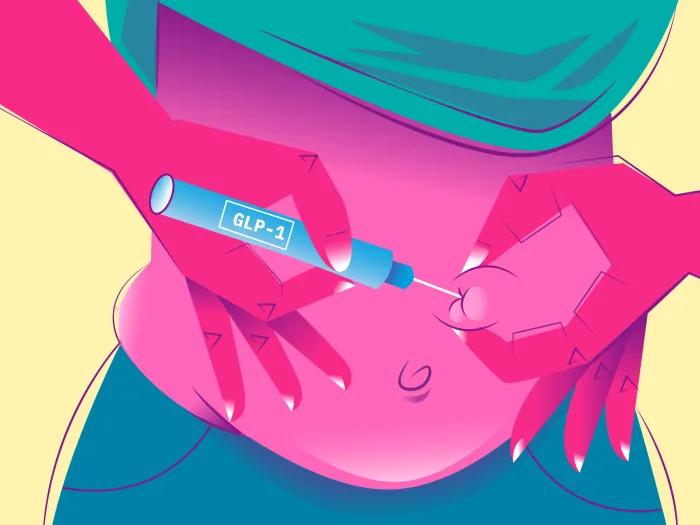
What should you know before starting a GLP-1?
2 Rogel members recognized by American Thyroid Association

Supplementing with peptides: Good for extra pep or a needless step?

Teenage patient receives treatment for papillary thyroid cancer