Abdominal Aortic Aneurysm
Abdominal Aortic Aneurysm
What is an abdominal aortic aneurysm?
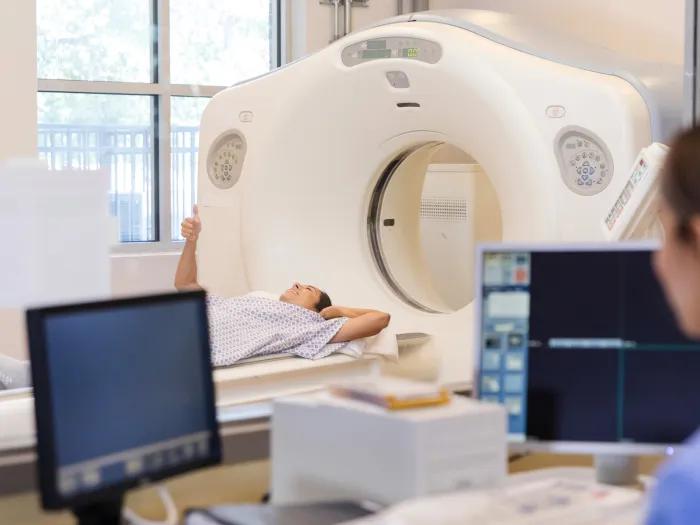
Most aortic aneurysms are abdominal aortic aneurysms. While small abdominal aortic aneurysms rarely rupture, they can grow very large without causing symptoms. The typical size of the abdominal aorta is 2 to 3 centimeters – about the size of a quarter. An enlarged abdominal aorta is typically larger than 3 centimeters. Not all patients with an enlarged aorta require surgery but instead need regular surveillance and monitoring by their care team. This may include testing by CT scan or ultrasound imaging.
Appointment Information
Visit our Make an Appointment page for more information.
Comprehensive Aortic Program
The Comprehensive Aortic Program is one of the highest volume centers for abdominal aortic aneurysm in Michigan. With nine physicians dedicated to providing the highest quality of care, our multidisciplinary program brings together a team of specialists to review complex cases and create the best treatment plan for each patient.
What are the symptoms of abdominal aortic aneurysm?
An abdominal aortic aneurysm typically produces no symptoms, but as the size of the aneurysm grows, abdominal and/or back pain may develop. Other symptoms may include pain radiating to the groin and a pulsating mass in the abdomen.
Although the exact cause of aortic aneurysms is unclear, risk factors such as smoking, in conjunction with diseases such as hypertension, increase the probability of developing the condition.
How is abdominal aortic aneurysm diagnosed?
Abdominal aortic aneurysms are often diagnosed as an incidental finding on an imaging study performed for some other reason. If an abdominal aortic aneurysm is suspected, testing may include:
- Abdominal ultrasound: Sound wave technology helps assess the aorta.
- Computerized tomography (CT) scan: Provides clear images of the aorta and detects the size and shape of an aneurysm.
- Magnetic resonance imaging (MRI): Imaging procedure to diagnose an aneurysm and determine its size and location.
How is abdominal aortic aneurysm treated?
Our experts can manage complex aortic disease including abdominal aortic aneurysm and all conditions associated with it, including:
- Aortic infection
- Penetrating ulcer with pseudoaneurysm (false aneurysm)
- Post-traumatic aneurysm
- Small aneurysms with occlusion (blockage by clot)
Not all patients with abdominal aortic aneurysms require immediate surgical treatment. We provide comprehensive care and monitor the progression of the aneurysms until surgery becomes necessary. In deciding whether to recommend surgery repair, a surgeon will consider the size of the aneurysm, its location, how fast it is growing, how complicated it is to repair, and the patient’s overall health.
Locations
-
Vascular Surgery Clinic | Frankel Cardiovascular Center 1425 E Ann St
Floor 3 Reception B
Ann Arbor, MI 48109-5856Get Directions
Doctors

Robert John Beaulieu, MD
Clinical Associate Professor
Vascular Surgery

Craig Stanton Brown, MD
Clinical Assistant Professor
Vascular Surgery

Frank Michael Davis, MD
Assistant Professor
Vascular Surgery

Jonathan Lee Eliason, MD
Professor
Vascular Surgery, Surgery

Peter Kerr Henke, MD
Professor
Vascular Surgery, Surgery

Nicholas Harold Osborne, MD
Associate Professor
Vascular Surgery, Surgery

Nimesh Anantlal Patel, MD
Clinical Assistant Professor
Vascular Surgery, Surgery
News & Stories

Young father survives aortic dissection after delayed diagnosis

Treating a rare coronary artery aneurysm without open heart surgery

A night of two national titles for U-M, as scientists and basketball players both triumph

Six U-M medical research teams picked for virtual science tournament

Delays in Heart Surgery for Women due to One-Size-Fits-All Criteria