Teenage patient receives treatment for papillary thyroid cancer
After a 10 hour surgery and radioactive iodine treatment, Gavin Hewitt continues pursuing his hockey dreams
3:17 PM
Author |
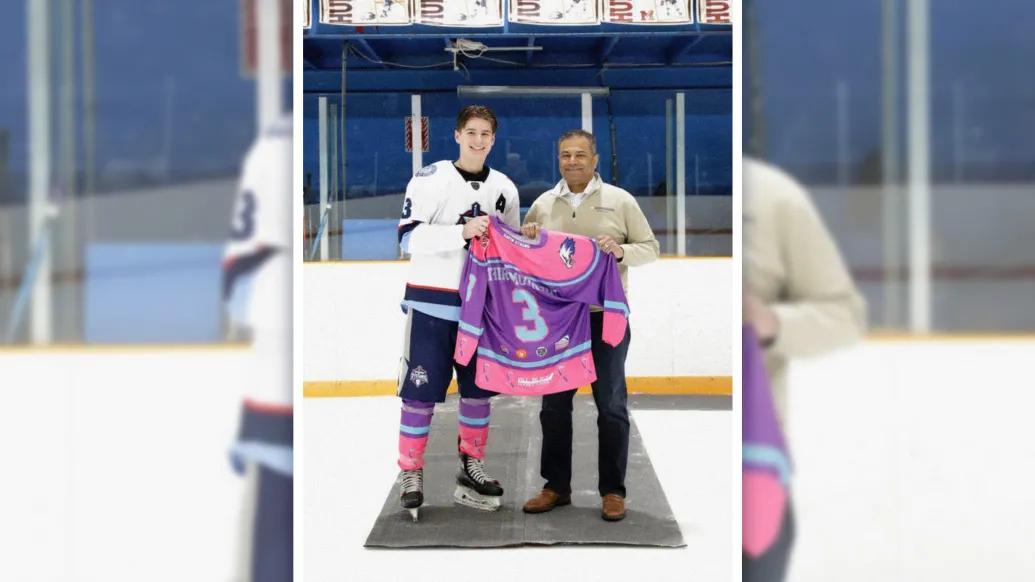
Gavin Hewitt, now 18, has been playing hockey since he was four years old, and his family was used to seeing him deal with minor injuries from the sport.
In 2025, when Gavin developed a small lump on the left side of his neck, his parents assumed that it was due to swollen lymph nodes, a common sign of infection.
Gavin continued playing hockey and remained active and healthy.
When the lump persisted for a few months, his parents took him to their local hospital.
A neck ultrasound revealed that the lump could be a cancerous mass.
"We started the day thinking that our kid had nothing wrong with him and then found out he had cancer,” said Bryan Hewitt.
“We were all numb and Gavin was terrified when we heard the results.”
Gavin was immediately referred to C.S. Mott Children's Hospital at University of Michigan Health for further evaluation and treatment.
A fine-needle aspiration test, which is used to sample cells from lumps, confirmed that Gavin had papillary thyroid cancer.
Although thyroid cancer is relatively uncommon in teenagers, the rates have been rising sharply for the last 25 years.
Papillary thyroid cancer is now the second-most common cancer in teenagers, affecting appoximately 2 patients per 100,000 between ages 15 to 19.
In 40% of patients, the tumor spreads to other parts of the body.
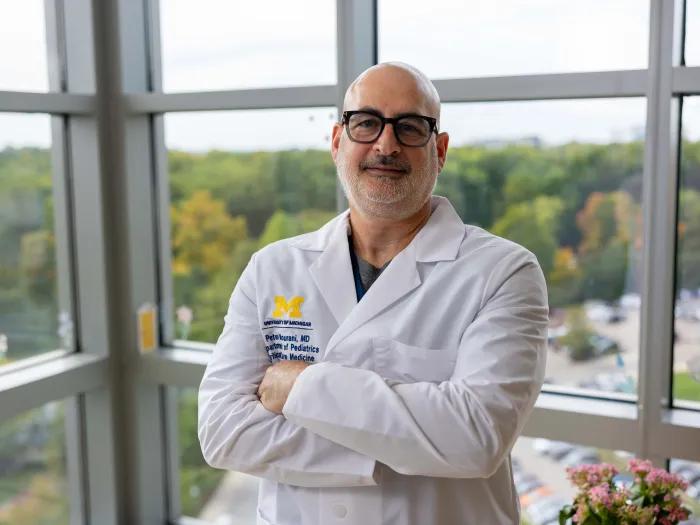
“Gavin had extensive metastasis, where the tumor had spread to his lymph nodes,” said Arul Thirumoorthi, M.D., Clinical Associate Professor of Pediatric Surgery who led Gavin’s treatment.
“Fortunately, we have seen 95-98% survival rates with the appropriate treatment."
Ten-hour surgery and radioactive iodine treatment
Just two weeks after his diagnosis, Gavin underwent a ten-hour surgery led by Thirumoorthi and Sean Edwards, M.D., James Hayward Endowed Clinical Professor of Oral and Maxillofacial Surgery.
The surgical team removed Gavin’s thyroid and the cancer-affected lymph nodes that had spread from both sides of his neck into his chest and around his vocal cords.
A week after his surgery, Gavin underwent radioactive iodine treatment to treat any remaining cancer cells in his neck.
“Our experience at Mott was bittersweet. Even though the pediatric cancer floor is one of the saddest places, it is also one of the most hopeful,” Hewitt said.
“We were grateful for everybody on that floor who did everything they could to take care of our son.”
During his recovery, Gavin developed postoperative hypocalcemia, a condition where the body has low calcium levels after thyroid surgery.
Although he continues to take medication to maintain his calcium levels, Gavin has resumed the schedule he had before his diagnosis.
Returning to hockey after cancer treatment
Gavin currently works two jobs as a grocery store clerk and a technical assistant at a veterinary clinic. He has also resumed playing hockey.
He additionally participated in Clash for a Cause, a benefit game to raise money for cancer patients.
For the game, he wore a jersey with Thirumoorthi’s name, and together they dropped the puck for the opening face-off.
“When we manage this disease, we aim to go from a scary diagnosis to treating it like a chronic condition where the patient remains on maintenance therapy,” Thirumoorthi said.
“I'm very proud of Gavin for not letting his experience stop him from pursuing his goals.”
Learn about getting involved at BlockOutCancer.org and be a part of bringing hope, healing and brighter tomorrows to children and families facing cancer.
Sign up for Health Lab newsletters today. Get medical tips from top experts and learn about new scientific discoveries every week.
Sign up for the Health Lab Podcast. Add us wherever you listen to your favorite shows.

Health Lab
Explore thousands of health news & research stories by visiting the Health Lab homepage for more.
Media Contact

Public Relations
Department of Communication at Michigan Medicine
In This Story

Arul S Thirumoorthi, MD PE FACS FAAP
Clinical Associate Professor
Related
New guidelines issued for treating thyroid cancer
A ‘transformational time’ for thyroid cancer
Stay Informed
Want top health & research news weekly? Sign up for Health Lab’s newsletters today!
Featured News & Stories

Paralyzed from waist down as a child, patient walks across stage at high school graduation
U-M-led consortium to receive up to $52 million in NIH funding to study why viral respiratory infections affect children differently
Comprehensive DNA sequencing reveals hidden drivers of cancer

‘Molecular glue’ stabilizes protein that inhibits development of non-small cell lung cancer and uterine cancer
FDA-approved drug offers hope for patients with polycythemia vera, a rare bone marrow disorder