
Understanding Your Care Team
At U-M Health, your care is provided by a team of specialists who work together to support your health.
Depending on your needs, you may see one or more of these professionals as part of your care.
Your care team works together to make sure you receive the right care at the right time.
You may not see every type of provider listed—but each plays an important role in supporting your health.
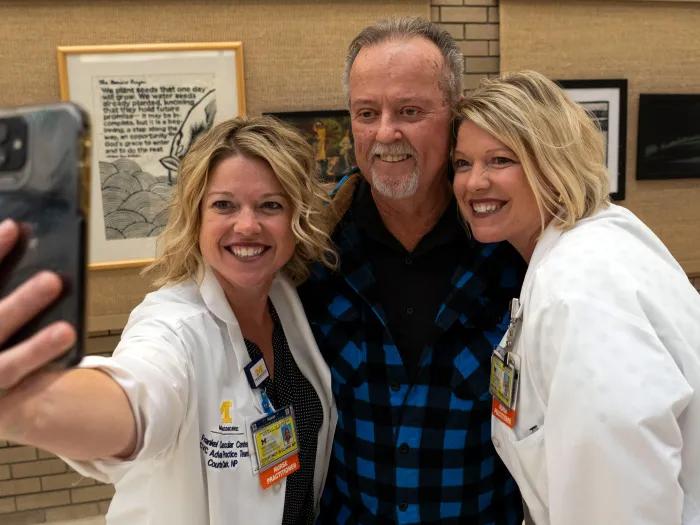
Double lung transplant patient returns yearly to share gratitude with care team
Doctors
Doctors are licensed medical professionals who diagnose conditions, develop treatment plans, and may perform procedures or surgery.
Physicians & Surgeons (MD, DO, MBBS)
What they do: Diagnose conditions, create treatment plans, perform procedures or surgery.
When you might see them: When you need diagnosis, treatment, or specialized medical care.
Dentist & Oral and Maxillofacial Surgeons (DDS, DMD)
What they do: Diagnose and treat conditions affecting the teeth, mouth, jaw, and facial structures, including oral surgery and complex dental care.
When you might see them: For dental pain, jaw problems, facial injuries, oral disease, or procedures involving the mouth, jaw, or facial bones.
Ophthalmologist (MD, DO, MBBS)
What they do: Diagnose and treat eye diseases and injuries; manage complex eye conditions; prescribe medications; perform surgery.
When you might see them: For eye diseases, injuries or infections, vision problems needing medical or surgical care, or eye surgery.
Optometrist (OD)
What they do: Provide vision care, eye exams, and treat many eye conditions.
When you might see them: For routine eye exams, glasses/contacts, and some eye conditions or follow-up care.
Podiatrist (DPM)
What they do: Provide podiatric medical and surgical treatment of the foot and ankle.
When you might see them: For foot pain, injuries, or chronic conditions like diabetes-related foot issues.
Advanced Practice Professionals
Advanced practice professionals are licensed clinicians who diagnose, treat, and manage patients. They work as part of an integrated care team alongside physicians and other providers.
Certified Registered Nurse Anesthetist (CRNA)
What they do: Administer and manage anesthesia, before, during, and after surgical and procedural interventions.
When you might see them: When you are having surgery or an interventional procedure requiring an anesthetic.
Certified Nurse Midwife (CNM)
What they do: Provide care across the reproductive lifespan, preventive women’s health, family planning, prenatal care, labor and birth, and postpartum care.
When you might see them: Routine gynecologic, preventive women’s health care, prenatal visits, labor and birth, postpartum, and family planning.
Nurse Practitioner (NP)
What they do: Evaluate, diagnose, treat, manage conditions, and develop treatment plans across a range of specialties.
When you might see them: For primary and preventive care, management of acute or chronic conditions, and for specialized care.
Physician Assistant (PA)
What they do: Diagnose, treat, manage conditions, perform procedures, assist in surgery; often a primary contact.
When you might see them: When you need diagnosis, treatment, or specialized medical care.
Psychologists
Psychologists diagnose behavioral health conditions, provide therapy and mental health support, and conduct psychological testing as part of your overall care plan.
Psychologist (PhD or PsyD)
What they do: Provide therapy and mental health support, diagnose behavioral health conditions and administer psychological testing.
When you might see them: For counseling, stress, anxiety, or behavioral health needs.
Clinical Practitioners
Clinical practitioners provide focused care or support services as part of your overall treatment plan.
Acupuncturist
What they do: Provide complementary therapy for pain and wellness.
When you might see them: For pain management or supportive therapy.
Audiologist (AuD)
What they do: Diagnose and treat hearing and balance issues.
When you might see them: For hearing loss, tinnitus, or balance concerns.
Genetic Counselor (CGC)
What they do: Help you understand genetic risks and testing.
When you might see them: When evaluating inherited conditions or family history.
Social Worker (MSW)
What they do: Provide emotional support and help access resources.
When you might see them: When you need help navigating care or support services.
