Stopping Ewing sarcoma relapses where they start
No compound has yet been found that can effectively reverse the driver of cancerous mutation in Ewing sarcoma in relapsed patients — until now
1:25 PM
Author |
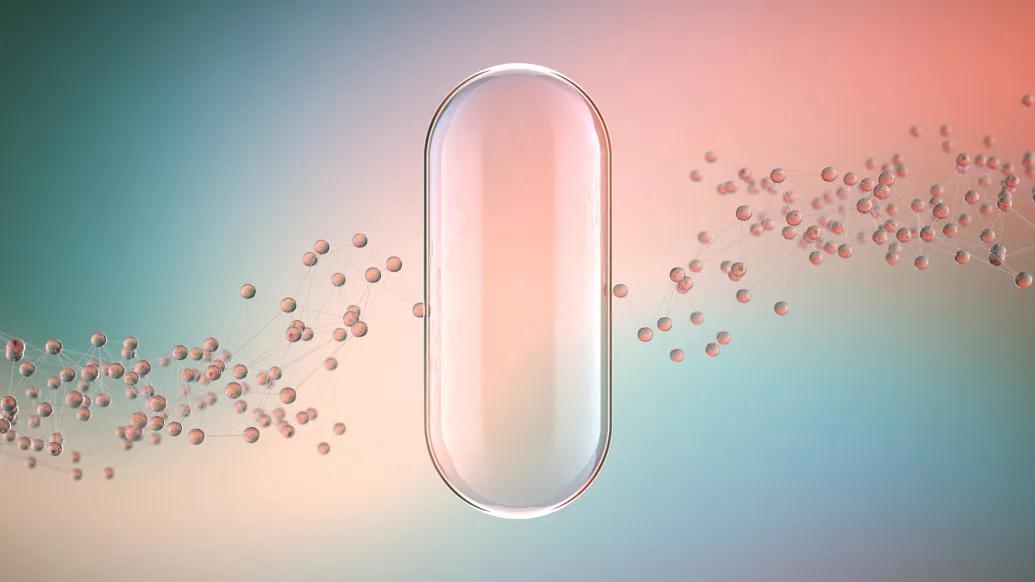
Two new drugs show promise in treating relapsed Ewing sarcoma, as new studies from University of Michigan Health Rogel Cancer Center researchers report.
Both drugs target the molecule responsible for RNA transcription that ultimately drives Ewing sarcoma tumor formation.
The findings appear in Nature Medicine and Nature Communications.
Ewing sarcoma is a rare bone and soft tissue cancer that primarily affects adolescents and young adults, although any age can be affected.
Patients often respond well to the first round of treatment when they have small, localized tumors, with about an 85% survival rate.
But patients with metastatic disease or those who have relapsed have poorer outcomes.
“Patients with relapsed disease face particularly poor outcome,” said Patrick Grohar, M.D., Ph.D., professor of pediatric oncology. Grohar’s first patient as a medical fellow was a pediatric patient with Ewing sarcoma, and that experience set him on a path to study the disease.
Current treatments for relapse cases of Ewing sarcoma are not that effective.
A 2021 review paper found that across 62 clinical trials for Ewing sarcoma therapies, patients only responded to treatment with shrinking tumors about 10% of the time.
“There is definitely room for improvement,” Grohar said.
“We can do better.”
Targeting transcription
Researchers have known for decades about a promising, but enigmatic, target for Ewing sarcoma: the EWS::FLI1 transcription factor.
This kind of molecule is involved in how cells use DNA to make RNA and, ultimately, the proteins responsible for the tumor.
If that transcription factor is mutated, it can promote the over-production of these tumor-forming proteins that lead to cancer.
“Transcription is where the rubber meets the road,” Grohar said.
“No matter what mutation or oncogenic driver exists, ultimately it comes down to how it affects a transcription factor and gene expression.”
Mutations in transcription factors are commonly found in all types of cancers including prostate, breast, acute myeloid leukemia, and sarcoma.
In Ewing sarcoma, the transcription factor EWS::FLI1 is the clear driver of tumor formation.
If scientists could develop a drug that would just turn off or slow down this transcription factor, it could slow or stop the cancer.
Grohar and collaborators took the first step toward that goal in 2011, when they published a paper demonstrating that a cancer drug, trabectedin, could “turn off” the “always-on” transcription factor that drove Ewing sarcoma.
But in a clinical study the following year, the treatment failed to prompt a response in the cancer in any of the Ewing sarcoma patients.
Grohar was stumped: How could it be that the molecule could deactivate the transcription factor they knew for sure was a key driver for tumor formation, but when they tried to connect it all together with a clinical trial, it didn’t work?
He spent the next decade trying to sort out exactly how the drug works with Ewing sarcoma.
“We haven’t totally figured it out, but we’ve made a lot of progress,” he said.
As detailed in his new study, published in Nature Medicine, they discovered that the exposure — how rapidly they delivered the drug, and at what concentration — made all the difference.
Trabectedin trials
The new study presents a Phase I/II clinical trial of trabectedin paired with another cancer drug.
In laboratory tests, Grohar had found that another drug, irinotecan, had a synergistic effect with trabectedin.
Trabectedin makes cells more sensitive to the DNA-damaging effects of irinotecan, and irinotecan boosted trabectedin’s suppression of the EWS::FLI1 transcription factor.
The trial included 37 patients with relapsed Ewing sarcoma.
These patients had failed a median of four previous lines of therapies.
Generally, cancer becomes more difficult to treat with each relapse.
An earlier clinical trial of trabectedin had delivered it over a 24-hour period.
Grohar’s laboratory work suggested that shorter infusions of the drug would reverse the EWS::FLI1 transcription factor more effectively, changing the disease progression.
So that’s what they tried.
The new approach was far more successful.
More than one-third of the patients responded to a rapid, one-hour delivery of the two-drug combination, significantly higher than the average of 10% response rate documented in the earlier review study.
After six months, about half of the patients had no progression of their disease. Importantly, they showed for the first time in 30 years that the approach did turn off the EWS::FLI1 target.
“It’s a big improvement,” Grohar said.
The most common response was a rapid decrease in tumor size.
“The first patient who responded was my patient,” he said.
“I was checking the CT scan at my kitchen table at night, and it was astounding. The treatment had, with just two cycles of the drug, shrunk the tumor in half. It was not a subtle response.”
Some patients instead had slow and sustained tumor shrinking over 10 months — still a positive response, but the researchers will explore why some tumors had this less-common reaction.
Also notably, the two patients with the best response had undergone five prior treatments, with limited success.
“Every time it comes back, it comes back angrier,” Grohar said.
“And for two of our best responders, this was their sixth line of therapy. That is not common, so this was quite a stunning result.”
The researchers plan to explore why some patients responded and others didn’t, as well as the difference in tumor response.
More research is needed into how the drug works in different patients and tumor conditions, but the treatment shows promise.
“To see it work due to 15 years of laboratory work was cool,” Grohar said.
“We had a bunch of responses in a row. It was super exciting.”
The next clinical step will be testing the treatment in patients’ first relapses.
The treatment has already been submitted to the National Comprehensive Cancer Network, which formalizes guidelines for treatment, to be added to the standard of care for relapsed Ewing sarcoma.
In addition, the combination is being evaluated in Europe in the EuroEwing Consortium, and the Children’s Oncology Group in the United States is developing a study.
Uncovering mithramycin’s Ewing-fighting mechanism
Over the last two decades, Grohar has also been pursuing another drug, mithramycin, to treat Ewing sarcoma, by targeting the same transcription factor as trabectedin.
A case from the 1960s showed that a Ewing sarcoma patient responded well to mithramycin, but a 2017 clinical trial of the drug failed.
For Grohar, it was a familiar problem: The drug should work to treat Ewing sarcoma, but clinical trials were falling short.
What was happening?
Grohar and colleagues screened more than 50,000 compounds, searching for those that might inhibit that key EWS::FLI transcription factor in Ewing sarcoma.
Mithramycin was the strongest contender.
It is an antibiotic drug, but previous work showed that it can affect gene transcription.
The mechanism behind that inhibition, however, remained elusive.
Previous studies assumed that it was a general transcription inhibitor, meaning it interferes with RNA’s activity across the entire genome, not just one particular transcription factor.
But Grohar’s work, recently published in Nature Communications, showed it can work specifically, too.
Using a line of test cells commonly used in Ewing sarcoma research, he tested the drug at different concentrations and delivery times.
He found that in contrast to trabectedin, a slower infusion at lower concentration was more effective at inhibiting the EWS::FLI1 transcription factor.
While higher concentrations caused a more general suppressive effect on transcription.
In other words, the drug wasn’t working broadly; it was working specifically.
Further genomic analyses pinpointed where on DNA the drug was affecting.
The team then tested a newer version of the drug, AIT102, and found that it was more effective at inhibiting the transcription factor while having fewer side effects.
“This paves the way for a new version of the drug that’s less toxic,” Grohar said.
AIT-102 was just approved for funding through the NCI-NeXT program, which means it will make it to patients.
Together, the new studies have Grohar feeling gratified about the progress he and his collaborators have made over the last two decades in fighting tough-to-treat cases of relapsed Ewing sarcoma.
“This work is really paving the way for future studies to try to optimize the suppression of that key transcription factor, and ultimately to keep improving outcomes for relapsed patients,” Grohar said.
And, he adds, after all these years of clinical ups and downs, “it’s very validating to see these treatments through and to see trabectedin shrinking tumors in patients.”
Sign up for Health Lab newsletters today. Get medical tips from top experts and learn about new scientific discoveries every week
Sign up for the Health Lab Podcast. Add us wherever you listen to your favorite shows
Health Lab
Explore thousands of health news & research stories by visiting the Health Lab homepage for more.
Media Contact
Public Relations
Department of Communication at Michigan Medicine
In This Story

Patrick J Grohar, MD, PhD
Professor
Stay Informed
Want top health & research news weekly? Sign up for Health Lab’s newsletters today!
Featured News & Stories

New insight into how lipodystrophy can affect overall health
FDA-approved drug offers hope for patients with polycythemia vera, a rare bone marrow disorder
Pediatric patient treated for rare kidney cancer
Engineered nanoparticles sensitize gliomas to radiotherapy
Who’s at risk for painful periods?