No One is You and That is Your Power
Living with an incurable, rare brain cancer, Claire Sloma found herself reprioritizing everything, learning to let go and live life as much as she can.
Author |
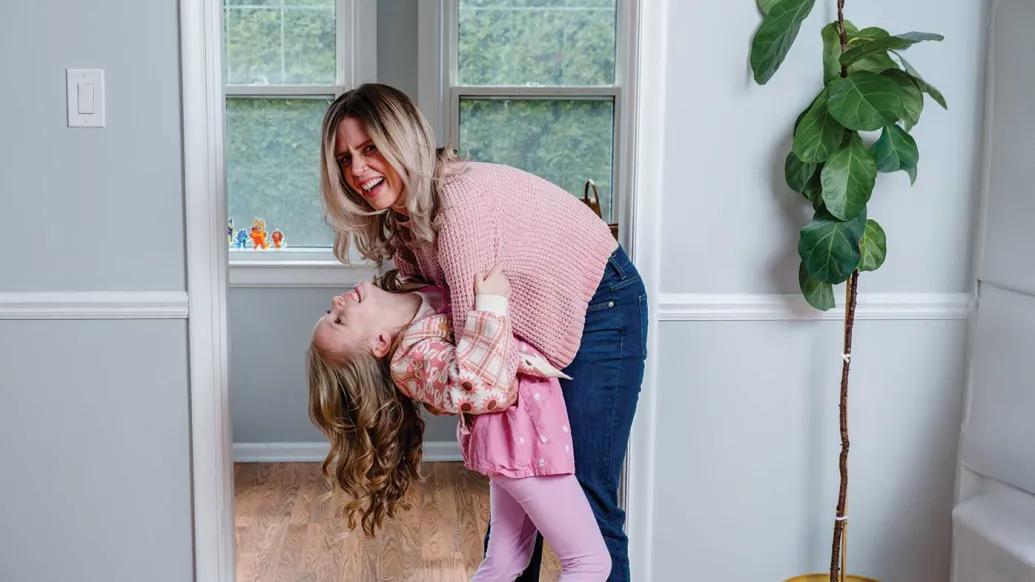
"I was relieved to finally have an answer.”
This is how Claire Sloma felt receiving her diagnosis in August 2024.
At the age of 35, she’d been experiencing strange symptoms for months: numbness on one side of her body, tingling in her hands, nausea. Symptoms that doctors attributed to allergies and a vitamin B deficiency, symptoms that doctors couldn’t get to the root of.
That August, Claire had a grand mal seizure in her home.
“No one could figure it out,” says Claire, now 36. “I felt very not listened to. Then the seizure happened. It was terrible but, I thought, ‘Thank goodness this happened because we know what’s wrong with me.’”
Claire was admitted to the ICU in a hospital near her home in Metro Detroit. There, she was diagnosed with a low-grade glioma and had surgery to remove much of the tumor a week later. “My cancer is incurable. I’ll be living with the disease for the rest of my life.”
A month later, after poor communication with her team at the original hospital, Claire switched her care to Rogel under John Fortunato, M.D.
Claire describes those early days as a blur. “It didn’t feel real,” she remembers.
A single mom to 6-year-old Harper, Claire recalls the challenges of adjusting to her new reality, to the fatigue of seizure medications and daily brain cancer drug, while parenting. “I was emotionally overwhelmed.” A patient advocate at Rogel connected her with Sandra Drabant, art therapist with Patient and Family Support Services.
Claire met Sandra weekly via telehealth, and later joined an art therapy group, using art therapy exercises to bring both self-expression and mindfulness to Claire’s routine. “Sandra is such a calming person,” Claire says.
Claire works as a marketer for fundraising at Memorial Sloan Kettering Cancer Center. “I know how to talk about cancer,” Claire continues. “My job is to find ways to talk about all the things my institution is doing to support cancer care and research, to tell people’s stories. But being in the seat as a patient is completely different. Sandra taught me new ways to connect and express everything I was going through without the pressure of having to speak to it. She gave me tools to help me navi gate the ups and downs.
“I’m living my diagnosis day-to-day, with the reality of not having a cure and just being here."
Connecting Feelings with Art
Claire’s journey has brought more empathy to her work at MSK, even more understanding of the necessity of the research and programs for which she’s fundraising, and a specific appreciation for cancer care providers.
“To have a doctor like Dr. Fortunato who talks with me like a human, who has witnessed so much emotion from me, who’s honest with me, is invaluable,” she says. “I’ll be managing this disease for the rest of my life, which means I’ll have a relationship with him for the rest of my life. Having someone I trust makes all the difference.”
Claire takes vorasidenib, a newly FDA-approved daily drug targeted for patients with low grade gliomas that have an IDH mutation that has been shown to slow tumor growth and improve progression-free survival.
“This treatment allows patients like Claire, whose cancer is ongoing, much like a chronic disease, to delay other more aggressive treatments like radiation and chemotherapy with the goal of maintaining their quality of life,” Fortunato explains.
This aspect of Claire’s journey is specific: she has a rare, incurable cancer that will require lifelong MRIs and doctor visits. “It’s still hard for people I meet to understand what that means,” she says. “They’re surprised I have cancer, let alone the type that I do. I hear a lot of, ‘But you look so healthy’ and ‘I’d never guess that you have cancer.’ I don’t need everyone to know I have cancer, but it’s hard to know what to say to them.”
This alienation is balanced by Claire’s family and friends who do seek to understand, and who she credits as key to helping her navigate her life. “It’s hard for me to ask for help,” she says. “I’m on a daily drug, and it wears on me, especially being a single mom with a full-time job. I’m tired a lot. I have seizures every day. Having people reach out and ask specific things they can help with—make dinner or clean the house, pick up my daughter for a playdate—is huge. I don’t necessarily feel like I can ask when I’m already exhausted and overwhelmed.”
When asked what she’s learned about herself since her diagnosis, what’s surprised her the most, Claire pauses. “It ties into my community. I’ve learned that I have to let go. I’m not always in control. I was top of my class, point guard on the basketball team, the lead in theater. I always strived to be the best. I still strive to perform well in my job and my life, but that means something different now.”
Now, best means resting when she needs, giving herself permission to relax, being kind to herself. Best means enjoying her lunch break, going for a walk midday, traveling. It also means taking time to unpack her feelings and experiences since her diagnosis and cultivating tools to decompress.
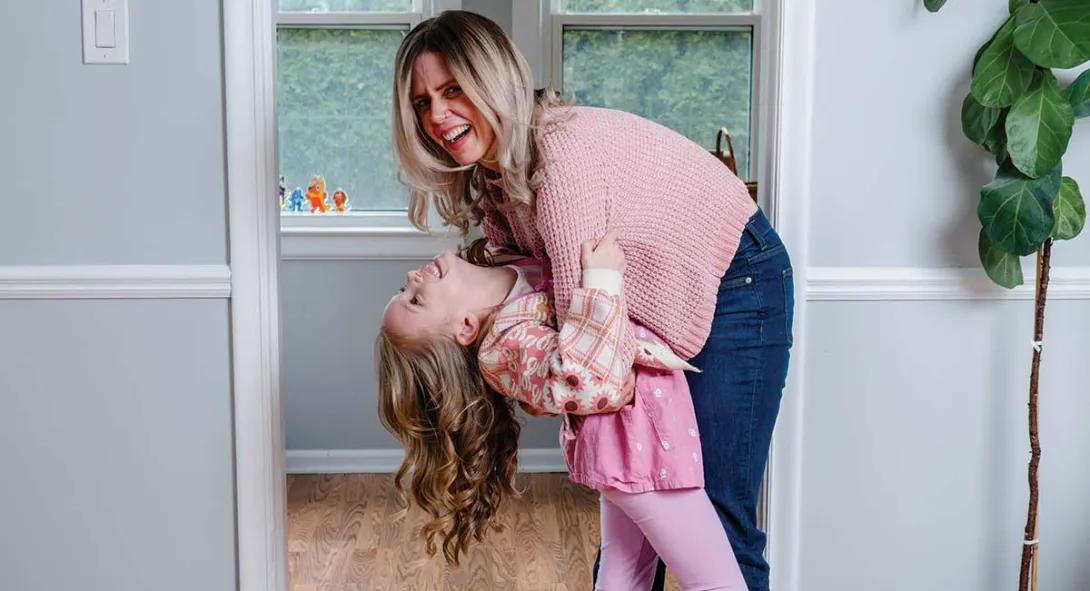
“I’ve been through so much. From passing out at home to a week later having my brain cut into. It was an insane thing to go through. I didn’t really understand that until I started group art therapy, which helped me to connect with those feelings and not suppress them.”
In art therapy sessions, Claire and Sandra decide together what she needs that day—pure expressionism, mindfulness exercises, breathwork that incorporates tactile movement. “Sandra always leaves space to talk through how I’m feeling. She teaches me to connect my feelings to art.”
“Helping Claire and other patients utilize art therapy as an outlet to externalize, process and release the stress and grief of a cancer diagnosis is what brings meaning and purpose to my work,” says Drabant. “I am honored to support Claire as she navi gates her diagnosis and the realities this brings.
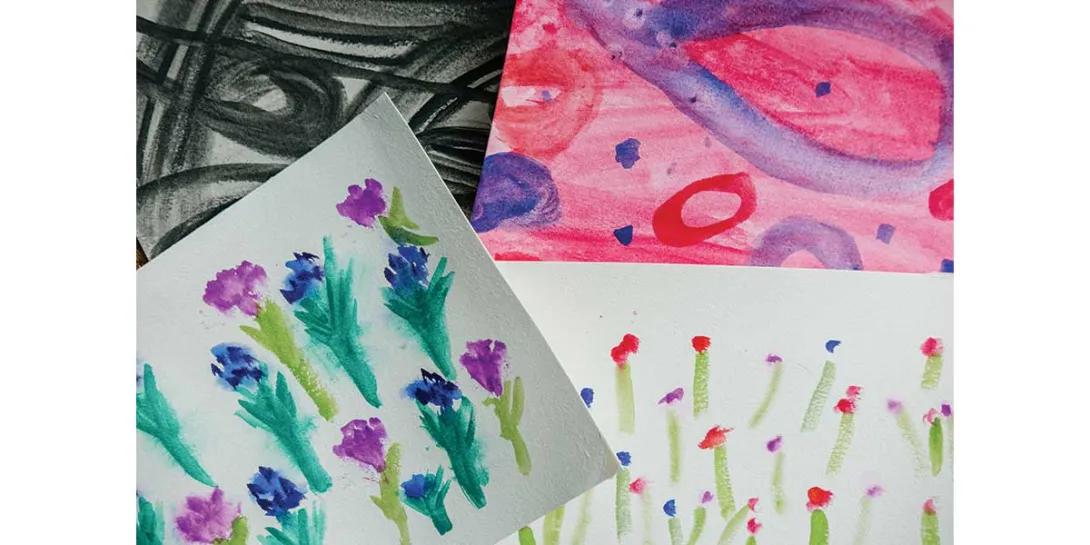
Claire makes art with supplies Sandra sent in an art toolkit, items for watercolor painting and mixed mediums for collages. Art helps ground Claire, helps relax her. Where she sits for work every day, several of her pieces are displayed, including an image of a lake surrounded by woods with the word release.
Another piece: A collage she made with her daughter, with stickers and gems and colors that soothe her, and the words no one is you, and that is your power.
Live Each Day
Since her diagnosis, Claire says that she’s “reprioritized everything.” “I’m not focused on saving for retirement,” she says. “I’m saving for my daughter, saving for travel.” The next day, Claire will leave for Venice, where she’ll eat pasta, take a cooking class, sightsee. “I’m doing what makes me happy. A lot of people don’t expect to be diagnosed with cancer in their 30s. We have to shift our thinking of what we're meant to do.
I know often this kind of thing makes people realize what they want to do in life,” she continues. “But anyone could die any day. For me, that’s what I’ve settled on. I do have an incurable cancer, but everyone should be living their lives as much as they can because we don’t know what the future holds.”
For Claire, common language around cancer, like warrior or survivor, doesn’t resonate. She’ll never ring a bell at the end of her treatment. “Not every cancer is curable. Yet. It’s really hard hearing words like that when you have a rare cancer. I know I’m not going to ring a bell until we make progress in research. I don’t know if that’ll happen in my lifetime, but I hope it does. My goal is to live my life every day.”
Claire marks her progress with bells of a different kind: managing anxiety leading up to quarterly MRIs and monthly bloodwork, celebrating no further tumor growth thanks to a daily cancer drug that gives her more time and autonomy than traditional chemotherapy and radiation. Touchstones like driving her daughter to school after not being able to drive for six months post-surgery, going on her daughter’s school field trips or nightly dance parties together are now celebrations of life. “The fun stuff means so much right now,” Claire says.
Claire is direct, sincere, reflective as she speaks about her experience. When she mentions her daughter, a brightness is infused into her steady authenticity. “She’s still so young. She doesn’t understand what’s wrong with me. I tell her I have a boo-boo on my brain. If she were older, I’d want her to under stand that not every day looks the same, but that’s the reality for everyone. I’d want her to know that no matter what changes day-to-day, I love her more than anything in the world. If heaven forbid she has to go through something as challenging as this, I want her to know that she’s not alone, that she has family and friends to help her.”
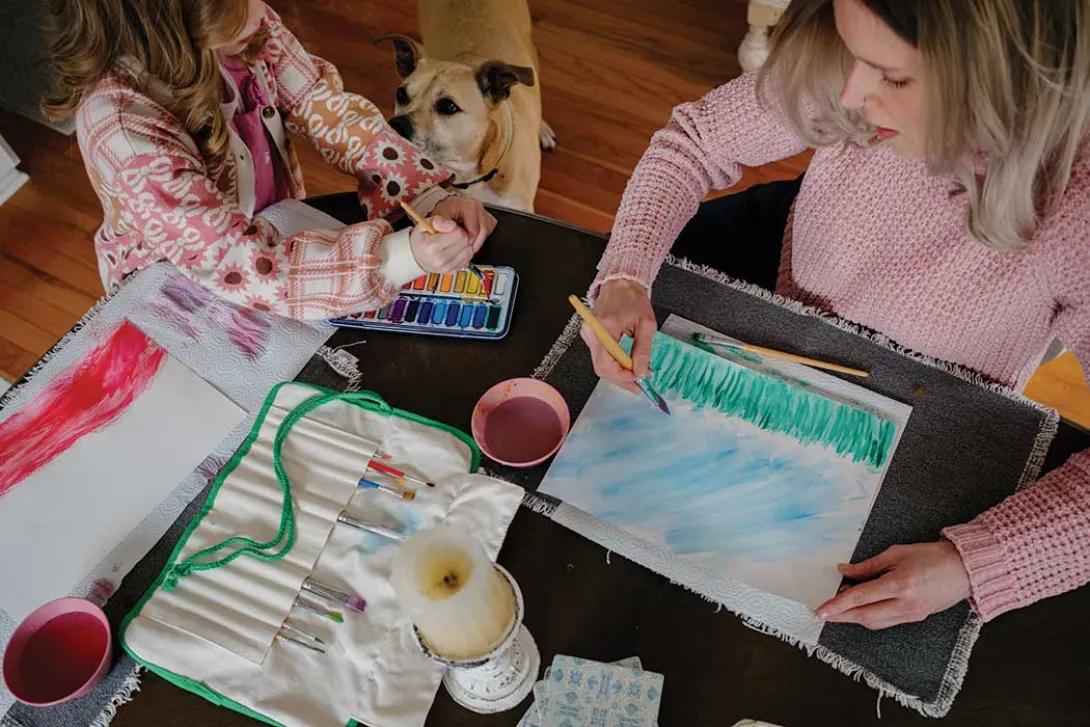
Claire imparts the lessons from art therapy to support her daughter, to connect and find meaning together. “She’s can’t yet understand why she might be feeling sad or mad about why I’m sick,” Claire says. “The exercises help us both express ourselves.” Together, they wet a piece of paper and spread it on the table. They splash paint on the paper — blues and greens and purples. They watch how the colors move, how they melt to make new, unexpected hues. They see the paint dance across the paper in all directions, how it keeps reaching, keeps going.
Continue reading THRIVE, spring 2026
In This Story
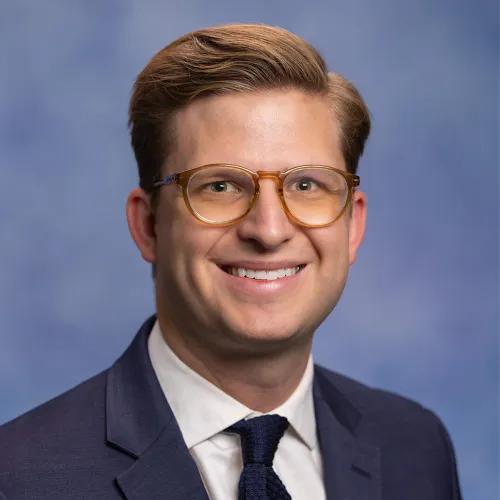
John Fortunato
Clinical Assistant Professor
Featured News & Stories
The Sixth Vital Sign: Your Wellbeing
Pathway to Peace

Understanding Your Pathology Report
Medical students develop novel technological solutions for unmet patient needs
From journalist to parent to advocate