Your gut is home to an entire ecosystem, and scientists are finding new residents
A new gut bacteria identified and named by U-M researchers
3:06 PM
Author |
There is an entire ecosystem living in your gut, and researchers want to identify each microorganism that makes up this community.
University of Michigan researchers recently found–and named– a previously unknown resident.
The gut microbiome is a world of microbes that aid in digestion by breaking down carbohydrates that our guts alone cannot.
“Part of our big picture towards health is trying to figure out how to connect the foods we eat with our gut bacteria,” said Eric Martens, Ph.D., professor in the Department of Microbiology & Immunology at the U-M Medical School.
“We want to know how we might leverage something as simple as diet to prevent diseases or keep people who live with Crohn's disease or Ulcerative colitis from going into as many flares as they do.”
Each person’s gut microbiome is unique, Martens explains.
“I like the analogy that the collection of bacteria that could be in the human gut is like a deck of 1000 or more playing cards,” Martens said.
“Beginning at birth, we are dealt a hand of some subset of those playing cards.”
In your deck, you will have different abundances of each bacterial species.
Some will appear frequently and will be easy to count; others may only appear when you look closely.
Martens’ lab is looking closely at gut microbiomes, looking for bacteria that degrade mucin, which makes up the barrier of mucus lining the colon and gastrointestinal tract.
These degrading bacteria can weaken the mucus barriers.
“We're interested in mucin-degrading bacteria because we've shown connections to them in inflammatory bowel disease in mouse models,” said Martens.
Martens and his colleagues search for bacteria that degrades mucin by taking stool samples and putting it on plates with mucin.
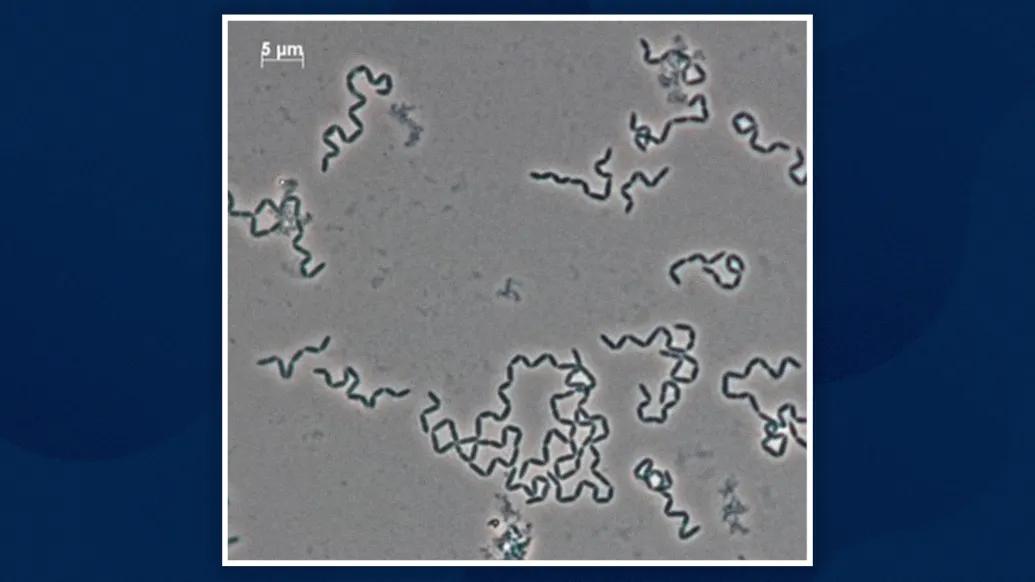
In one sample, they saw a bacterium they didn’t recognize.
“We realized that this bacterium didn't look like any of the other things that we had seen in the past,” Martens said.
“It was like a needle in a haystack, essentially.”
These newly found bacteria are picky eaters - they need a specific environment in order to live and gobble up the mucin.
“I think the cool part was figuring out how it's using mucin,” said Nicholas Pudlo, Martens’ lab manager.
“It's actually a mucin specialist, so it doesn't grow on the dietary side. It grows mostly just on mucin sugars or simpler sugars that aren't as complex as the dietary sugars.”
The structures of mucin sugars are partially determined by blood type.
To break down mucin, the bacteria need to be specialized to handle different sugars.
This idea was first hypothesized by Lansing Hoskins, M.D., in the 1970s
Hoskins was a gastroenterology doctor who took on bacteriology projects in his free time. He’s also a friend of the Martens lab.
“It was cool that this organism degrades mucin very differently than other things we've seen,” Martens said.
“It is the archetype of Lance’s original hypothesis that something would become specialized for just a blood group.”
The bacteria’s specialization “loops back to the low prevalence that we see compared to other mucin degrading bacteria because it might be in a limited population or it only targets or uses a subset of the mucin and sugars,” Pudlo added.
“It is likely limited in its ability to colonize someone.”
When you discover something new in science, you get to name it.
Martens and Pudlo decided to name the bacteria in honor of Hoskins, Hoskinsella mucinilytica.
Naming in science is much more complex than just selecting something that sounds good.
Pudlo worked to create phylogenetic trees, identify physiological traits and antibiotic susceptibilities, and sequence its DNA.
Once that was done, the research was submitted for peer review.
“If you're going to publish and rename something, they want to make sure that what you're calling new or novel is indeed that,” Pudlo said.
Additional authors: Gabriel Vasconcelos Pereira, Sadie R. Schaus, Qinnan Yang, Jaime J. Fuentes, Chunsheng Jin, Robert Hein, Li Zhang, Nicolas Terrapon, Costas A. Lyssiotis, Thomas M. Schmidt , Gunnar C. Hansson, Ana S. Luis
Michigan Research Core(s): Proteomics Resource Facility
Paper cited: “The butyrate-producing Gram-positive human gut bacterium, Hoskinsella mucinilytica, selectively targets host mucin N-acetylhexosamines,” Journal of Biological Chemistry. DOI: 10.1016/j.jbc.2026.111371
Sign up for Health Lab newsletters today. Get medical tips from top experts and learn about new scientific discoveries every week.
Sign up for the Health Lab Podcast. Add us wherever you listen to your favorite shows.

Health Lab
Explore thousands of health news & research stories by visiting the Health Lab homepage for more.
Media Contact

Public Relations
Department of Communication at Michigan Medicine
In This Story

Eric C Martens, PhD
Professor
Stay Informed
Want top health & research news weekly? Sign up for Health Lab’s newsletters today!
Featured News & Stories

Pain, psychological factors and physical function closely linked in people with systemic sclerosis

Many hospitals still don’t do enough to prevent UTIs from catheters

15 years of data will help uncover how flu spreads—and how to reduce its impact
$3.9 million NIH grant to fuel U-M effort to develop first targeted therapy for fatal childhood brain disorder
Rural-urban disparities in head and neck cancer