How a common virus's hijack of cell repair processes may promote cancer
A deeper look into how Epstein-Barr virus' reactivates from latent infection
5:00 AM
Author |
Most people will become infected with Epstein-Barr virus, or EBV, at some point in their lives.
In addition to being an extremely common herpes virus, EBV persists in its host for life as a “quiet” or latent infection.
While EBV infection may have no symptoms, it often causes mild illnesses such as mononucleosis (known as the “kissing disease", because EBV spreads through saliva).
In rarer instances, EBV plays a surprising critical role in multiple sclerosis and nearly 2% of all cancers.
A new paper from the University of Michigan looks at details surrounding EBV’s reactivation from latent infection, known as the lytic phase of viral replication.
During lytic EBV infection, the virus co-opts the host cell’s own DNA damage repair machinery to make more virus.
“It's a very damaging and traumatic event for the host cell,” said Elliott SoRelle, Ph.D., of the Department of Microbiology and Immunology.
“Normally an event that dramatic would cause the cell to arrest and die. The virus has to solve this problem: keep the host cell alive so that it can still hijack the cell’s metabolites and machinery to complete the later stages [of replication].”
Just how the virus keeps the cell alive despite generating widespread host DNA damage has been a mystery.
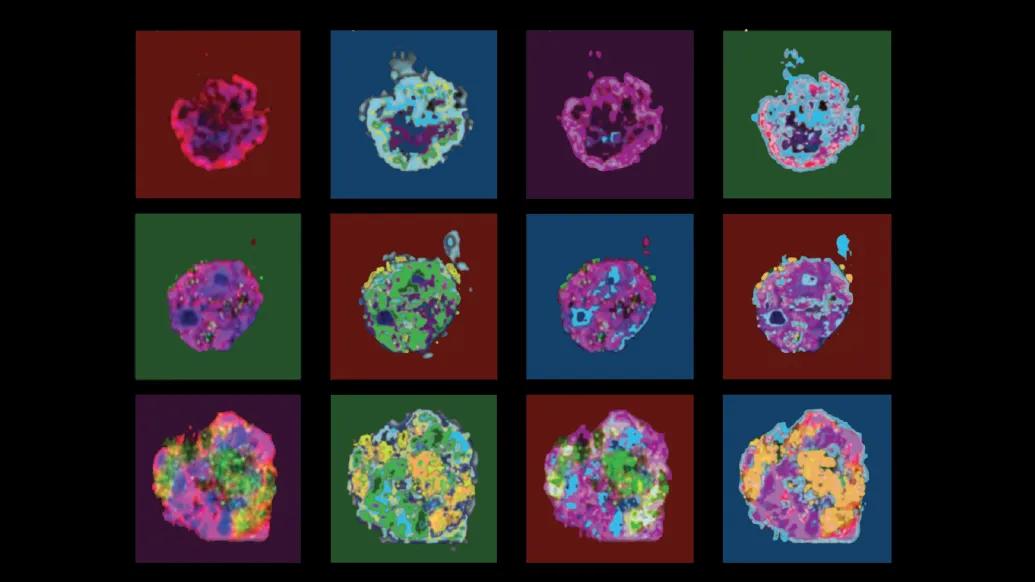
By screening EBV-infected immune cells called memory B-cells fixed in different stages of the lytic process, the team generated an atlas of more than 850,000 cells and applied automated single-cell image analyses to home in on when things go awry.
The innovative assay was generated by SoRelle’s mentee, graduate student Dina Tekle, of the Department of Biological Chemistry.
“If you think of every cell as a snapshot in the movie of lytic infection, we capture all of these individual movie frames, but they're out of order. When we use advanced bioinformatic techniques, we can put the frames of the movie back into the right order,” he explained.
Using this technique (called pseudotime analysis), they saw that lytic cells begin the early steps in the DNA damage response but interfere with its completion in later stages.
This raises an interesting possibility: “Some EBV-infected cells may start the lytic cycle and DNA damage responses but not finish them, which can dramatically reorganize the host cell genome without killing the cell,” SoRelle said.
This finding has implications for EBV-associated cancers, because these cells are “genomically unstable” and may be primed for malignancy, he adds.
In future research, Tekle plans to apply the assay to study this link.
“Using our approach, I will study the dynamics between the host DNA damage response and EBV lytic factors to understand how this essential response is being dysregulated. This approach will help us to better understand the direct role or roles of lytic infection in oncogenesis.”
Additional authors: Craig J. Dobry, Jonathan Z. Sexton
Funding/disclosures: This research was supported by the NIH S10 award 1S10OD034245-01A1 for the Yokogawa CellVoyager CV8000 laser-based high-content imager. D.G.T. acknowledges support from a University of Michigan Rackham Graduate School Merit Fellowship. J.Z.S. acknowledges support from a NIH National Institute of General Medical Sciences R01 (R01GM152417). E.D.S. acknowledges Hypothesis Fund support, funding from a NIH National Cancer Institute K22 (1K22CA288946), and lab startup from the University of Michigan Rogel Cancer Center (NIH P30CA046592, PI: Dr. Eric Fearon) and Department of Microbiology and Immunology.
Paper cited: “Reconstructing EBV reactivation and DNA damage response kinetics in morphologic pseudotime,” PNAS. DOI: 10.1073/pnas.2609598123
Sign up for Health Lab newsletters today. Get medical tips from top experts and learn about new scientific discoveries every week
Sign up for the Health Lab Podcast. Add us wherever you listen to your favorite shows

Health Lab
Explore thousands of health news & research stories by visiting the Health Lab homepage for more.
Media Contact
Public Relations
Department of Communication at Michigan Medicine
In This Story

Elliott SoRelle, PhD
Assistant Professor
Stay Informed
Want top health & research news weekly? Sign up for Health Lab’s newsletters today!
Featured News & Stories

The hidden life of parasites like Cyclospora
Your gut is home to an entire ecosystem, and scientists are finding new residents
First person-centered measure of dementia caregiving styles improves partner, patient outcomes
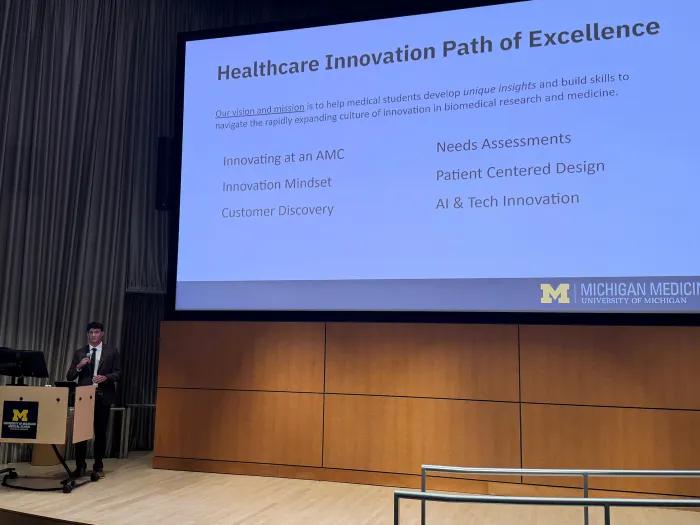
Medical students develop novel technological solutions for unmet patient needs

Study overturns 100-year-old assumption about common bacteria in the lungs