
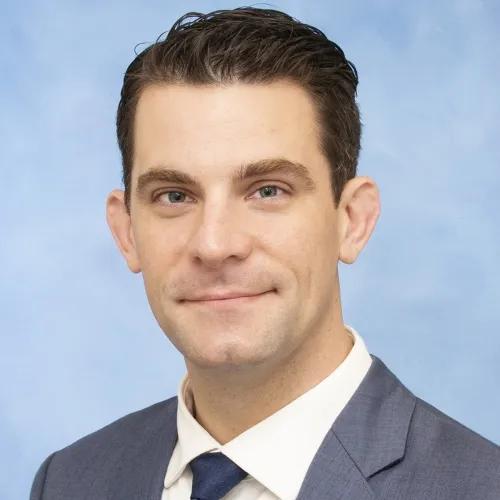
Sean Michael O'Neill, MD
To request an appointment call
Manage Your Profile
About
Sean M. O’Neill, MD, PhD is a faculty member in the Division of Minimally Invasive Surgery at Michigan Medicine. Born and raised in the Flint area, he received his undergraduate degree in Computer Science from Harvard College. He then obtained a Ph.D. in Policy Analysis from the Pardee RAND Graduate School and his M.D. from Northwestern University’s Feinberg School of Medicine. He completed General Surgery residency at UCLA, followed by a fellowship in Advanced GI/MIS/Bariatric Surgery at Ohio State. He is certified by the American Board of Surgery.
Dr. O’Neill is a member of the American Society for Metabolic and Bariatric Surgery (ASMBS), where he serves on the Patient Education Committee. He is also a member of the Americas Hernia Society (AHS), the Society of American Gastrointestinal and Endoscopic Surgeons (SAGES), and the American College of Surgeons (ACS).
Clinical Specialization:
Dr. O’Neill’s clinical focus includes laparoscopic, robotic, and endoscopic approaches in addition to traditional open surgery. In addition to general surgery, his specialty practice includes operations for morbid obesity (Roux-en-Y gastric bypass, sleeve gastrectomy), groin and abdominal wall hernia, gastroesophageal reflux, hiatal and paraesophageal hernia, esophageal dysmotility, and gallbladder disease.
Areas of Practice
General surgery, laparoscopic and robotic minimally invasive surgery, bariatric/metabolic surgery, abdominal wall hernia, groin hernia, benign diseases of the foregut (including gastroesophageal reflux disease (GERD), hiatal and paraesophageal hernia, and achalasia), gallbladder disease, and diagnostic and therapeutic upper endoscopy (EGD).
Expertise
Locations
-
General Surgery Clinic | Chelsea Professional Office Building 14650 E Old US Highway 12 Ste 201
Chelsea Multispecialty Clinic
Chelsea, MI 48118-1801Get Directions
Insurance Accepted
University of Michigan Health participates with most health insurance plans.
Education & Training
Medical School or Training
Residency
Fellowships
Board Certifications
Research Overview
Dr. O’Neill’s academic interests center around the delivery of health care services to improve population health, with a specific focus on organizational leadership and management. His Ph.D. dissertation at RAND focused on organizational drivers of success or failure in health care quality improvement interventions. He has studied the optimal delivery of surgical services in different settings, ranging from small, urban community hospitals to large regional integrated healthcare organizations. He has additionally published in the areas of medical education, hospice care, and continuous quality improvement.
Links
Patient Ratings & Comments
Visit our Physician Ratings & Comments page to learn more about how patient ratings are collected, calculated, and updated to help you make an informed decision when choosing the right physician for your care.
Patient Ratings
207 Patient Ratings
Patient Comments
June 30, 2026 - "I can't say enough good things about Dr. O'Neill. When I came to him I was on bad shape. He diagnosed my problem and formed a plan right away to fix it,I truly believe he saved my life."
June 30, 2026 - "Dr. O'Neill was so very helpful in explaining my situation and my options."
May 22, 2026 - "Dr. O'Neill was phenomenal. He very clearly explained the procedure, risks, timeline, recovery, and alternatives. He answered all questions and was extremely personable and friendly the whole time."
May 19, 2026 - "Dr O'Neill is an excellent surgeon. He and [...] are very professional and caring. I highly recommend him [...]"
March 22, 2026 - "Dr O'Neill was very informative. Explained to me his schedule in the event I had a problem."
March 3, 2026 - "[...] very impressed by Dr O'Neill [...]"
January 18, 2026 - "Dr. O'Neill listened to my post-surgery concerns and offered recommendations for [...] recovery from surgery."
January 6, 2026 - "Dr. O'Neill explained the procedure very thoroughly and answered all my questions in a very professional manner."
December 4, 2025 - "Dr. O'Neill explained everything perfectly and in terms I could understand."
November 18, 2025 - "Dr. O'Neill was patient, thorough, knowledgeable, and kind. He inspired confidence."
