
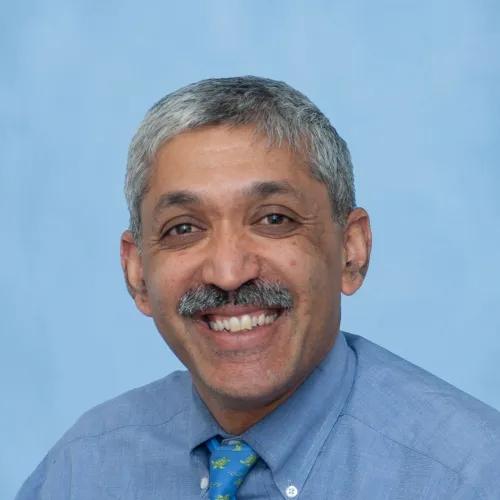
Krishnan Raghavendran, MBBS
To request an appointment call
Manage Your Profile
About
Dr. Raghavendran is a Professor of Surgery in the Division of Acute Care Surgery. He received his medical education in India and immigrated to the United States in 1991, wherein he completed his Surgical Residency and subsequent fellowship in Surgical Critical Care.
He has a long-standing interest in global health and established research collaborations between India and the University of Michigan medical school. He serves as one of the lead physicians for the University of Michigan India collaborative, a distinct platform under Global Reach. The collaborative extends across multiple sub-specialties and is currently working with many institutions across India. He has also been working on similar collaborative efforts in Ethiopia and Taiwan.
Clinical Specialization:
Dr. Raghavendran specializes in acute care surgery including trauma and care of the critically ill. Areas of publication include VTE, aspiration-induced lung injury, pulmonary surfactant biology and decompressive craniectomy for TBI. He has also been involved in the study of TBI and trauma systems in the global arena.
Areas of Practice
Acute care surgery, trauma and care of the critically ill
Locations
-
General Surgery Clinic | Taubman Center 1500 E Medical Center Dr
Floor 2 Reception C
Ann Arbor, MI 48109-5331Get Directions -
Medical Procedures Unit | University Hospital 1500 E Medical Center Dr
Floor 2
Ann Arbor, MI 48109-5051Get Directions
Insurance Accepted
University of Michigan Health participates with most health insurance plans.
Education & Training
Medical School or Training
Residency
Fellowships
Board Certifications
Research Overview
Dr. Raghavendran has been continuously funded by the National Institutes of Health (NIH) from both NIGMS and NHLBI for the past 13 years. His laboratory studies the inflammatory biology of lung injury with a focus on direct forms of lung injury including lung contusion and gastric aspiration. The focus is on development of therapeutic strategies to mitigate the progression of these risk factors to ARDS and ventilator associated pneumonia. He also collaborators with other researchers in the areas of ultrasound biology, single cell imaging and microfluidic studies of liquid-air interface.
