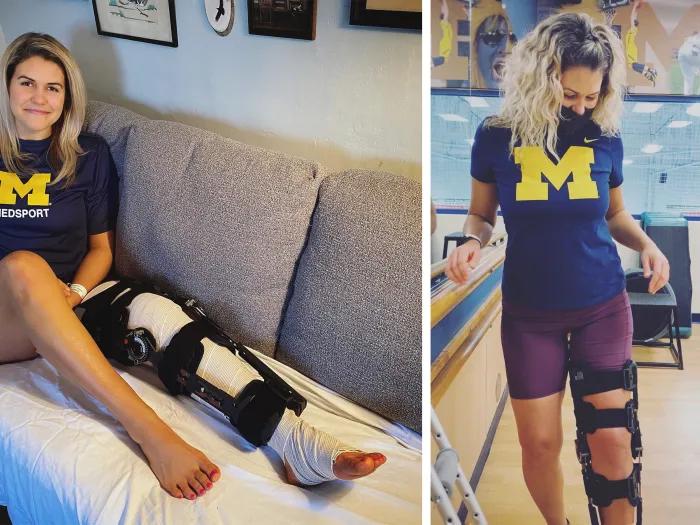
Orthobiologics & Regenerative Therapies: Sports Medicine Care
Orthobiologics & Regenerative Therapies
Accelerate healing with regenerative therapies designed specifically for athletic injuries.
Your Michigan Answer for Orthobiologics & Regenerative Therapies
Regenerative medicine focuses on helping your body do what it was designed to do: Heal. Orthobiologics and regenerative treatments stimulate your body's natural repair systems, providing a less invasive treatment alternative towards healing.
At U-M Health Sports Medicine, we have leading experts in the field that use minimally invasive techniques (non-surgical) with advanced imaging to accurately deliver these therapies to target the areas of injury.
Joint and soft tissue injuries of the shoulder, knee, hip, elbow or ankle due to playing sports are ideal candidates for orthobiologic and regenerative therapies.
At U-M Health Sports Medicine, our team has made regenerative medicine a core part of sports injury treatment. We offer these cutting-edge therapies alongside current standard treatments of care.
Make an Appointment
Make an appointment with one of our U-M Health Sports Medicine experts by calling us at the number below.
You may also submit an appointment request via our form, and we will be in touch with you.
Find a Sports Medicine location close to you:
Meet Our Sports Medicine Experts
Get back to the game you love. Seek treatment for your sports injury from one of our experts.
Orthobiologics in Sports Medicine
Common Uses of Orthobiologics in Sports Medicine
We treat a wide range of sports injuries with regenerative therapies.
Acute Injuries
- Platelet-rich plasma
- Muscle strains
- Ligament sprains (nonsurgical)
- Stem cells
- Ligament sprains (nonsurgical)
- Cartilage damage (knees, hips, shoulders)
- Ultrasound-guided procedures
- Muscle strains or tears
- Hematoma drainage or aspiration
- Ligament injuries
Chronic & Overuse Injuries
- Platelet-rich plasma
- Tendon problems (tennis elbow, Achilles tendinitis, rotator cuff tears)
- Plantar fasciitis
- Stem cells
- Tendon problems (tennis elbow, Achilles tendinitis, rotator cuff tears)
- Cartilage damage (knees, hips, shoulders)
- Ultrasound-guided procedures
- Tendinopathy
- Trigger finger release
- Plantar fasciitis (needle fenestration)
- De Quervain's tenosynovitis
- Scar tissue breakdown
Orthobiologics & Regenerative Therapies in Care Plans
Platelet-Rich Plasma (PRP)
PRP uses concentrated platelets from your own blood to jump-start healing Platelets contain Growth factors that naturally reduce inflammation, stimulate tissue repair mechanisms allowing for a faster recovery to sports and function.
Cell Therapy
Cell Therapy offers a more sophisticated approach to different types of healing mechanisms. Cells taken from your own body have the capacity to heal all types of injuries - from common to complex. These cells are harvested from your bone marrow or adipose tissue and delivered to the injured area using precision guidance. This treatment shows promise for joint and soft tissue injuries that don't heal well on their own.
Frequently Asked Questions About Regenerative Therapies
Recovery varies by injury and treatment. Early benefits from Cell Therapy and PRP are typically seen in 4-6 weeks with long-term benefits experienced around 8-12 weeks.
Cell Therapy and PRP are typically not covered by traditional insurance. Check with your provider before treatment.
The injection feels similar to getting a shot. We use local anesthesia to minimize discomfort. Some soreness at the injection site for a few days is normal.
Your body needs time to heal. Your sports medicine provider will discuss an individualized, sport-specific rehabilitation plan to meet your goals and return you to your preferred sport.
Why Choose U-M Health Sports Medicine
News & Stories

A concussion expert and football father discusses why he values teamwork over zero-risk
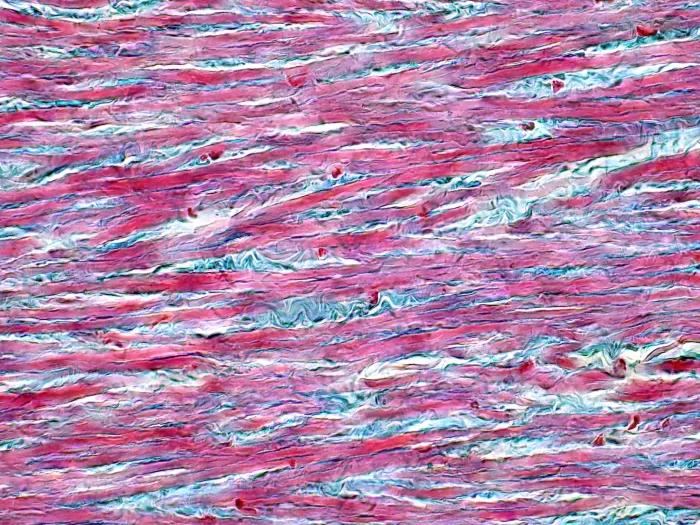
Why tendons heal so poorly and how researchers hope to fix them
To reduce chronic pain, a new digital program could help
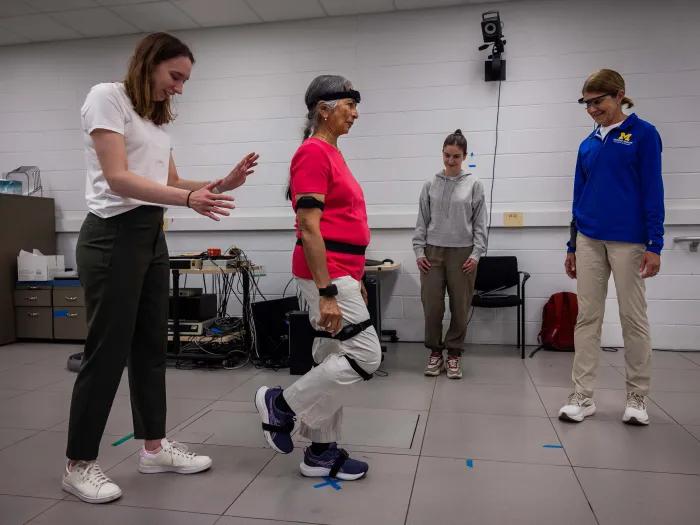
AI supports home-based balance training
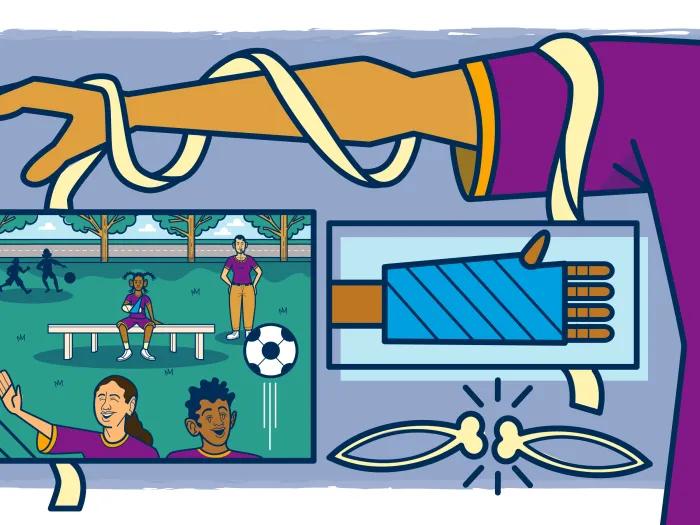
Properly treating, and recovering, from pediatric sports injuries