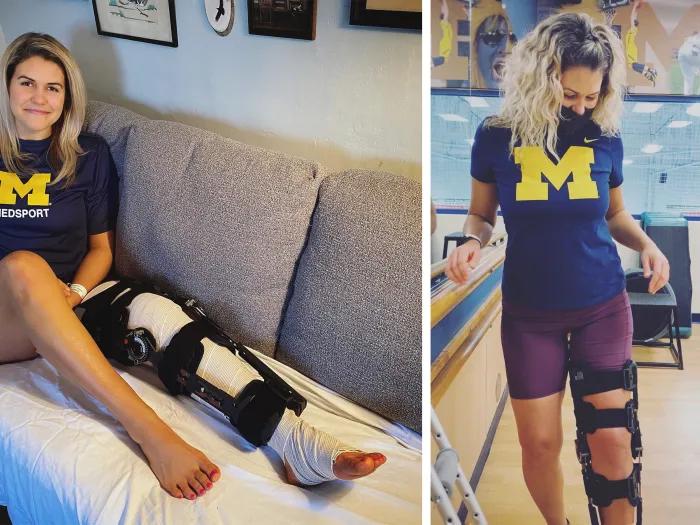
Hand Injuries: Sports Medicine Care
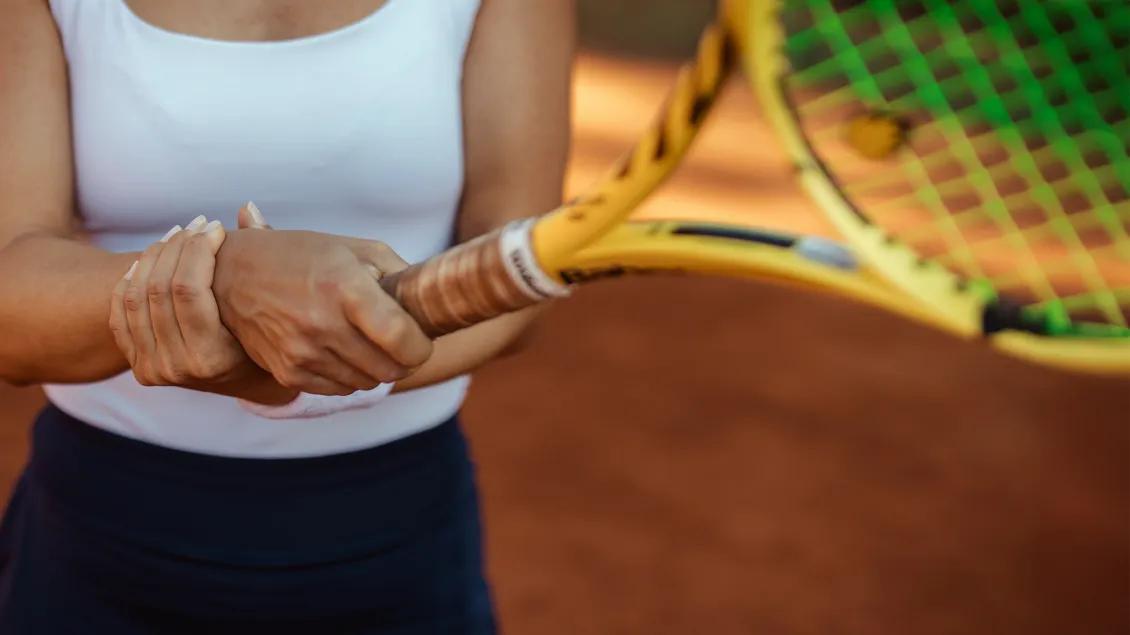
Hand Injuries
Your U-M Health Sports Medicine team cares for hand injuries that affect your function, range of motion and strength.
Your Michigan Answer for Hand Injuries
Hand injuries are among the most common injuries athletes face, and can also be some of the most disruptive. Some hand injuries happen in an instant, such as a hard fall or catch. Others build up gradually from the repetitive demands of your sport, developing into pain and weakness that get harder to ignore over time.
Whether you play a contact sport, a precision sport or anything in between, your hands are involved in nearly every movement you make. Even a minor injury can affect your grip, your throw, your swing and your daily life off the field.
Without proper diagnosis and treatment, hand injuries can limit your range of motion, reduce your strength and lead to chronic problems that are far more difficult to treat down the road.
Regardless of your sport or specific hand injury, we're here to help get you back into your game and your daily life. Explore the hand injuries we treat and the treatments we offer below.
Make an Appointment
Make an appointment with one of our U-M Health Sports Medicine experts by calling us at the number below.
You may also submit an appointment request via our form, and we will be in touch with you.
Find a Sports Medicine location close to you:
Meet Our Sports Medicine Experts
Get back to the game you love. Seek treatment for your sports injury from one of our experts.
Hand Injuries We Treat
Explore Hand Injury Details & Doctors
From acute trauma to chronic overuse, we treat the full spectrum of hand and wrist conditions that keep athletes from performing their best.
Learn about the hand injuries we treat and the doctors who treat them by exploring the links below.
- Hand Fractures
- Ulnar Collateral Ligament (UCL) Injuries
- Thumb Injuries
- Wrist/Scaphoid Fractures
- Wrist Instability
- Distal Radius/Forearm Fractures
- Finger/Carpal Dislocations
- Tendon Injuries
- Wrist Pain
Hand Injury Treatments
We've seen firsthand how hand pain and weakness can derail everything, not just your game, but your daily life. We also know that what starts out as a small issue can, over time, worsen and become a bigger issue if you don't address it properly.
Hand and wrist injuries in athletes require highly specialized care. The structures involved are small, precise, and deeply interconnected, which means getting the diagnosis right matters enormously.
That's why at U-M Health Sports Medicine we look at the whole picture when planning your care. Our team has the experience to figure out exactly what's going on and create a plan that works for you. This may include nonsurgical treatment or surgery, based on what’s right for you. Either way, we’ll help you understand your options and guide you through every step.
Your Treatment Plan
We customize your treatment based on your specific injury and make sure the approach fits your needs for your sport. Treatment will vary but can include nonsurgical or surgical options.
Nonsurgical Options
- Training load management and activity modifications
- Bracing or supportive gear
- Injections or pain management therapies
- Cutting-edge orthobiologic treatments
Surgical Options When Needed
If nonsurgical treatments don't provide relief, or your injury is too severe, we offer advanced surgical techniques including:
- Fracture fixation
- Ligament reconstruction
- Tendon repair
- Joint stabilization
- Nerve decompression
Rehabilitation
Treating an injury is more than just repair, it's about rebuilding and developing new approaches to movement. Every treatment plan includes rehabilitation designed to restore your ability and help you regain, even improve, your range of motion and strength.
Your treatment plan is about more than your injury. It's about getting you back in the game confidently and safely.
Why Choose U-M Health Sports Medicine
News & Stories

A concussion expert and football father discusses why he values teamwork over zero-risk
Why tendons heal so poorly and how researchers hope to fix them
To reduce chronic pain, a new digital program could help
AI supports home-based balance training
Properly treating, and recovering, from pediatric sports injuries