Hip Preservation
Hip Preservation
What is hip preservation?
Hip preservation encompasses multiple techniques designed to treat structural or mechanical hip problems without replacing the joint. When performed appropriately and early, hip preservation can improve long-term hip function. Our hip preservation experts utilize specialists from fellowship-trained surgeons with years of experience in managing hip conditions to physical medicine & rehabilitation doctors, sports medicine providers, musculoskeletal radiologists, pain medicine, and skilled physical therapy teams.
When you come to U-M Health you don’t just get a single surgeon—you gain access to a dedicated team focused on protecting your native hip whenever possible, reconstructing it when necessary, and keeping you moving for life.
Our Approach
At University of Michigan Health our hip preservation and reconstruction team provides comprehensive, lifelong, care for the full spectrum of hip conditions – from straightforward sports injuries to complex structural deformities. Whether protecting your native hip joint through targeted non-surgical therapy or advanced preservation techniques, or performing joint replacement surgery when needed, our multi-disciplinary team tailors every treatment plan to your unique anatomy, activity level, and long-term goals.
Appointment Information
Call 734-930-7400 to speak with a representative in our U-M Health Sports Medicine program or submit an appointment request form and let us contact you.
What conditions will hip preservation surgery address?
Our team specializes in the management of the entire spectrum of hip care, diagnosing and treating conditions such as:
- Femoroacetabular impingement (FAI)
- Labral tears
- Developmental/borderline dysplasia of the hip (DDH/BDH)
- Avascular necrosis
- Advanced osteoarthritis
We offer the following diagnostic options when evaluating hip pain:
- X-rays/radiographs
- Magnetic Resonance Imaging (MRI)
- Computed Tomography (CT) scans including 3-D reconstruction when necessary
- Dynamic hip ultrasound evaluation
- Diagnostic and therapeutic image-guided injections
How is hip pain treated?
Navigating hip pain—especially as an athlete, young adult, or active individual—requires clear guidance and shared decision-making. We take the time to evaluate detailed, low-dose 3D imaging, assess dynamic hip mechanics, and thoroughly explain your non-operative and surgical options.
Whether your hip can be preserved or has progressed to require replacement/reconstruction, our team has the clinical depth and subspecialty training to offer the right procedure at the right time:
- Hip Arthroscopy (Keyhole Surgery): A minimally invasive surgery using small incisions. Doctors use it to fix torn joint tissue, shave down extra bone rubs, and repair smooth joint coatings.
- Periacetabular Osteotomy (PAO): A surgical procedure that turns the hip socket into the right position. This fixes a loose hip joint, spreads out your weight evenly, and protects your natural joint surface.
- Combined Single-Stage Procedures: Performing hip arthroscopy alongside PAO or open surgical hip dislocation at the exact same time. This means you only go under anesthesia once, face fewer surgeries, and have a single recovery period.
- Total Hip Arthroplasty (Hip Replacement): A complete hip replacement used when joint damage, shape problems, or arthritis are too severe for hip preservation procedures. Our specialized reconstruction/joint replacement surgeons use modern and robotic-assisted technology to put in a new, artificial joint.
We also provide treatment options for the following conditions :
- Core decompression for avascular necrosis (AVN)
- Femoral osteotomy for abnormal proximal femur morphology
- Surgical hip dislocation
- Gluteus medius/minimus (hip abductor tendon) tear repair or reconstruction
- Proximal hamstring tear repair or reconstruction
Resources
Below are educational resources for a variety of musculoskeletal conditions available to orthopaedic surgery patients for pre- and post-surgical care. This contains helpful information for patients as they start their surgical journey.
Research
As part of a premier academic medical center, Orthopaedic Surgery at Michigan Medicine is at the forefront of clinical research, outcome tracking, and surgical techniques. Our patients benefit directly from evidence-based care models, access to clinical registries, and cross-specialty collaboration between sports medicine, pediatric orthopaedics, and adult joint reconstruction.
Locations
-
Orthopaedic Sports Medicine Program | Domino's Farms 24 Frank Lloyd Wright Dr Ste 1000
Lobby A
Ann Arbor, MI 48105-9484Get Directions -
Orthopaedic Surgery Clinic | Brighton Center for Specialty Care 7500 Challis Rd
Entrance 1, Level 1
Brighton, MI 48116-9416Get Directions -
Orthopaedic Surgery Clinic | Northville Health Center 39901 Traditions Dr
Floor 1
Northville, MI 48168-9493Get Directions -
Orthopaedic Surgery Clinic | Taubman Center 1500 E Medical Center Dr
Floor 2 Reception B
Ann Arbor, MI 48109-5328Get Directions -
Pediatric Orthopaedic Surgery Clinic | C. S. Mott Children's Hospital 1540 E Hospital Dr
Floor 3 Reception C
Ann Arbor, MI 48109-4213Get Directions
Doctors
Asheesh Bedi, MD
Professor
Orthopedic Surgery, Sports Medicine

Alex L Gornitzky, MD
Clinical Assistant Professor
Orthopedic Surgery

Matthew James Hartwell, MD
Clinical Assistant Professor
Sports Medicine, Orthopedic Surgery
Michael Maher Kheir, MD
Clinical Assistant Professor
Orthopedic Surgery

Adam James Lewno, DO
Clinical Assistant Professor
Physical Medicine & Rehabilitation, Sports Medicine
Steven Bishoy Soliman, DO, RMSK, FAIUM, FAOCR
Clinical Associate Professor
Diagnostic Radiology

Andrew Gray Urquhart, MD
Clinical Professor
Orthopedic Surgery

Ira Zaltz, MD
Clinical Professor
Orthopedic Surgery
News & Stories
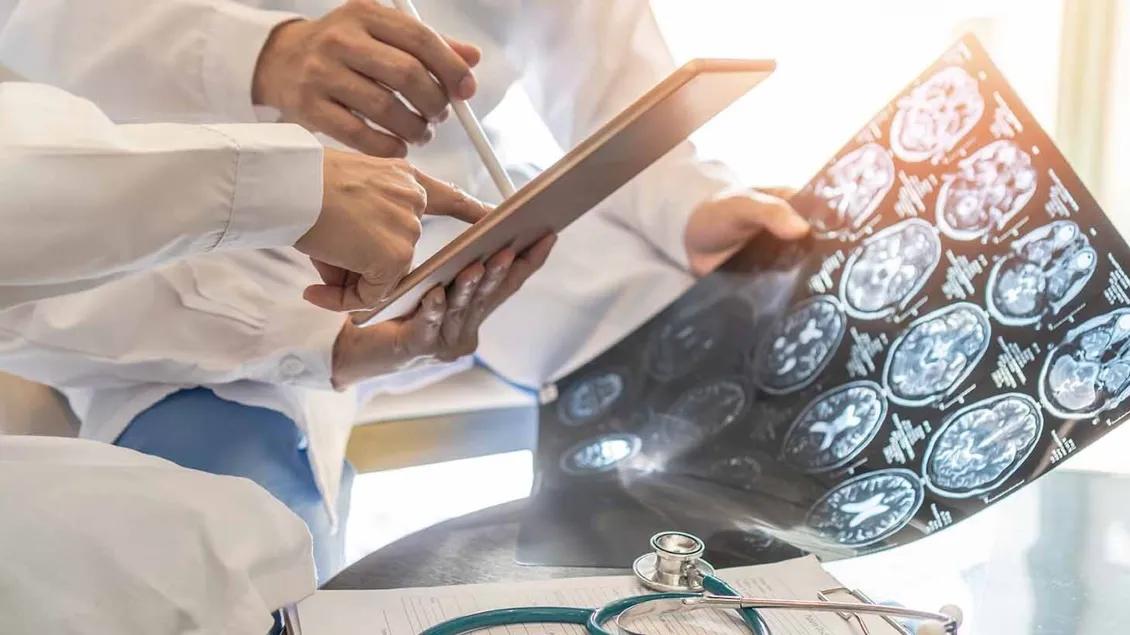
A concussion expert and football father discusses why he values teamwork over zero-risk
To reduce chronic pain, a new digital program could help
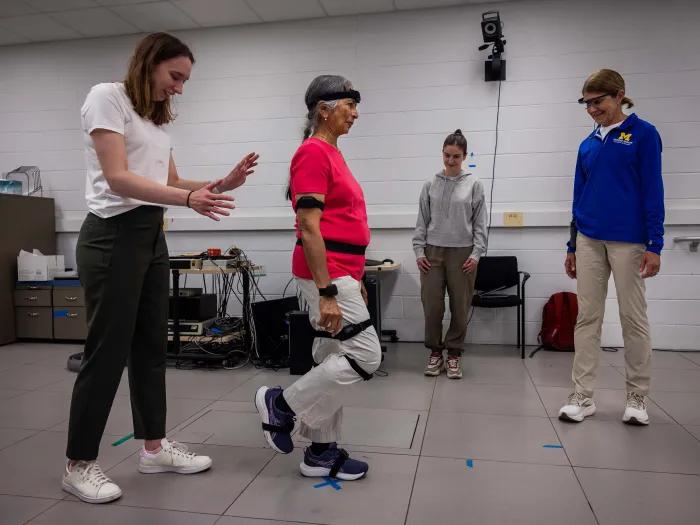
AI supports home-based balance training
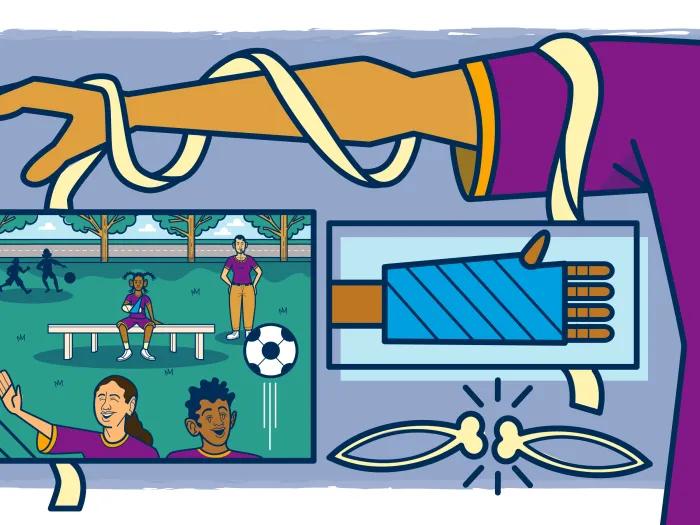
Properly treating, and recovering, from pediatric sports injuries