
Kelly Malcom
Lead Research Communicator
Malcom is a lead research communicator for Michigan Medicine and research communications strategist for the U-M Medical School, with more than 20 years of experience in strategic communications, marketing, and health and science writing. She covers the basic science departments, pulmonary and critical care medicine, infectious disease, pathology and anesthesiology. Contact: [email protected]


Health Lab
How a gene for obesity affects the brain
How a gene for obesity affects the brain: The discovery could lead to new treatments for metabolic diseases with fewer side effects

Health Lab
This anesthesia technique makes surgery safer, less scary for pediatric patients
The pediatric spinal anesthesia program offers a needle-based technique that provides sensory and motor block without the need for intubation or general anesthesia for pediatric surgical procedures below the belly button. This means the patient will not feel anything below chest level.

Health Lab
Primary care physicians are hesitant to accept chronic pain patients using opioids or cannabis
Michigan Medicine research finds that patients with chronic pain who use either substance may find it harder to find primary care physician than those who don’t.
News Release
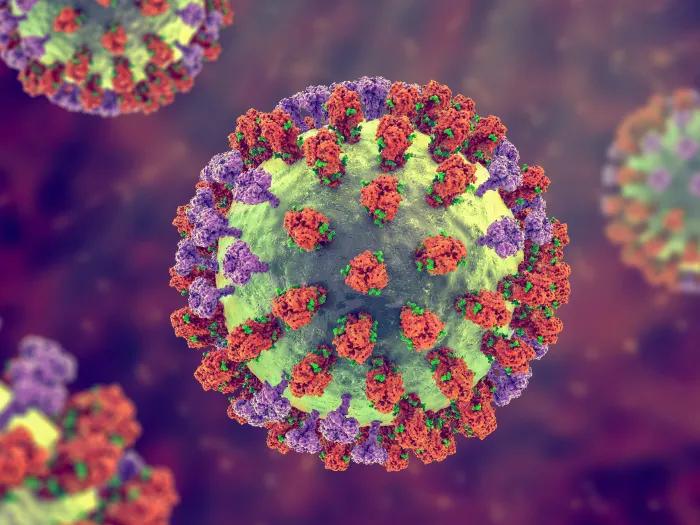
$10 million NIH-award establishes new U-M center to study genomics of infectious disease pathogens
A new NIH award will establish the Michigan Infectious Disease Genomics (MIDGE) Center, the goal of which is to use whole genome sequencing and functional genomic assays to determine how genetic differences among strains or isolates affect the behavior, transmission, and drug resistance of viral, bacterial, and fungal pathogens.

Health Lab
Circadian rhythm drives the release of important immune cells
A study shows circadian rhythm drives the release of important immune cells in the body.

Health Lab
Studies uncover the critical role of sleep in the formation of memories
Two new studies from University of Michigan reveal what's happening inside the brain during sleep and sleep deprivation to help or harm the formation of memories.
Health Lab
New drug could help those with CAH reduce the use of corticosteroids
Michigan Medicine researchers discover that a new drug could help those with CAH, or congenital adrenal hyperplasia, reduce the use of corticosteroids.
Health Lab
Commonly used antibiotic brings more complications, death in the sickest patients
In emergency rooms and intensive care units across the country, clinicians make split-second decisions about which antibiotics to give a patient when a life threatening infection is suspected. Now, a study reveals that these decisions may have unintended consequences for patient outcomes.
Health Lab
Bacteria in the mouth linked to pulmonary fibrosis survival
Bacteria in the mouth may play a role in survival from idiopathic pulmonary fibrosis (IPF).
Health Lab
Two genes linked to autism implicated in brain cell connectivity
A new study links two autism-associated genes together for the first time, potentially revealing a mechanism behind brain changes seen in people with autism.

Health Lab
Immunocompromised patients and COVID infections: Who’s at risk?
A prospective study published in the journal Lancet Microbe provides more clarity on which patient populations are at higher risk for prolonged infections — and hints that this fear is likely unwarranted.

Health Lab
CRISPR off-switches: A path towards safer genome engineering?
A study from the University of Michigan Medical School developed off-switches useful for improving the safety of the Type I-C/Cas3 gene editor.
Health Lab
A how-to guide to COVID treatments
A Michigan Medicine FAQ about Paxlovid, with new information since its FDA approval in May 2023.
Health Lab
More clues revealed about the causes of an allergic inflammation of the esophagus
A recent study from U-M offers more insight into the underlying causes of EOE.
Health Lab
Preterm birth predicted using new approach for harmonizing diverse microbiome data
A team developed a new approach for combining microbiome data together while overcoming the noise introduced by the different techniques used in each study into a tool they dubbed MaLiAmPi (Maximum Likelihood Amplicon Pipeline).
