For Health Providers

Committed to partnering with your practice

We want your patients to have the best experiences possible, especially when you choose to refer them to us. 
Call M-LINE: 800-962-3555
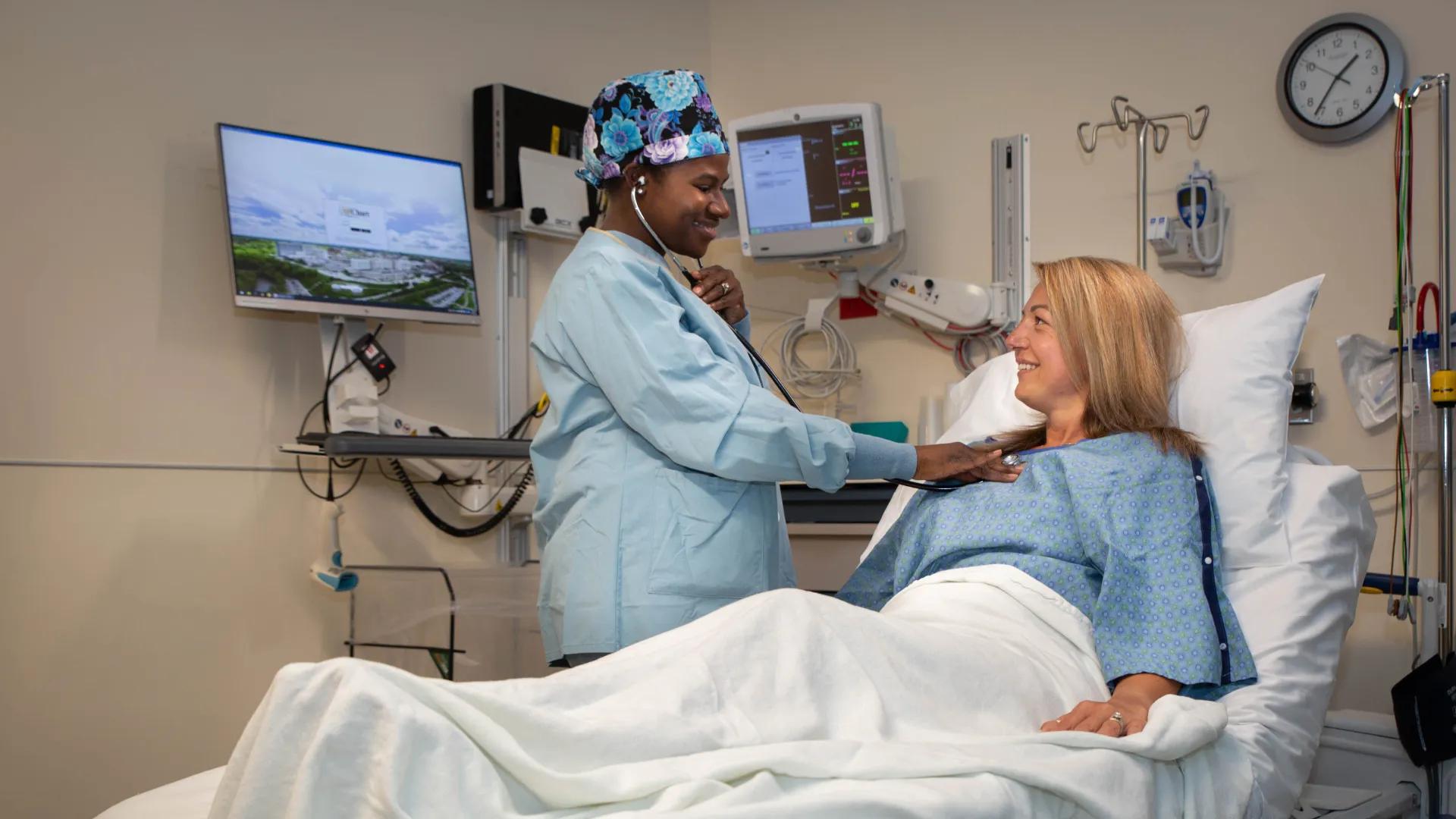
wide angle view of doctor taking vitals on patient

Referring Provider Resources

Female doctor wearing glasses and white hajib talking to young girl in exam room

Refer or Transfer a Patient

If you're a health professional who needs to transfer a patient to U-M Health, one call connects your patients with world-class services and advanced care.

Refer or transfer a patient
Reviewing medical images on a tablet

Upload Your Images

Securely transfer images electronically to U-M Health through Life Image, a third-party HIPAA-compliant image exchange network.
Upload your images
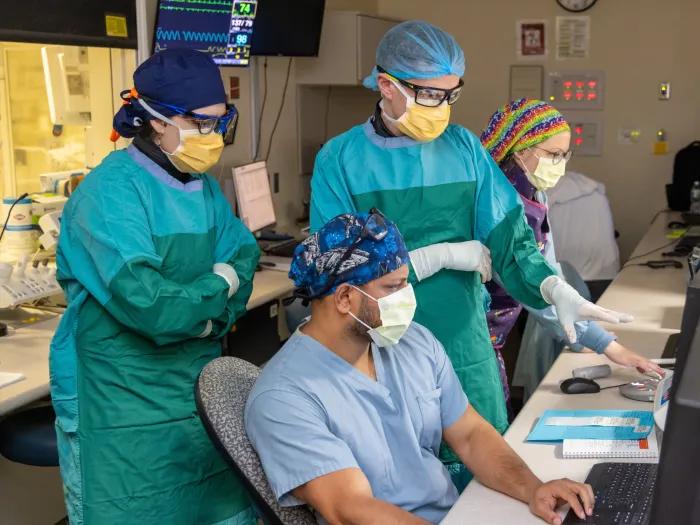
A group of people looking at a computer screen

Access Electronic Medical Records

There are several options for referring physicians to access their patients’ electronic medical records. Find the option that will best meet your practice's needs.

Access electronic medical records

Contact Us

M-LINE is a single, 24-hour, toll-free number for referring physicians and their staff seeking access to clinical services and faculty at University of Michigan Health.

Call M-LINE: 800-962-3555
U-M Health Physician Liaison Team

Meet the Physician Liaison Team

Our Physician Liaison team is dedicated to providing personalized service to community-based physicians.

Meet the team

Connect with Michigan Medicine

Opportunities

woman with red nail polish wearing a gold shirt holding an mobile phone

Clinical Colleague Newsletter

We are committed to communicating with our referring providers. Sign up for Clinical Colleague Newsletter email updates from U-M Health.

Sign up for email updates
woman at mic. with hand over her heart

Speakers Bureau

Michigan Medicine's Speakers Bureau is one way for our providers to engage with colleagues across the state of Michigan.

Request a speaker
Doctors-Around-A-Table

Join Our Team

Michigan Medicine provides world-class training, diverse opportunities, and the mentorship you need to ignite your career and shape the future of health care.

Explore Career Opportunities

Latest from Health Lab

See more Health Lab articles
e-bikes colorful riding close up of helmet
Health Lab

E-Bikes are everywhere, but most parents say they don’t know enough about them

Electric bikes have become a familiar sight in communities across the country, but most parents say they know little about them or where they’re supposed to be used, a national poll suggests.
cells close up blue and green background microscope
Health Lab

Engineered nanoparticles sensitize gliomas to radiotherapy

University of Michigan researchers discovered a new pathway that sensitizes mIDH1 gliomas to radiation in human and mouse mIDH1 glioma cells and mouse models, paving the way for phase 1 clinical trials in humans
fish dinner Mediterranean food on table
Health Lab

Mediterranean diet can slow progression of age-related macular degeneration

Fish, vegetables and whole grains in the Mediterranean diet can help reduce progression of age-related macular degeneration and support long term eye health.
getty image of a woman bending over in a red seat in pain with green painted background
Health Lab

Who’s at risk for painful periods?

A University of Michigan-led study looked more closely at dysmenorrhea, which is pain that comes with menstruation, in girls before and after their first periods.
blue person figure symptoms questioning and social media icons flashing moving
Health Lab

Have an MCAS diagnosis? Well, maybe not

A leading MCAS expert breaks down what mast cell activation syndrome is and how people may be getting over, and mis, diagnosed.
Illustration of a tangle of lines like a roller coaster with four people trapped in a car on one of the lines
Health Lab

Study reveals the work and health insurance roller coaster millions of Americans ride

A study of the connection between work hour and income variation, and type of health insurance coverage, in low-income and middle-income workers, holds importance for changes to Medicaid and other health programs.