
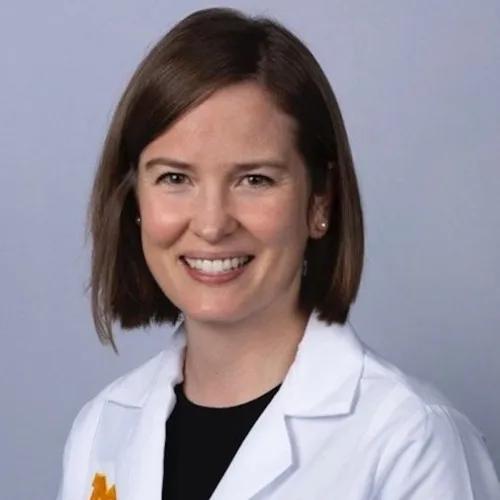
Hallie Christine Prescott, MD, MSC
To request an appointment call
Manage Your Profile
About
Dr. Hallie Prescott is an Associate Professor in Pulmonary & Critical Care Medicine at the University of Michigan and a staff physician the Ann Arbor Veterans Affairs Healthcare System. She completed pulmonary/critical care fellowship training in 2014 and currently attends in the Ann Arbor VA outpatient pulmonary clinic and medical intensive care unit, as well as the Critical Care Medicine Unit at Michigan Medicine. She has a master’s degree in healthcare research, with broad methodological expertise in quantitative, qualitative, and survey research methods. Her research program has leveraged nationwide Veterans Health Administration (VHA) data to answer clinically-important and policy-relevant questions. The primary focus of her research has been on sepsis care and outcomes. She serves as co-chair of the international Surviving Sepsis Campaign Guidelines and as lead for the Michigan Hospital Medicine Safety Consortium’s Sepsis Initiative. In addition to research on sepsis, Dr. Prescott has leveraged her clinical and methodological expertise to study a variety of topics, including hospital performance measurement and risk-adjustment methodology, COVID-19, VHA medication prescribing patterns, and interventional pulmonary procedures, among other topics. Her research contributions have been recognized by awards from American Thoracic Society, American Society of Clinical Innovation, Australia/New Zealand Intensive Care Society, and the Carol A. Kauffman MD Department of Internal Medicine Early Career Endowment Award (2019-2024) from the University of Michigan.
Locations
-
U of M Pulmonary 1500 E Medical Center Dr
Spc 5360
Ann Arbor, MI 48109-5360
Insurance Accepted
University of Michigan Health participates with most health insurance plans.
Education & Training
Medical School or Training
Residency
Fellowships
Board Certifications
Research Overview
Dr. Prescott conducts health services research to understand and improve the long-term outcomes of acute medical illnesses, drawing on the tools of ‘big data’ analytics and implementation science. Her initial focus is reducing the need for repeated hospitalization after severe sepsis, including an examination of hospital readmissions and healthcare utilization among sepsis survivors, with a goal of helping develop novel clinical interventions to improve recovery and reduce healthcare utilization among this population.
Featured News & Stories

NASCAR star’s death shows how sepsis can kill anyone if not caught

Surviving sepsis: New guidelines harness life saving evidence for treating adults
Switching inhalers could have good effects on the climate, but bad effects on health
Using data to drive sepsis care
