Toys and children’s products play an important role in childhood and child development. Toy-related injuries, however, are a significant contributor to hospital emergency room visits.
There are a number of things you can do to promote safe selection and use of toys in your household.
The first step—make sure what you have is safe.
Check every children’s product you own and be sure it hasn’t been recalled. Do not assume that if you have filled out the registration card you will be contacted if there is a safety problem or recall. Contacting consumers in case of a dangerous product is only required of car seat manufacturers and recalls are usually not well publicized. This leaves it up to you, the consumer, to seek out recall information.
Be cautious with used products and hand-me-downs.
Use caution when buying products at garage sales, thrift stores or resale shops. Some products for sale could be broken, recalled, or otherwise unsafe. A Consumer Product Safety Commission (CPSC) study revealed that nearly 70 percent of resale stores sold at least one hazardous product.
Know how to check and stay current on product recalls.
You can check with the Consumer Product Safety Commission (1-800-638-CPSC or 1-800-638-2772) to find out about kids’ products recalls. Remember that a product can be recalled at any time, even years after it came out.
Common hazards of children’s products
- Walkers: Walkers are very dangerous for babies. The American Academy of Pediatrics does not recommend the use of walkers. Contrary to popular belief, they do not keep babies safe. In fact, according to the CPSC, thousands of babies under 15 months are treated in the ER for baby walker injuries each year. The most serious injuries are caused by falling down the stairs. Research shows that walkers actually have no positive benefit for your baby and could delay motor development.
- Cribs: Take care to select a crib with safe features. Slats should be no more than 2 3/8 inches (6 centimeters) apart and no slats should be missing or cracked. The mattress should fit snugly, with no space between it and the crib walls. There should be no cutouts in the headboard or footboard. Cribs should not be placed near draperies or blinds where a child could become entangled and strangle on cords. Most crib-related deaths are due to crib defects or broken parts in older cribs.
- Infant bathtub seats: Bathtub seats are not safety devices. These are meant to help hold a baby up while bathing, but babies can slip down, or suction cups can detach, causing the baby to tip over and be trapped under water. Children should be supervised by an adult at all times while in the tub. Never leave a baby in water unattended. It only takes a moment for a baby to drown.
- Highchairs: Highchairs should have a wide base so they don’t tip over. When using a highchair, make sure the child is buckled in and the chair is positioned well away from anything that could be dangerous to your child (curtains, cords)
- Strollers: Be sure your stroller has a wide base so it won’t tip over. Do not hang diaper or shopping bags on your stroller because that could make it unstable. Don’t leave your children alone in a stroller or allow them to play with it.
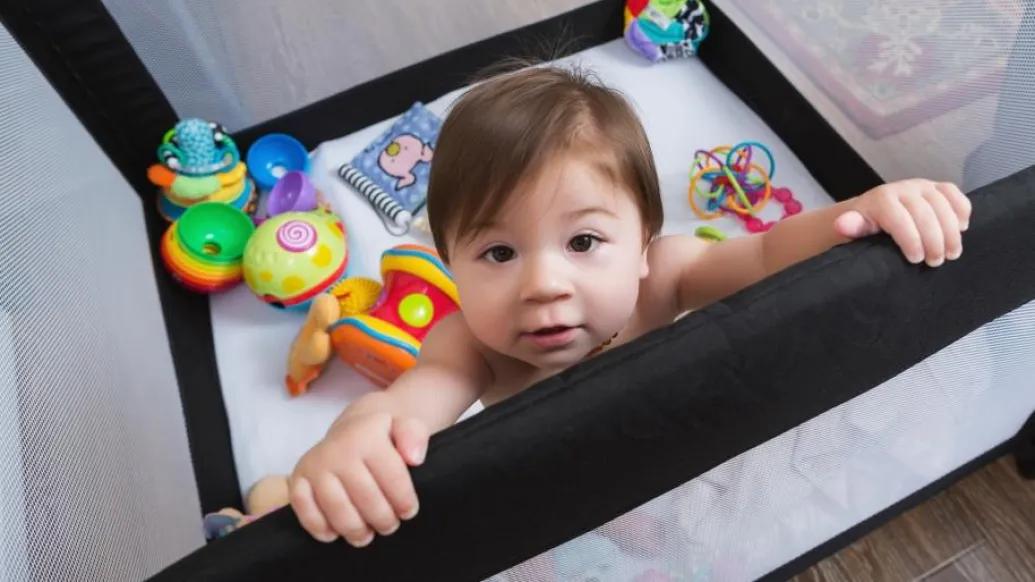
- Playpens: Playpens, portable cribs, and play yards with wooden bars like cribs should have bars less than 2 3/8 inches (6 centimeters) apart. Do not tie things on the sides of the pen because babies can strangle themselves. Many portable playpens have been recalled. Be sure to check whether yours is safe. Many parents use portable playpens as a crib. Like in cribs, babies can suffocate in soft bedding or added mattresses or cushions.
- Thrift store baby equipment: Use extra caution if purchasing used baby equipment. Always check for recalls and inspect for safety. Use this thrift store safety checklist as a starting point when buying from thrift stores, garage sales, or using hand-me-downs. Never buy a used car seat.
Toy safety
The most important thing to remember about toy safety is to always supervise your kids when they are playing.
Follow age guidelines that are marked on packaging.
Specific potential dangers include:
- broken toys
- toys with small, loose, or broken parts
- loose strings, ribbons, or ties
- toy weapons with shooting parts
- water toys that are not approved as flotation devices
- electrical plug-in toys
- riding toys (including tricycles and scooters) used without helmets
Some children's toys contain dangerous chemicals such as lead, other heavy metals, or toxic plastic additives. Keep in mind that toy chests can smash fingers or trap a child’s head if the heavy lid closes suddenly.
Be sure toys with small parts that may belong to an older child are safely stored out of sight and out of reach of younger children. Placing them within sight but out of reach may only tempt younger children to climb furniture or attempt to pull things off dressers and shelves.
Choking hazards
Anything that can fit in a child’s mouth is considered a choking hazard. Believe it or not, balloons cause more childhood deaths than any other toy. Any substance that can take the shape of a child’s windpipe or airway (like balloons or disposable diaper stuffing) is a dangerous choking hazard. Most people don’t realize it but children ages 3–6 are still at risk for choking on balloons and other toys.
Additional resources:
- How to buy safe toys (AAP)
- Children’s Health (Consumer Reports)
- More info about children's product safety and recalls (Kids in Danger)
- Tips for choosing a safe crib (AAP)
- Kids and choking hazards (Your Child)
- Tips for safe sleep for babies (Your Child)
- Toy safety podcast (U-M)
- Tiny batteries, big danger for kids (U-M Health Blog)
- Bike safety (Your Child)
Reviewed by Shanti Kandavel, MD, and Sara Laule, MD
Updated February 2018

Health Lab
Explore thousands of health news & research stories by visiting the Health Lab homepage for more.
Media Contact

Public Relations
Department of Communication at Michigan Medicine
Stay Informed
Want top health & research news weekly? Sign up for Health Lab’s newsletters today!
Featured News & Stories
Safe sleep for babies
Spring and Summer Safety

Summer Camp

Vaccine Safety

PFAS Contamination