Constipation happens when children have infrequent – occurring less than every three days in preschool and school-aged children – bowel movements or stools. It also occurs when children have bowel movements that are hard, dry, or difficult and/or painful to pass, even if they have bowel movements several times per week.
Soiling is the unintentional leakage of liquid or formed stool in underwear. Soiling (or “accidents”) occurs because there has been constipation and, over time, a build-up of stool – called an impaction – accumulates in the rectum (the end part of the large intestine). When constipation and impaction have gone on for many months, changes happen in the muscles and nerves in the rectum such that many children cannot feel the need to go and are not able to stop stool that may leak out involuntarily.
Constipation and soiling are common health problems in children. It occurs in 3 to 4 of every 100 children at the preschool age and 1 to 2 of every 100 children at school age.
Causes of constipation
- Diets that are too low in fiber
- Not drinking enough fluids
- Not taking enough time to sit and try to pass stool on a routine basis
- Painful experiences around stool passage
- Withholding of stool as a result of past discomfort
- Medications that are constipating
- Having low muscle tone, neuromuscular problems, and/or developmental delay
- Family pattern of slower bowel function
Symptoms of constipation
- Infrequent bowel movements
- Bowel movements that are hard, dry, or difficult and/or painful to pass
- Pain while having a bowel movement
- Abdominal pain
- Nausea
- Traces of liquid or clay-like stool in the child's underwear
- Soiled underwear
- Blood on the surface of hard stool
- Poor appetite
- Cranky behavior
- Fear of having a bowel movement (leg crossing, clenching of the buttocks, twisting of the body)
- Urine accidents and/or frequent urinary tract infections
Treatment for constipation
More than half of the children who have functional constipation and soiling recover after 6–24 months of closely following these treatment recommendations:
- Medical evaluation
- Educating yourself and your child about the constipation problem
- “Clean out” with laxative medication if there is an impaction of stool in the rectum
- “Maintenance Program” where you and your child work together to take medications, achieve positive toileting behaviors, track stool outputs, and increase dietary fiber and clear fluids
- Wean off laxative medication support while maintaining progress in diet and behavioral areas
For constipation that does not respond to the above treatments, consider an evaluation with a specialist in pediatric gastroenterology, behavioral pediatrics, and/or pelvic floor physical therapy.
What behavioral steps can I take with my child?
- Write down all stool outputs (in toilet or accident) on a chart or calendar.
- A successful maintenance program is 1–2 comfortable, mushy stools each day and no soiling “accidents.” Keep up the good work!
- The risk for re-impaction occurs when your child has stools less than every three days, hard and/or large stools, and soiling “accidents.” Review the chart with your healthcare provider.
- Start positive toileting routines. Many children with chronic constipation and soiling cannot feel the urge to pass stools. Therefore, have regular toilet sitting times to help your child have their outputs in the toilet and avoid soiling accidents. It takes patience and positive attention to help children build successful toileting routines.
- Direct your child tosit on the toilet 2–4 times per day
- Choose times for sitting which can be routine and calm. Sitting after meals takes advantage of the normal gastro-colic reflex to produce stool.
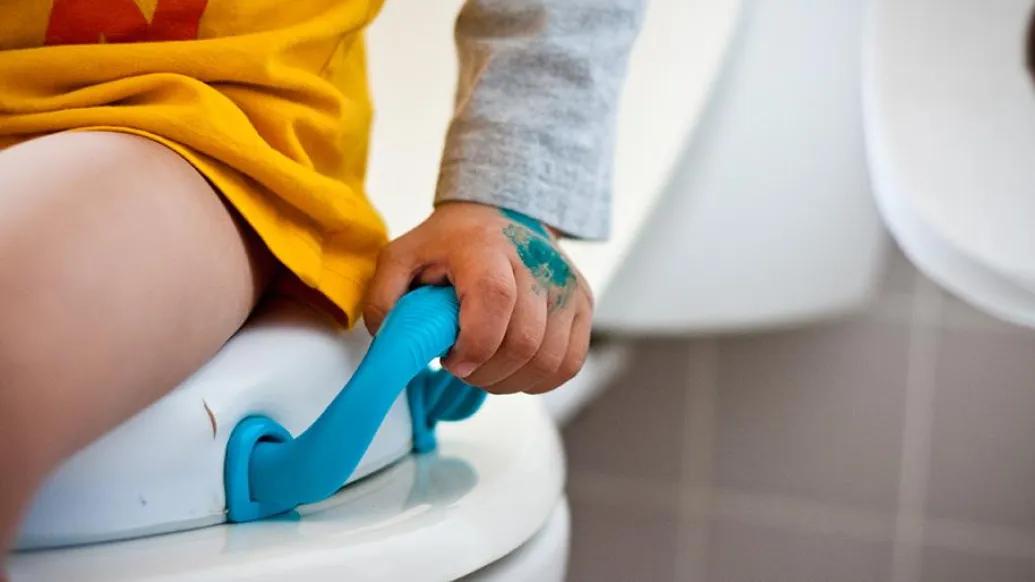
- When your child is sitting on the toilet, be sure his/her feet are firmly placed on a flat surface. This will help your child push out stools. If using an adult-sized toilet, a foot stool may be needed.
- Check to see if your child has his/her hands on their knees. Holding on to the toilet seat may increase muscle tension at the pelvic floor and make it harder to pass stool comfortably and completely.
- Work toward a sit time of about 5 minutes.
- Maintain a positive outlook. Privileges and incentive programs are often useful and needed for motivating a child to learn new toileting behaviors.
Constipation and diet
- Increase dietary fiber to your child's age in years +5 every day. For example, a 5-year-old child should have 10 grams of fiber each day. Good fiber choices include fiber-rich breads, crackers, cereals, fruits and vegetables. Keep a fiber in foods guide handy for quick reference.
- Make sure your child is drinking enough clear fluids. The goal is about two ounces of clear fluids for each gram of fiber that you target for your child each day. The best clear fluid is water.
- Discuss the need for laxative medications for clean out and maintenance with your doctor.
Additional resources:
- The Poo in You – Constipation and Encopresis Educational Video (GIKids.org and the NASPGHAN Foundation)
- What Causes Constipation? (Peekaboo Kidz)
- Clouds and Clocks: A Story for Children Who Soil by Matthew Galvin (book)
- Everyone Poops by T. Gomi (book)
- It's Potty Time, Learning Through Entertainment (DVD)
- Once Upon a Potty, Barron's Educational Series, Inc. (DVD)
Written by Priyanka Rao, MD
Reviewed by Haley Neef, MD
Updated by Sydney Ryckman, MD, January 2022

Health Lab
Explore thousands of health news & research stories by visiting the Health Lab homepage for more.
Media Contact

Public Relations
Department of Communication at Michigan Medicine
Stay Informed
Want top health & research news weekly? Sign up for Health Lab’s newsletters today!
Featured News & Stories
Back-to-school anxiety: 6 ways to fight the fear
Safe sleep for babies

Navigating Mental Health Resources

10 Tips for New Parents
Croup