Uveitis (Iritis)
Uveitis (Iritis)
What is uveitis (Iritis)?
Uveitis means inflammation of the uvea, or the middle layer of the eye. The uvea consists of three structures: the iris, the ciliary body, and the choroid. Inflammation occurring in any of these three structures is termed "uveitis."
Inflammation in uveitis may involve any but not necessarily all of these three structures. Depending upon which structures are inflamed, uveitis may be further categorized into one of three main diagnoses:
- Iritis or anterior uveitis
- Intermediate uveitis
- Choroiditis or posterior uveitis
Appointment Information
For more information or to make an appointment, call 734-763-5874.
What are the symptoms of uveitis?
In uveitis, different combinations of these symptoms may be present, depending on which part of the eye is inflamed, including:
- Redness
- Light sensitivity
- Floaters
- Blurry vision
- Pain/tenderness to touch
The symptoms described above may not necessarily mean that you have uveitis. However, if you experience one or more of these symptoms, contact your ophthalmologist for a complete exam.
Causes
Uveitis may develop following eye trauma or surgery, in association with diseases that affect other organs in the body, or may be a condition isolated to the eye itself. Common conditions associated with uveitis include: sarcoidosis, rheumatoid arthritis, ankylosing spondylitis, lupus, and Behcet's disease. Uveitis often results from infectious causes.
How is uveitis diagnosed?
When evaluating a patient with uveitis, a battery of blood tests may be ordered in an attempt to find a systemic cause. If necessary, patients are sent to a rheumatologist for additional evaluation. When no cause can be found, the condition is described as “idiopathic.”
Severe visual loss can result from untreated or undertreated uveitis, including glaucoma, macular edema, iris scarring, retinal damage, and cataract formation. Early detection and treatment is necessary to reduce the risk of permanent vision loss.
How is uveitis treated?
Treatment for uveitis may include steroid eye drops, injections, or pills, as well as eye drops to dilate the pupil and reduce pain. More severe cases of uveitis may even require treatment with chemotherapeutic agents to suppress the immune system.
Locations
-
Ophthalmology Clinic | Brighton Center for Specialty Care 7500 Challis Rd
Entrance 1, Level 2
Brighton, MI 48116-9416Get Directions -
Ophthalmology Clinic | Kellogg Eye Center-Grand Blanc 3181 E Grand Blanc Rd
Grand Blanc, MI 48439-2709Get Directions -
Ophthalmology Clinic | Northville Health Center 39901 Traditions Dr
Floor 2
Northville, MI 48168-9493Get Directions -
Retina & Uveitis Clinic | Kellogg Eye Center 1000 Wall St
Elevator B Floor 2
Ann Arbor, MI 48105-1912Get Directions
Doctors

Cagri Giray Besirli, MD, PhD
Associate Professor
Ophthalmology

Grant Michael Comer, MD, MS
Clinical Associate Professor
Ophthalmology

Susan Gail Elner, MD
Professor
Ophthalmology

Emily Ann Eton, MD
Clinical Assistant Professor
Ophthalmology

Abigail Teich Fahim, MD, PhD
Associate Professor
Ophthalmology

Thomas Wright Gardner, MD, MS
Professor
Ophthalmology

Michael Jacob Huvard, MD
Clinical Assistant Professor
Ophthalmology

Mark W Johnson, MD
Professor
Ophthalmology

Shilpa Kodati, MBBS
Assistant Professor
Ophthalmology

Jason Matthew Lewis Miller, MD PhD
Assistant Professor
Ophthalmology







News & Stories
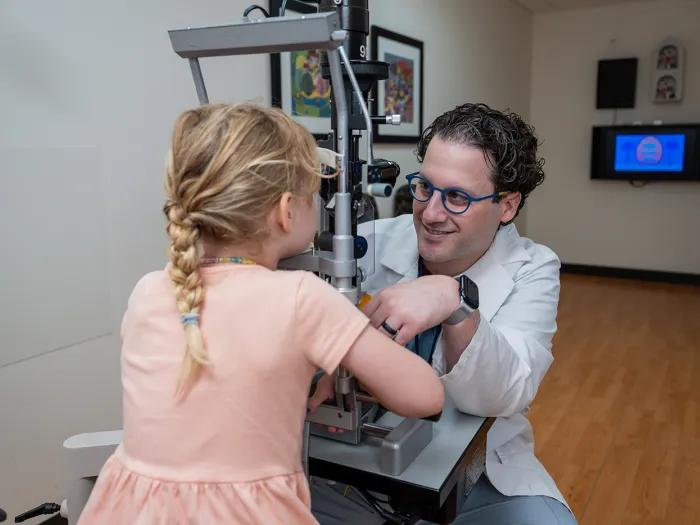
Innovative children’s vision research gets a boost from the Knights Templar Eye Foundation

Nerf gun accident causes retinal detachment in pediatric patient

Kellogg care inspires gift to vision research

Mediterranean diet can slow progression of age-related macular degeneration

Patient with retinitis pigmentosa receives new hope at Kellogg’s low vision clinic