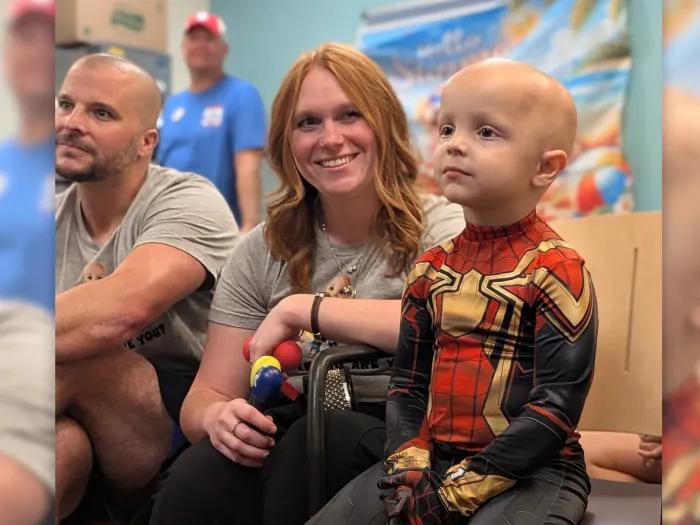
Pediatric Palliative & Complex Care
A palliative care or complex care team provides comfort and support to children and their family as they cope with a serious illness, injury or complex medical condition.
Your Michigan Answer for Pediatric Palliative and Complex Care
When your child is living with a serious or complex medical condition, you deserve care that supports not just their health, but your entire family.
At University of Michigan Health C.S. Mott Children’s Hospital, our pediatric palliative and complex care teams help your family focus on having the best quality of life possible. We bring together multiple teams to provide comprehensive support to a child and their caregivers, focusing on the physical, psychological, social and spiritual needs of patients with serious illnesses. We know that all families are unique, and our team will get to know your child, your family and your priorities, so that we may provide an extra layer of support and find you the most helpful resources.
Serious illnesses in children may include cancer, heart and lung conditions, genetic or neurologic disorders, and many others and are typically defined as life-threatening. Children may be diagnosed with serious illness prior to or around the time of their birth or may develop a serious illness or injury at any point throughout their childhood or adolescence. Our Stepping Stones Pediatric Palliative Care program helps patients and their families - from newborn to young adults - including families coping with a serious diagnosis during pregnancy.
Complex care is focused on children who have multiple medical problems going on at the same time. These patients often need extra organization and management and a multidisciplinary approach. Most children with complex care needs are followed primarily by their pediatrician or family doctor, with help from other medical subspecialists. For some of the most complicated patients, C.S. Mott Children’s Hospital has a program that combines complex care and palliative care, called Partners for Children – Little Heroes League.
Pediatric hospice care focuses on care for children who are anticipated to be in the last several months of their life. Hospice care is delivered by agencies outside of the hospital system. The pediatric palliative care team may work closely with a hospice team in cases where those services are appropriate and desired by the patient and family. The teams work together with the patient and family to determine what care makes the most sense at that point in their illness and provide resources to remain at home if that is desired. In some cases, hospice care can be provided with therapies designed to treat serious illness. This type of care is referred to as concurrent care. This unique care model is different than adult hospice and can be discussed further with the pediatric palliative care team. See our Grief Support section for helpful information related to the loss of family member or child.
No family should have to face serious illness alone. Here, you’ll find expertise, compassion, and a team fully committed to supporting your child—and your family—through every moment that matters.
Looking for a Doctor or Location?
Give to Pediatric Palliative Care
Your generosity ensures the most effective services alongside each child’s medical care, from pregnancy through early adulthood. Donations help us provide individualized care tailored to each family’s goals and values.
Our Expertise Includes

Help Support Kids at Every Stage of Illness
Visit our Pediatric Palliative Giving page to learn more about how to support patients and families facing complex and life-threatening medical conditions
News & Stories

From 20 seizures a day to more time for play: How personalized epilepsy care helped young patient
More babies with hypoplastic left heart syndrome surviving critical period between surgeries
Distance, insurance, social factors may hinder access to lifesaving heart monitoring for children

Continuing the legacy of a doctor’s doctor

A pediatric epilepsy fundraiser that changes lives