Overflow Tearing
Overflow Tearing
What is overflow tearing?
Overflow tearing, a common birth condition in infants, occurs due to a narrowing or blocking of the canaliculus, a part of the nasal lacrimal drainage system. The blocked system can spontaneously open within a few months of birth, or it can be surgically opened. Overflow tearing can also occur when the child's eyelashes stick together after sleep, a situation that can cause one or both eyes to become chronically infected; or when environmental elements irritate the eye.
What causes overflow tearing?
Overflow tearing occurs when a membrane covering the tear duct inside the nose fails to open at or before birth, thus clogging the nasal lacrimal draining system.
Risk Factors: This is a very common birth condition.
Appointment Information
To schedule an appointment, please call 734-764-7558.
What are the symptoms of overflow tearing?
Symptoms include excessive tearing. The symptom may not necessarily mean that you have overflow tearing. However, if you experience this symptom, contact your eye doctor for a complete exam.
How is overflow tearing diagnosed?
This condition is often diagnosed by a thorough history and physical examination. A fluorescein dye may be instilled by a drop into the eye to see how well the tears drain.
How is overflow tearing treated?
Initially, your doctor may recommend antibiotic eye drops or ointment used once or twice daily, along with pressure (or massage) over the tear sac. To apply this pressure, the adult caregiver places a finger under the inner corner of the eye next to the nose, and rolls over the bony ridge, pressing down and in. After applying this pressure on the tear sac, the antibiotic can be placed in the eye.
Surgery
If the tearing persists, it may be necessary for the ophthalmologist to open the tear ducts by probing and irrigation.
A thin, blunt metal wire is gently passed through the nasal lacrimal drainage system to open any obstruction, and fluid is then irrigated through the system. Infants experience no pain after the probing, but some blood-tinged tears or nasal secretion is common. A discharge from the eye may be present for up to a week and antibiotics may be prescribed. Obstruction can recur, and if so, a repeated probing may be needed. If probing is not successful, plastic or silicone tubes can be placed into the drainage canals. This is a longer procedure than probing and requires a general anesthesia.
As with any surgical procedure, infection or bleeding can occur, or scarring can re-obstruct the opening, and require additional surgery.
Locations
-
Ophthalmology Clinic | Canton Health Center 1051 N Canton Center Rd
Canton, MI 48187-5097Get Directions -
Ophthalmology Clinic | River Place Office Building 1974 N Huron River Dr
River Place Offices
Ypsilanti, MI 48197-1654Get Directions -
Ophthalmology Oncology Clinic | W. K. Kellogg Eye Center 1000 Wall St
Elevator B Floor 3
Ann Arbor, MI 48105-1912Get Directions -
Pediatric Ophthalmology & Adult Strabismus Clinic | Kellogg Eye Center 1000 Wall St
Floor 1
Ann Arbor, MI 48105-1912Get Directions -
Pediatric Ophthalmology Clinic | Trinity Health Oakland Hospital Medical Office Building
44555 Woodward Avenue, Suite 405
Pontiac, MI 48341Get Directions
Doctors

Steven M Archer, MD
Professor
Ophthalmology
Monte Anthony Del Monte, MD
Professor Emeritus
Ophthalmology
Christopher Gappy, MD
Clinical Assistant Professor
Ophthalmology
Adam Brent Jacobson, MD
Clinical Associate Professor
Ophthalmology
Otana Agape Jakpor, MD, MS
Clinical Assistant Professor
Ophthalmology
Dolly Ann Padovani Claudio, MD
Clinical Instructor
Ophthalmology
Lev Prasov, MD, PhD
Associate Professor
Ophthalmology

Breanna Marie Tracey, MD
Clinical Assistant Professor
Ophthalmology

Grace Meng Wang, MD, PhD
Clinical Assistant Professor
Ophthalmology
Marguerite Cullen Weinert, MD
Clinical Assistant Professor
Ophthalmology
Providers
Courtney Amanda Dewey, OD
Clinical Assistant Professor
Optometry
Carlton J Foster, OD
Clinical Instructor
Optometry
Jacqueline Dinh Hoan My Nguyen, OD
Clinical Assistant Professor
Optometry
News & Stories
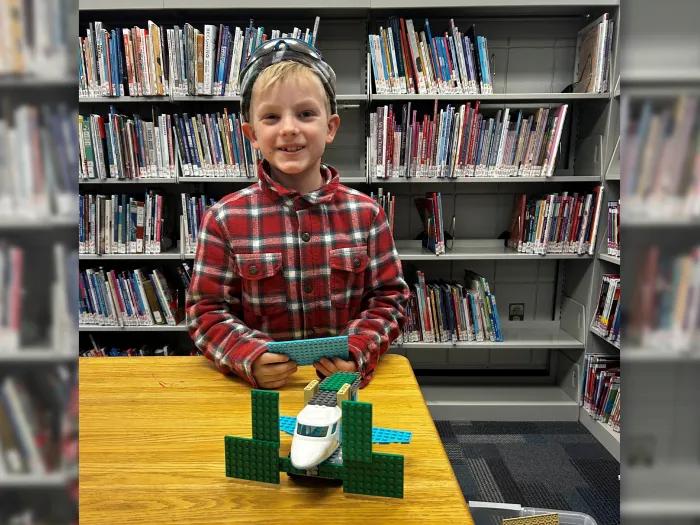
Nerf gun accident causes retinal detachment in pediatric patient

Patient with retinitis pigmentosa receives new hope at Kellogg’s low vision clinic

Medical students develop novel technological solutions for unmet patient needs

A new clue for aging eyes

Susan J. Lane: Gratitude and Giving