Keratitis (Corneal Ulcers)
Keratitis (Corneal Ulcers)
What is keratitis (corneal ulcers)?
Infectious keratitis and corneal ulcers refer to the invasion of an infectious organism into the cornea. These infections can involve any layer of the cornea and as a general rule, the deeper the corneal infection, the more severe the symptoms and complications.
Causes
A corneal ulcer usually occurs after corneal trauma or from an irregular ocular surface, which allows bacteria, fungus, or parasites to enter the cornea and cause an infection with inflammation.
Risk Factors
Trauma from a foreign body (including contact lenses), severe dry eyes, or eyelid disease can predispose patients to corneal infections. Contact lens overuse or poor contact lens hygiene also puts a patient at higher risk for such infections due to the bacteria and other organisms that can grow on the contact lenses, cases, and in re-used contact lens solution.
Appointment Information
For more information or to make an appointment, call 734-764-5106.
What are the symptoms of keratitis?
- Pain and eye irritation
- Eye redness
- Blurred vision
- Light sensitivity
- Discharge
How is keratitis diagnosed?
An eye care professional can diagnose a corneal infection during an eye exam. More severe ulcers may be sampled and sent to a lab for cultures to identify the offending organism. Occasionally, special imaging with a high-resolution microscope can be utilized to look for atypical organisms when infections do not respond to common treatments.
How is keratitis treated?
Minor corneal ulcers can usually be treated with anti-bacterial eye drops. If the problem is more severe, the patient may receive more intensive or specially formulated antibiotic drops to eliminate the infection. Occasionally, steroid eye drops are also used to reduce inflammation. In the case of suspected fungal or parasitic infection, a patient may receive special antibiotics specifically targeted at these organisms. After the infection is resolved, residual corneal scarring or thinning can occur, and occasionally procedures such as corneal gluing or corneal transplantation may be recommended. Early treatment may help reduce the risk of complications. Frequent visits to an eye care professional may be necessary for several months to eliminate the problem.
Locations
-
Cornea & Refractive Surgery Clinic | Kellogg Eye Center 1000 Wall St
Elevator B Floor 3
Ann Arbor, MI 48105-1912Get Directions -
Ophthalmology Clinic | Kellogg Eye Center-Grand Blanc 3181 E Grand Blanc Rd
Grand Blanc, MI 48439-2709Get Directions -
Ophthalmology Clinic | Northville Health Center 39901 Traditions Dr
Floor 2
Northville, MI 48168-9493Get Directions -
Ophthalmology Clinic | West Ann Arbor Health Center-Parkland Plaza 380 Parkland Plaza Ste 210
Floor 2
Ann Arbor, MI 48103-6201Get Directions
Doctors

Theresa M Cooney, MD
Clinical Associate Professor
Ophthalmology

Pauline Dmitriev, MD
Clinical Assistant Professor
Ophthalmology

Farida Esaa Hakim, MD
Clinical Assistant Professor
Ophthalmology

Christopher Thomas Hood, MD
Clinical Associate Professor
Ophthalmology

Shahzad Ihsan Mian, MD
Professor
Ophthalmology

Nambi Nallasamy, MD
Assistant Professor
Ophthalmology

Roni Mintz Shtein, MD, MS
Associate Professor
Ophthalmology

Hunson Kaz Soong, MD
Professor Emeritus
Ophthalmology

Alan Sugar, MD
Professor Emeritus
Ophthalmology

Angela Joy Verkade, MD
Clinical Assistant Professor
Ophthalmology

News & Stories
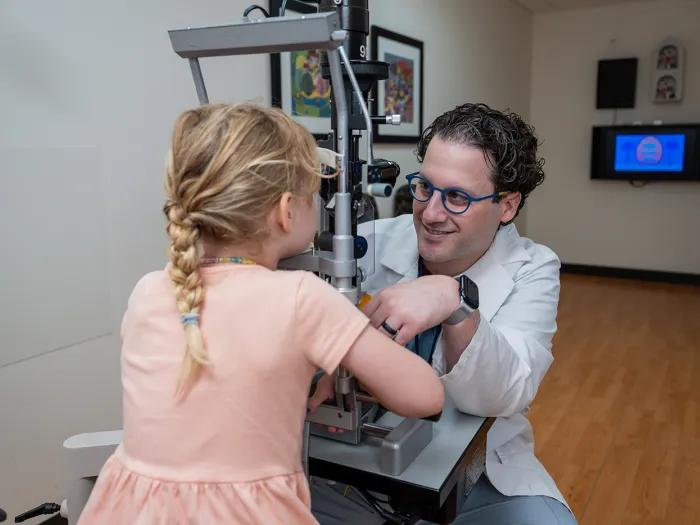
Innovative children’s vision research gets a boost from the Knights Templar Eye Foundation

Nerf gun accident causes retinal detachment in pediatric patient

Kellogg care inspires gift to vision research

Mediterranean diet can slow progression of age-related macular degeneration

Patient with retinitis pigmentosa receives new hope at Kellogg’s low vision clinic