After 46 years of service, Max S. Wicha, MD, founding director of the University of Michigan Rogel Cancer Center, will retire from the University of Michigan and move to emeritus status.
Wicha founded what’s now the Rogel Cancer Center in 1986 and shepherded it to its first National Cancer Institute cancer center designation in 1988. Two years later the center earned comprehensive status, which it has maintained since. Wicha was at the helm through six Cancer Center Support Grant renewals. When he stepped down as director in 2013, he was the longest-serving cancer center director in the country.
Under his leadership, the cancer center grew from a handful of employees in a trailer to a world-class program with a distinguished history of excellence and impact in research, education, clinical care, outreach and service.
“Dr. Wicha recruited me to the University of Michigan in 1995,” said current Rogel Cancer Center Director Eric R. Fearon, MD, PhD. “As part of the cancer center’s leadership team, I learned a great deal from him. Our center’s history of success, reputation and tremendous culture of collaboration, innovation and teamwork all have its foundation in his inspiring leadership.”
Many of the center’s most significant advances came directly from Wicha’s own laboratory and clinical experiences. He formed one of the first multidisciplinary breast cancer tumor boards in the country, creating the basis for the multidisciplinary care the Rogel Cancer Center provides today to patients across cancer types.
In the laboratory, he has made important contributions towards an understanding of the biology of normal breast development and breast cancer. Wicha, one of the world’s foremost cancer stem cell researchers, was part of the team that in 2003 initially identified stem cells in breast cancer, the first time they had been described in a solid tumor.
His lab has continued to advance understanding of the role cancer stem cells play in the development of cancer, treatment resistance and cancer recurrence, including translation to clinical trials testing potential therapies aimed at attacking cancer stem cells.
In 2016, Wicha’s vision led to a $17.5 million gift from Sidney and Madeline Forbes to launch the Forbes Institute for Cancer Discovery. The institute’s goal is to translate the most promising laboratory research into new therapies to benefit patients. As director, Wicha focused on high-risk, high-reward concepts, providing game-changing grants to faculty to fuel rapid development of innovative technology and new therapies.
Wicha earned his medical degree from Stanford University School of Medicine in 1974 and came to the University of Michigan in 1980. He was honored with Stanford’s J.E. Wallace Sterling Lifetime Achievement Award in Medicine in 2017. In 2019, he was awarded the Henry Russel Lectureship, U-M’s highest honor for senior members of its active faculty.
Wicha has a long history of bolstering the field of oncology by supporting both individuals and institutions. He served on the external advisory boards of more than a dozen other cancer centers, helping to create a strong network of collaboration among cancer centers. He worked to establish endowed professorships at U-M, enabling the cancer center to recruit high-caliber faculty. He started Rogel’s Cancer Research Committee, which reviews all internal grants, and has chaired or served on the committee for 43 years.
In the 2022 issue of Rogel’s Illuminate magazine, Wicha recalled how different the field of oncology was when he began his career:
“When I first got into this field about 40 years ago, I went for advice to someone who was very senior in medicine. I said I want to go into cancer research and become an oncologist. They looked at me and said, ‘Why would you want to waste your life on that? We’re not going to make progress against cancer. It’s the least scientific of any discipline. Go into some other field where you can really use science,’” Wicha said.
“Of course, that turned out to be completely wrong. … Personally, it’s been such a privilege, and I’ve been so fortunate to have been in oncology during this phase when it went from a primitive discipline to being a scientific discipline making huge advances.”
Wicha’s retirement is effective Oct. 31, at which point he will move to an active emeritus appointment and will step down as director of the Forbes Institute. As emeritus, Wicha will remain an active principal investigator on several current grants, as well as on a program project grant submission with colleagues from five other cancer centers. He will also continue mentoring and philanthropy efforts.
“What I’m most proud of in my career has been establishing the cancer center and seeing how thousands of patients benefited from the coordinated care and the great discoveries coming out of this program,” Wicha said. “Also, witnessing the success of people I’ve trained has been wonderful, both in the laboratory and in the clinics. Watching how well they’ve done feels like a tremendous accomplishment.”
In This Story
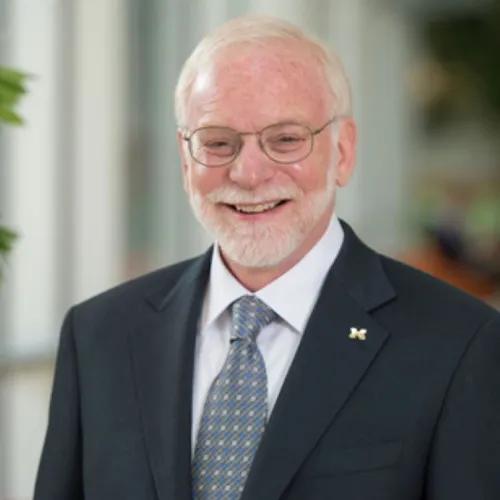
Max S Wicha, MD
Professor
Featured News & Stories
Online resources and coaching helped people seek genetic testing for cancer
‘Molecular glue’ stabilizes protein that inhibits development of non-small cell lung cancer and uterine cancer

Exceptional response to immunotherapy gives patient with liver cancer more milestones to celebrate
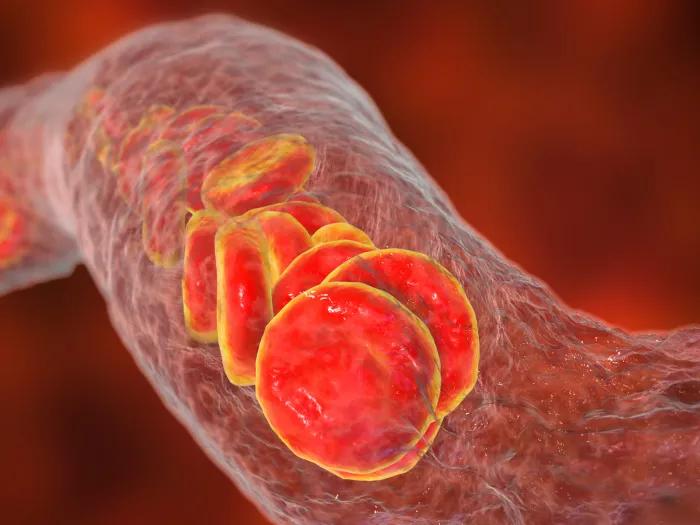
FDA-approved drug offers hope for patients with polycythemia vera, a rare bone marrow disorder

Pediatric patient treated for rare kidney cancer