Surgery patients now less likely to get opioids – but decline has slowed
Opioid prescriptions from surgeons still average 44 pills, suggesting efforts to right-size prescribing are still needed
11:00 AM
Author |
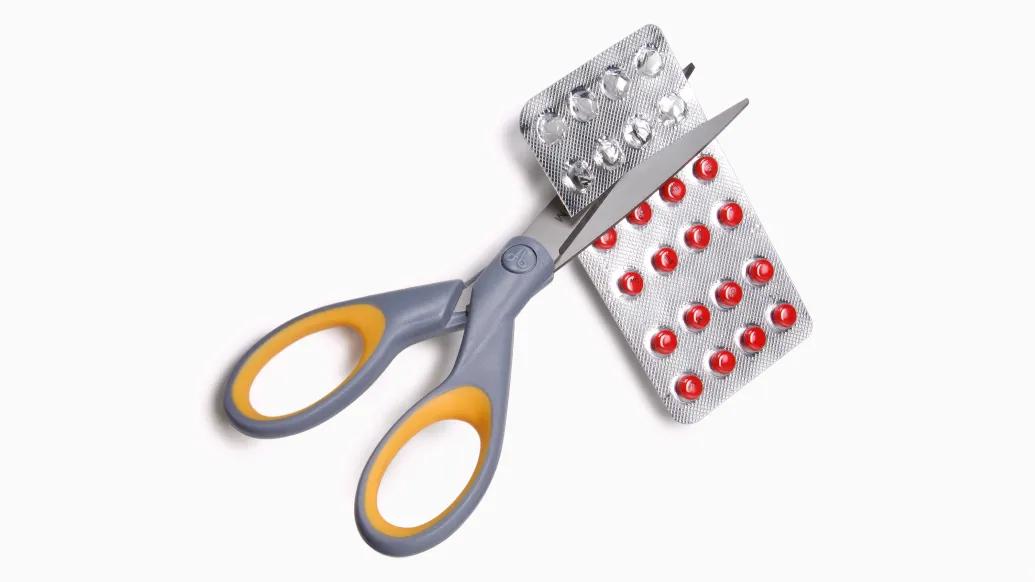
Post-surgery pain relief has shifted away from opioid-containing medications over the past seven years, but the downward trend has slowed since 2020, a study shows.
Overall, the rate of surgery-related opioid prescriptions dropped by 36% from 2016 to the end of 2022, and the average amount of opioids in those prescriptions dropped by 46%, the study of pharmacy data finds.
That combination of declines means that the total amount of opioids dispensed to surgical patients in late 2022 was 66% lower compared with early 2016, according to the findings published in JAMA Network Open by a team from the University of Michigan.
But the rate of decline was much faster before the pandemic, the researchers report after comparing surgical opioid patterns before and after 2020.
That’s even after they took into account the unusual circumstances of spring 2020, when most elective surgery temporarily stopped to free up hospital capacity for COVID-19 patients and reduce unnecessary exposure to the SARS-CoV-2 virus.
SEE ALSO: An innovative pharmacy service for pain management
Even with the overall declines, American surgery patients in late 2022 still received the equivalent of 44 5-milligram pills of hydrocodone from pharmacies after their operations on average.
That’s far higher than what patients need for most procedures.
“These data suggest surgical teams have substantially reduced opioid prescribing, but also suggest that efforts to right-size opioid prescriptions after surgery must continue,” said Kao-Ping Chua, M.D., Ph.D., the senior author of the study and an assistant professor of pediatrics at U-M.
He worked with first author and former U-M research assistant Jason Zhang, who’s now in medical school at Northwestern University.
The researchers also find that some types of surgeons have reduced the amount of opioids dispensed to patients more than others.
For instance, reductions were particularly large in cardiothoracic surgery and ophthalmology.
Orthopedic surgeons still account for more than half of all surgical opioids dispensed to American patients, even as the rate and size of prescriptions filled by their patients dropped.
Right-sizing prescribing
The authors note that surgeons should not strive to eliminate opioid prescribing altogether.
“The goal should be to ensure that opioids are only prescribed when necessary, and that the amount of opioids prescribed matches the amount that patients need,” said Zhang.
“Achieving these goals could help reduce the risk of opioid misuse, persistent opioid use, and diversion of pills to other people besides the patient.”
These data suggest surgical teams have substantially reduced opioid prescribing, but also suggest that efforts to right-size opioid prescriptions after surgery must continue."
Kao-Ping Chua, M.D., Ph.D.
The potential for accidental exposure to opioids by others in the household, and interactions between opioids and other substances including alcohol and prescription drugs, are other reasons to focus on non-opioid surgical pain care.
SEE ALSO: How one state beat national surgery opioid trends
Chua and colleagues have studied procedure-related opioid prescribing multiple times, including a recent study showing that the reduction in the rate of dental opioid prescribing has similarly slowed in recent years.
They have worked with the Michigan Opioid Prescribing Engagement Network to develop prescribing guidelines for adult and pediatric surgical care.
Surgical organizations and the Centers for Disease Control and Prevention have advised surgeons to rely less on opioid-based acute pain relief for their patients since the mid-2010s.
But no studies have examined surgical opioid prescribing trends using pandemic-era data.
The study is based on data from a company called IQVIA that tracks prescriptions dispensed at 92% of United States pharmacies.
In addition to Chua and Zhang, the study’s authors include the network’s co-directors Jennifer Waljee, M.D., M.P.H., M.S., and Chad Brummett, M.D., as well as Thuy D. Nguyen Ph.D., Amy S. Bohnert Ph.D., and Mark Bicket, M.D., Ph.D. All except Zhang are members of the U-M Institute for Healthcare Policy and Innovation, and Brummett and Bohnert co-direct the U-M Opioid Research Institute.
Chua is a member of the Susan B. Meister Child Health Evaluation and Research Center in the Department of Pediatrics, which also provided some of the funding for the study.
The study reported in this press release was funded by the National Institute on Drug Abuse of the National Institutes of Health (DA057284, DA056438, DA048110), the Benter Foundation and the Michigan Department of Health and Human Services. The content is solely the responsibility of the authors and does not necessarily represent the official views of the National Institutes of Health.
Paper cited: “Opioid Prescribing by US Surgeons, 2016-2022,” JAMA Network Open. DOI: 10.1001/jamanetworkopen.2023.46426

Health Lab
Explore thousands of health news & research stories by visiting the Health Lab homepage for more.
Media Contact

Public Relations
Department of Communication at Michigan Medicine
Stay Informed
Want top health & research news weekly? Sign up for Health Lab’s newsletters today!
Featured News & Stories

Top 7 tips for choosing Medicare prescription drug coverage for 2027

U-M Board of Regents approves construction of Nathan and Catherine Forbes Sports Medicine Institute

Many older adults make Medicare decisions quickly and most don’t change plans, poll finds
What’s the latest on 7-OH and kratom availability and addiction care?

Many hospitals still don’t do enough to prevent UTIs from catheters