New Michigan laws make storing firearms safely more important than ever
Firearm owners, parents of kids and teens, and loved ones of anyone at higher suicide risk should take immediate action to prevent injury and death
2:53 PM
Author |

Originally published April 2023 and updated February 2024; updated February 2025 and March and October 2026 to include new data and resources
Several new laws are now in effect in Michigan that aim to reduce the toll of firearm injuries and deaths across the state, by requiring guns to be stored securely in any location where young people might be present, allowing firearms to be removed temporarily from the homes of people considered to be at high risk, and more.
As of February 2024, firearm owners whose weapons end up in the hands of a young person who shoots themselves or someone else could face prison time or major fines. The firearm owner could face charges and a fine even if the gun is never fired, but gets into the hands of a young person who shows it to someone.
Also new: police officers, health care professionals, mental health professionals, family members, roommates, current and former partners, and others who are concerned that someone may harm themselves or others can seek a court order to remove their firearms temporarily.
This is called an extreme risk protection order, and is sometimes referred to as a "red flag" law. In 2025, the first full year the law was in effect, a report shows that individuals filed for protection orders under the law 504 times, and that courts ruled 407 times that the individual should temporarily surrender their weapons.
Michigan also now has laws that add background check requirements for purchasing or inheriting a rifle or long gun, and that prohibit people convicted of certain domestice violence offenses from possessing a firearm.
In 2022, University of Michigan researchers showed that for first time, firearms had become the leading cause of death among young people age 1 to 19 in the United States, starting in 2020.
Their work was highlighted in a U.S. Surgeon General's advisory in 2024. Other researchers have confirmed that the trend has continued using more recent data.
Meanwhile, national data show that firearm suicide rates have reached record highs. About half of all suicide deaths involve a firearm, and suicides account for half of all firearm-related deaths in the U.S.
U-M research also shows that firearm-related hospitalizations rose sharply after the start of the COVID-19 pandemic, reversing a downward trend that had been going on for several years.
All of this makes it more important than ever for Michiganders who own firearms to take steps to store them safely, either with gun locks or in locked storage with ammunition stored separately, say experts from the University of Michigan.
Gun locks are available for free from most law enforcement agencies and from local health departments, and for a low cost from retailers. Veterans can receive a cable-style gun lock for free at any VA facility. Locked storage boxes are also available from retailers.
“Even if you don’t live with a child or teen, or a person with a high risk of suicide, simple storage changes can prevent tragedy,” said Patrick Carter, M.D., co-director of the U-M Institute for Firearm Injury Prevention and an emergency physician at Michigan Medicine, U-M’s academic medical center.
New tools available for Michiganders
In early 2026, on the second anniversary of the new laws' taking effect, the U-M institute and the state of Michigan unveiled M-Flip, a new online toolkit and assistance program to help communities, organizations and individuals across the state understand and implement the new laws.
Michigan Medicine in 2022 signed on to the Hospitals United campaign, which promotes safe storage and encourages parents to ask about firearm storage in homes where their children are going to play. That effort grew into the Agree to Agree campaign launched in 2025 and focused on finding common ground to reduce the impact of gun violence on children and teens across all communities in the U.S.
Safe storage success
The Psychiatric Emergency Services team at Michigan Medicine has given away hundreds of free gun locks, through a program for patients who seek emergency mental health care at U-M. The team also asks nearly every patient and family they see about firearm ownership and offers information on safe storage.
Said John Kettley, L.M.S.W., the chief social worker for the Department of Psychiatry’s emergency team, "We hope that other mental health, emergency and primary care providers will consider adding detailed screening and education for their patients, no matter what their diagnosis."
Even if you don’t live with a child or teen, or a person with a high risk of suicide, simple storage changes can prevent tragedy."
- Patrick Carter, M.D.
Victor Hong, M.D., who formerly directed U-M Health's emergency psychiatry service and is now associate director for Adult Psychiatry Hospital Services, said “Our efforts to conduct a more thorough assessment of firearm safety for our patients are bearing fruit. We are having more active discussions and coaching sessions with families about the risks of having unsecured firearms and what some options are for safe storage. These discussions are approached from a non-judgmental stance to facilitate an open conversation, and in an effort to facilitate a change in behavior.”
Free firearm safety help available from U-M and others
To help the public and health care providers take action to reduce firearm injury risks of all kinds, visit and use the following resources:
- U-M Institute for Firearm Injury Prevention - Resources for Communities
- Michigan's firearm safety laws including background check requirements
- ERPO ("red flag") toolkit
- Safe firearm storage toolkit
- Family Guide to Home Firearm Safety
- Michigan Firearm Storage Requirements and Penalties: An easy-to-understand guide to the new law, from the Michigan Department of Health and Human Services
- Make your home suicide-safer: A brochure from U-M Psychiatry on many ways to reduce access to lethal means, including firearms, if someone in the household has expressed suicidal thoughts, has attempted suicide or has a mental health concern.
- Nine ways to prevent firearm tragedies near you: A guide from Michigan Medicine and the U-M firearm institute on specific steps that anyone can take, whether or not they own firearms.
- Podcasts on firearm injury prevention topics: Produced by areas of U-M for a general audience.
- Online learning about firearm injury prevention and safe storage: Web-based videos and classes for free use by anyone, from the U-M firearm institute.
- Firearm Counseling for Clinicians and Safe Storage for Clinicians: Videos for clinicians who want to address these issues with patients, created by the FACTS Prevention Research Consortium based at U-M.
- How can we reduce the firearm death toll in older adults?: A Michigan Medicine article and video featuring Carter discussing safe storage and other prevention topics.
- What More Could We Do to Prevent Veteran Suicides? Results of a survey conducted by researchers from Michigan Medicine and the VA Ann Arbor Healthcare System.
- Firearm Policy Briefs on the evidence related to safe storage laws and other topics, from the U-M firearm institute.
Accelerating firearm injury research
With the establishment of the U-M firearm institute in 2021, U-M has become a national leader in academic firearm research that seeks to reduce injury and death and inform policymakers while respecting individual rights.
For instance, a team of U-M researchers has helped Upper Peninsula families with teens increase safe-storage practices through tailored education. Other U-M research has shown that firearm purchases by families with teens grew during the pandemic.
While the new Michigan laws focus on safe storage of firearms around young people, one-third of all firearm deaths in the U.S. are among people over 50, with the vast majority of those deaths being suicides.
Men over age 75 have the highest rate of suicide of any age group, though a report from the Centers for Disease Control and Prevention shows that rates have risen in many age groups and among both men and women.
Carter’s research has shown that 24% of firearm owners over age 50, and 20% of those who have children living with them or visiting often, store at least one of their firearms loaded and unlocked. He has also studied older adults’ attitudes toward firearm injury prevention policies.
As Michigan policymakers consider other measures to reduce the toll of firearm injury, research by U-M teams is informing their work.
Anyone interested in receiving updates about firearm injury prevention research at U-M can join the institute's email list.

Health Lab
Explore thousands of health news & research stories by visiting the Health Lab homepage for more.
Media Contact

Public Relations
Department of Communication at Michigan Medicine
In This Story

Patrick M Carter, MD
Professor

Victor Y Hong
Clinical Associate Professor
Related

For rural firearm owners, Store Safely program offers options to enhance secure firearm storage
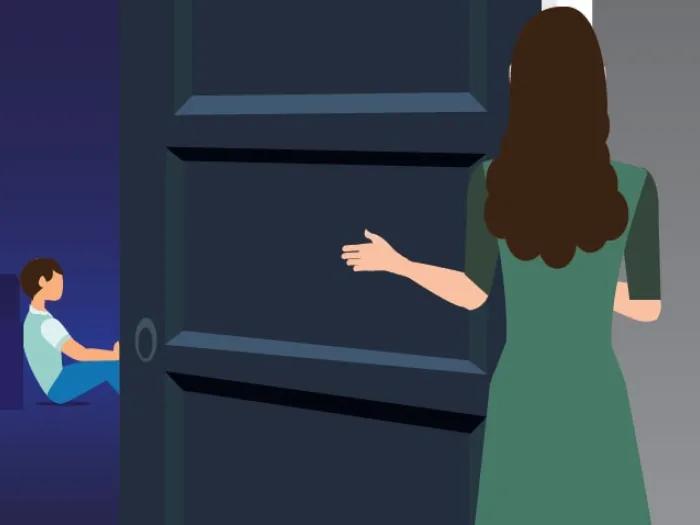
Preventing Teen Suicide: When to Remove Firearms from Your Home
Stay Informed
Want top health & research news weekly? Sign up for Health Lab’s newsletters today!
Featured News & Stories

Top 7 tips for choosing Medicare prescription drug coverage for 2027
Learning Together: Making Space for Growth at Work

Many older adults make Medicare decisions quickly and most don’t change plans, poll finds

What’s the latest on 7-OH and kratom availability and addiction care?

Depression in OBGYN residents needs more attention, study suggests