Many parents face challenges getting kids to eat a healthy breakfast before school
Time constraints, picky eating and morning moods are among the barriers parents report when trying to start the school day with a nutritious meal
5:00 AM
Author |
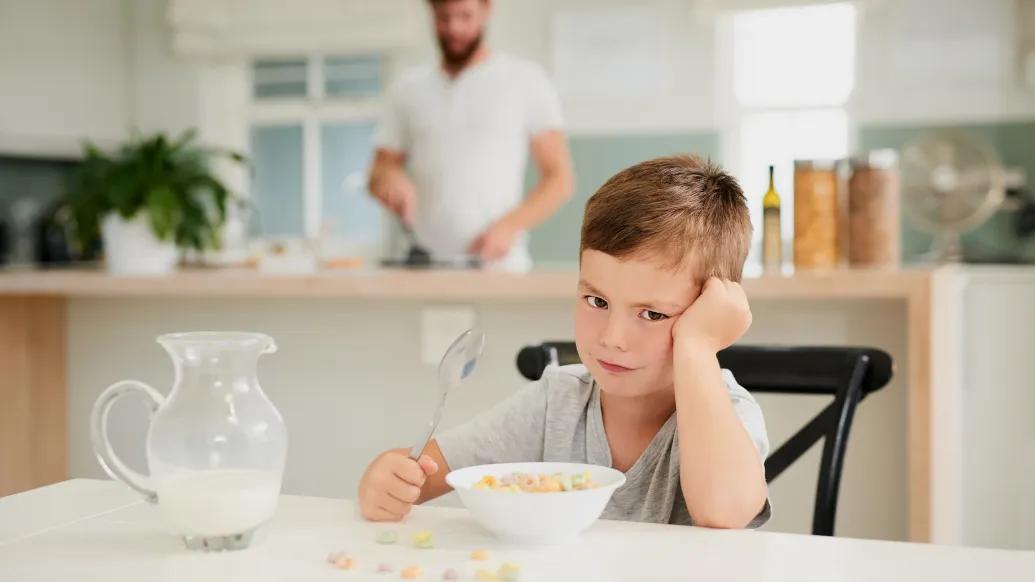
As families reset their back-to-school routines, getting children out the door isn’t the only challenge.
Making sure they eat a healthy breakfast can be a struggle, too.
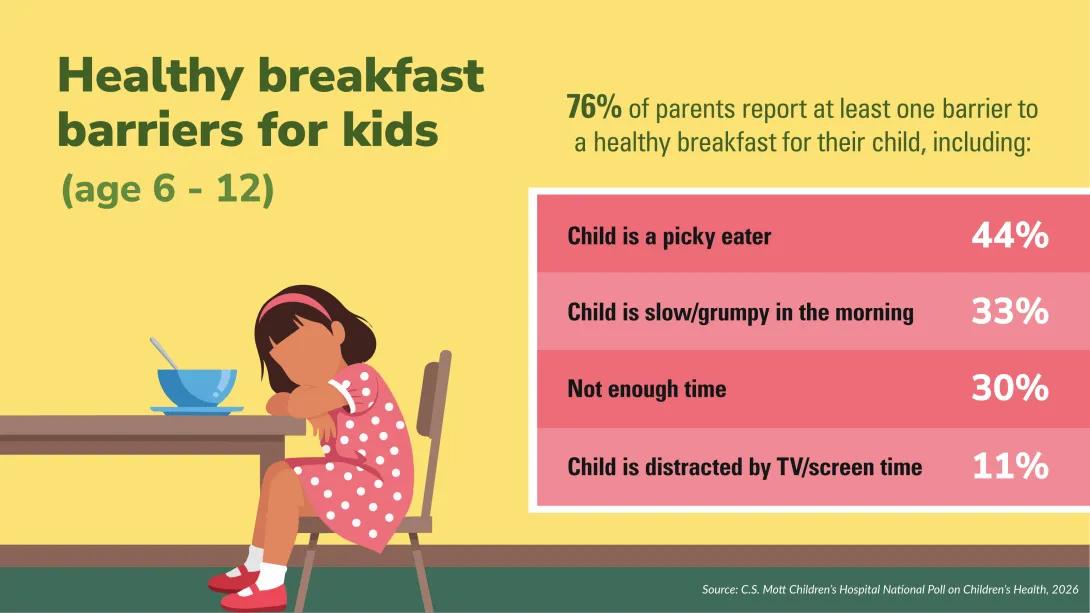
Three-quarters of parents report at least one barrier to their child starting the day with a healthy meal on a typical school day, according to the University of Michigan Health C.S. Mott Children’s Hospital National Poll on Children’s Health.
The most common challenges are picky eating, children being slow or grumpy in the morning and not having enough time to eat while fewer parents cited television or screen time as being a distraction.
About one in five parents also say their child’s breakfast rarely includes key nutritional components.
“Breakfast is an important opportunity to give children foods that can help them feel satisfied and ready to start their day, but families are often trying to make that happen in a short window of time,” said Mott Poll Co-Director and Mott Pediatrician Susan Woolford, M.D.
“The goal does not have to be a perfect breakfast every morning. Small, realistic changes that add protein, fiber or fruit to foods children already enjoy can make a difference.”
Most kids eat breakfast, but it may not be balanced
The nationally representative report is based on responses from 1,037 parents with at least one child age 6 to 12, surveyed in July.
Most children do eat breakfast on school days, with about two-thirds of parents saying their child typically eats breakfast at home while nearly one in four say their child eats at school.
Fewer say their child eats on the way to school or doesn’t usually eat breakfast.
There is no single breakfast routine that will work for every family. A realistic goal is to find foods that fit the family’s schedule, provide nutritional value and that a child will actually eat.”
-Susan Woolford, M.D.
But even when kids eat breakfast, time can be tight.
One in three parents say their child has 15 minutes or less for breakfast before school, nearly half say their child has 15 to 25 minutes to eat and about one in five say they have 30 minutes or more.
What children eat also varies, and key nutritional components are not consistently part of many children’s breakfasts, the poll suggests.
Less than half of parents say their child’s breakfast includes protein, fiber or whole or cut fruit most days of the week.
Meanwhile, only a third of parents say their child typically has a breakfast low in added sugar most days.
How parents choose breakfast foods
Parents polled place a high value on making breakfast appealing and manageable: more than two-thirds say it's very important to offer something their child likes, while two in five say quick and convenient foods are very important.
Another one in four parents place a high priority on foods their child can prepare independently.
Among parents whose children eat breakfast at home or on the way to school, a little more than half say their child usually decides what to eat.
When purchasing breakfast cereal, parents also most often consider their child’s preference, followed by nutritional content such as protein or fiber.
Other factors include calories or added sugar, cost and artificial coloring.
But parents who let children take the lead on the menu also report fewer days when breakfast includes protein, fiber or fruit or is low in added sugar.
“Children having a say in what they eat can be a positive part of developing independence, but parents can still shape the choices that are available,” Woolford said.
“Instead of making breakfast a battle, parents should provide nutritious options and then let the child decide which of these foods they want to eat.”
Healthier breakfasts do not necessarily require more time, she notes.
Parents can keep convenient options such as fruit readily available or make simple changes to foods children already enjoy.
Whole grain bread can replace white bread, for example, or peanut butter can be added to toast.
A smoothie made with whole or cut fruit can also be an alternative to juice.
“Parents do not need to completely reinvent breakfast to make it healthier,” Woolford said.
“Even one small change could add nutritional value, like choosing a higher-fiber cereal, adding vegetables to an omelet or having a fruit along with their typical breakfast.”
Breakfast can be family time, too
Breakfast can also be an opportunity for family connection, although busy school mornings don't always make that possible.
About two-thirds of parents say their child typically eats breakfast with a sibling, while about half say they eat with a parent.
About one in six say their child typically eats breakfast alone.
If families need more time in the morning, Woolford suggests parents can consider preparing breakfast in advance when possible.
“There is no single breakfast routine that will work for every family,” she said.
“A realistic goal is to find foods that fit the family’s schedule, provide nutritional value and that a child will actually eat.”
Sign up for Health Lab newsletters today. Get medical tips from top experts and learn about new scientific discoveries every week.
Sign up for the Health Lab Podcast. Add us wherever you listen to your favorite shows.

Health Lab
Explore thousands of health news & research stories by visiting the Health Lab homepage for more.
Media Contact

Public Relations
Department of Communication at Michigan Medicine
In This Story

Susan J Woolford, MD, MPH
Associate Professor
Stay Informed
Want top health & research news weekly? Sign up for Health Lab’s newsletters today!
Featured News & Stories

A metabolic “switch” that could help reset scar-producing cells in scleroderma

Emergency room intervention pairs smartphone, telehealth counseling to reduce risky firearm behavior
Pain, psychological factors and physical function closely linked in people with systemic sclerosis

Many hospitals still don’t do enough to prevent UTIs from catheters

Rural-urban disparities in head and neck cancer