The growing use of hemp-derived alternative cannabis products containing CBD, Delta-8-THC, CBG, CBN
A lack of regulation around CBD, Delta-8 and other cannabinoids could open up consumers to harm
3:20 PM
Author |
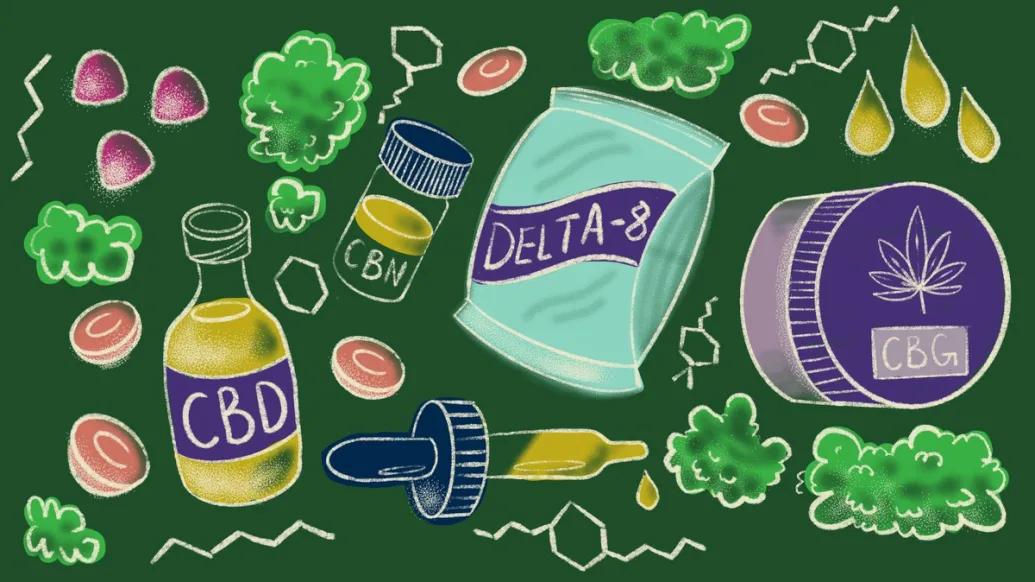
Cannabis use for medicinal or recreational purposes is now permitted is most states in the United States.
Many of the products sold in dispensaries contain delta-9-tetrahydrocannabinol (better known as “THC”), and are thus classified as Schedule I drugs, making them illegal under federal law.
However, there is a parallel market for products derived from hemp—defined as cannabis containing less that 0.3% THC—spurred in part by the passage of the 2018 Farm Bill, which removed hemp-derived cannabinoids from the federal Controlled Substances Act.
A Michigan Medicine study published in JAMA Network Open examines past-year use of some of these hemp-derived cannabinoids, including cannabidiol, Delta 8-THC, cannabigerol and cannabinol.
“While the de-scheduling of hemp products initially opened up the market for CBD products, it also applies to the 100-plus cannabinoids also found in the plant.
“That means, as with CBD, all of them can follow that same path and be sold in gas stations, as ingredients in cosmetics, as well as in dispensaries—there will likely be substantial proliferation of some of these compounds,” said Kevin Boehnke, Ph.D. of the Chronic Pain and Fatigue Research Center and the Department of Anesthesiology at the University of Michigan Medical School.
Using a census-representative sample of adults from the National Opinion Research Center AmeriSpeak panel, Boehnke and his colleagues examined knowledge of and past-year use of the most popular hemp derived cannabinoids.
Overall, 72% of participants had heard of CBD, while fewer had heard of delta-8-THC (41%), CBG (18%), or CBN (17%).
Similarly, 21% reported using CBD in the past year, compared with 12% for delta-8-THC, 5% for CBG and 4% for CBN.
Furthermore, people living in states without legal medical or recreational cannabis laws had higher rates of using delta-8-THC.
“Delta-8-THC purportedly has quite similar effects to delta-9-THC, better known as THC. In other words, there is a loophole where people in states without legal cannabis can get high legally on delta-8-THC.
“It makes sense then that people who don’t have access to regulated markets would be more likely to use it,” said Boehnke.
However, use of these alternative cannabinoids is concerning, says Boehnke, because these products are largely unregulated and have inadequate safety testing for contaminants like pesticides and solvents.
Further, many may not contain the amounts listed on the label.
“Not only are people with medical conditions being sold products with uncertain therapeutic effects, but these products may contain contaminants that are harmful,” said Boehnke.
He adds that without a basic framework ensuring adequate laboratory testing for safety, alternative cannabinoid products could be putting people, especially young people, at risk.
Additional authors include Adrianne R. Wilson-Poe Ph.D., Tristin Smith M.P.H., Michael R. Elliott Ph.D., and Daniel J. Kruger Ph.D.
Wilson-Poe reported receiving grants from the Good Samaritan Foundation of Legacy Health during the conduct of the study and personal fees from Vectura Fertin outside the submitted work. Kruger reported receiving funding from the State of Michigan Veteran Marijuana Research Program and the New York State Office of Addiction Services and Supports during the conduct of the study and outside the submitted work. Boehnke reported receiving from National Institutes of Arthritis, Musculoskeletal, and Skin Diseases of the National Institutes of Health, Tryp Therapeutics, and the State of Michigan Veteran Marijuana Research Program and personal fees from the Medical Cannabis Research Advocacy Alliance outside the submitted work.
Citation: “Past-year use prevalence of cannabinoids CBD, CBG, CBN, and delta-8-THC in the United States,” JAMA Network Open. DOI: 10.1001/jamanetworkopen.2023.47373
Sign up for Health Lab newsletters today. Get medical tips from top experts and learn about new scientific discoveries every week by subscribing to Health Lab’s two newsletters, Health & Wellness and Research & Innovation.
Sign up for the Health Lab Podcast: Add us on Spotify, Apple Podcasts or wherever you get you listen to your favorite shows.

Health Lab
Explore thousands of health news & research stories by visiting the Health Lab homepage for more.
Media Contact

Public Relations
Department of Communication at Michigan Medicine
Stay Informed
Want top health & research news weekly? Sign up for Health Lab’s newsletters today!
Featured News & Stories
Top 7 tips for choosing Medicare prescription drug coverage for 2027

Comprehensive DNA sequencing reveals hidden drivers of cancer
‘Molecular glue’ stabilizes protein that inhibits development of non-small cell lung cancer and uterine cancer

Many older adults make Medicare decisions quickly and most don’t change plans, poll finds
What’s the latest on 7-OH and kratom availability and addiction care?