1 in 3 parents fear their teen or young adult could cause a crash
More than half of parents polled have witnessed at least one unsafe driving behavior by their child, but most still say their child drives as well as or better than peers
5:00 AM
Author |
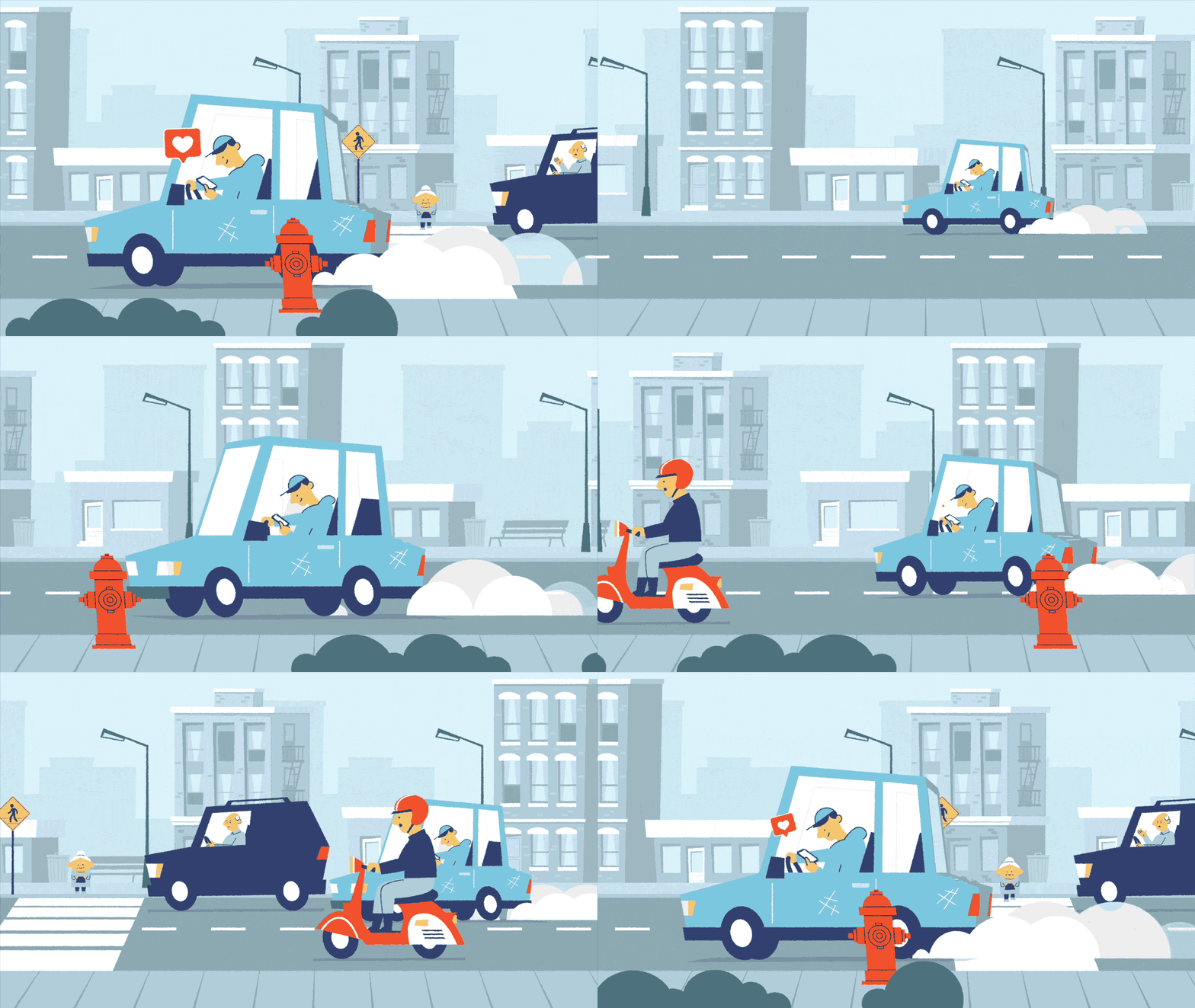
Motor vehicle crashes remain a leading cause of death for teens and young adults, yet many families may underestimate the risks close to home, suggests a new national poll.
One in three parents worry their teen or young adult driver could cause an accident, according to the University of Michigan Health C.S. Mott Children’s Hospital National Poll on Children’s Health.
Yet, nearly all parents believe their child drives as well as or better than other young drivers and relatively few said they imposed consequences for unsafe driving behaviors.
“Our report suggests a disconnect between parents’ concerns about risky teen driving and their confidence in their own child’s skills behind the wheel,” said Mott Poll Co-Director Sarah Clark, M.P.H.
Risky behaviors are common
The nationally representative report includes responses from 1,780 parents with children ages 16 to 25 surveyed in February.
Most parents report their teen or young adult drives, and nearly two-thirds say their child drives almost every day.
More than half of parents say they have witnessed at least one unsafe driving behavior by their child.
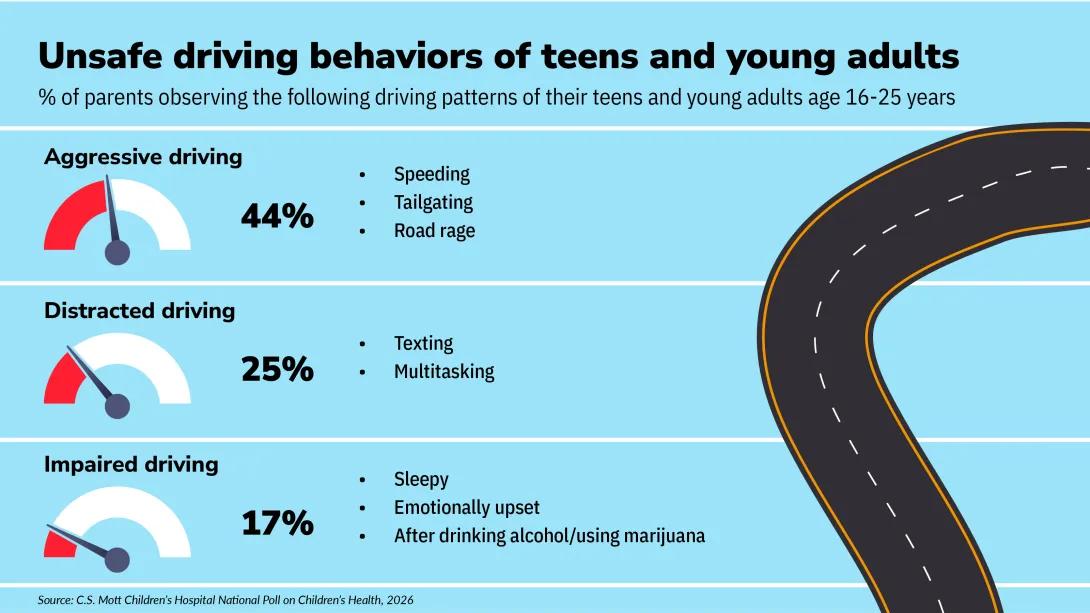
Nearly half have seen aggressive driving such as speeding or tailgating and one in four have observed distracted driving, including texting or multitasking.
Another 17% of parents have seen their child drive while impaired, including while sleepy, emotionally upset or under the influence of alcohol or marijuana.
“Distracted, impaired and aggressive driving are major contributors to crashes,” Clark said.
“Even behaviors that seem minor, like glancing at a phone or driving while exhausted, can significantly slow reaction time and increase crash risk.”
Parents of young adults ages 21 to 25 are more likely to report distracted or impaired driving than parents of teens ages 16 to 20.
Confidence outweighs concern
Despite these observations, 96% of parents rate their child’s driving as average or better compared to peers.
Only 4% say their child is a worse driver than others their age.
Parents are often the most influential driving instructors their teens will ever have. Setting clear expectations, modeling safe driving and enforcing consequences when needed can make a real difference.”
– Sarah Clark, M.P.H.
Even parents who have observed distracted or impaired driving tend to give their child similar ratings to those who have not seen such behaviors.
And parents who have witnessed aggressive driving were actually less likely to rate their child as a worse driver than peers.
“Many parents do not connect risky driving behaviors to being a good driver,” Clark said.
“Often, parents engage in these same risky driving behaviors and may not view them as dangerous.”
Few parents take action
While one in three parents express worry about their young driver sharing the road, only one in four report taking steps to address their child’s driving behavior.
Actions include installing monitoring devices, restricting driving privileges, refusing access to a family car or threatening to stop paying for car insurance.
Experts emphasize that parental involvement remains critical, especially as driver education requirements vary by state and some allow online instruction or do not require formal driver’s education at all.
While most states have hands-free laws and prohibit texting while driving, Clark notes, other distractions like eating, grooming or interacting with passengers remain widespread and risky.
As teens and young adults gain independence on the road, Clark encourages families to have ongoing conversations about safe driving and to take concerns seriously before a preventable tragedy occurs.
“Parents are often the most influential driving instructors their teens will ever have,” Clark said.
“Setting clear expectations, modeling safe driving and enforcing consequences when needed can make a real difference.”
Sign up for Health Lab newsletters today. Get medical tips from top experts and learn about new scientific discoveries every week.
Sign up for the Health Lab Podcast. Add us wherever you listen to your favorite shows.

Health Lab
Explore thousands of health news & research stories by visiting the Health Lab homepage for more.
Media Contact

Public Relations
Department of Communication at Michigan Medicine
In This Story
Sarah J Clark
Research Scientist
Stay Informed
Want top health & research news weekly? Sign up for Health Lab’s newsletters today!
Featured News & Stories

Continuing the legacy of a doctor’s doctor

U-M-led consortium to receive up to $52 million in NIH funding to study why viral respiratory infections affect children differently

Many older adults make Medicare decisions quickly and most don’t change plans, poll finds

Many hospitals still don’t do enough to prevent UTIs from catheters

What’s changing in Medicaid and what can you do?