Varicose Veins
Varicose Veins
What are varicose veins?
Varicose veins, a form of venous disease, are large, "rope-like" veins, often one-quarter inch or larger in diameter. While any vein can become varicose, those most likely affected are on the thighs and lower leg. Varicose veins affect about half of all people age 50 and older, and 15 to 20 percent of all adults.
Varicose veins involve the superficial venous system (as opposed to the deep system) and occur when veins do not properly return blood from the lower leg to the heart. All veins have valves that open to allow the flow of blood to the heart and close to prevent backflow (or "reflux") of blood to the foot. When valves fail to function properly, blood leaks through and flows down the leg in the wrong direction. The blood overfills the superficial veins under the skin, resulting in the bulging seen in varicose veins.
Appointment Information
Visit our Make an Appointment page for more information.
Symptoms & Causes
Varicose veins can develop without a clear cause or as a result of chronic venous insufficiency. These veins can cause significant itching, throbbing, pain, burning and discomfort. Varicose veins can also clot, bleed and increase the risk of deep vein thrombosis (DVT). If not treated varicose veins can enlarge over time and become increasingly symptomatic and cosmetically unappealing.
How are varicose veins treated?
Treatment for varicose veins will include medical management (compression stockings, intermittent leg elevation, and exercise) and often procedures:
- Venous Ablation: Venous ablation is a minimally invasive treatment option to treat patients suffering from varicose veins or chronic venous insufficiency. We offer a variety of procedures including laser, radiofrequency (RFA, VNUS procedure), chemical injections (VenaSeal, Varithena) and pharmacomechanical ablation (ClariVein).
- Open Phlebectomy: An oupatient procedure where small incisions are made to remove varicose veins.
- Powered (TRIVEX) Phlebectomy: An outpatient surgery where only a few small incisions are made to remove extensive networks of large varicose veins.
- Perforator Treatment: An oupatient surgery to treat incompetent perforator veins through laser ablation, chemical injection or open ligation.
- Sclerotherapy: An office based procedure (Northville Health Center, Brighton Center for Specialty Care, East Ann Arbor Medical Procedures Unit) where a chemical injection is used to treat spider, reticular or varicose veins.
Locations
-
East Ann Arbor Surgery & Medical Procedures Center 4270 Plymouth Rd
Ann Arbor, MI 48109Get Directions -
Vascular Surgery Clinic | Frankel Cardiovascular Center 1425 E Ann St
Floor 3 Reception B
Ann Arbor, MI 48109-5856Get Directions -
Venous Management Clinic | Brighton Center for Specialty Care 7500 Challis Rd
Entrance 1, Level 2
Brighton, MI 48116-9416Get Directions -
Venous Management Clinic | Frankel Cardiovascular Center 1425 E Ann St
Floor 3 Reception B
Ann Arbor, MI 48109-5856Get Directions
Doctors

Andrea Tara Obi, MD
Associate Professor
Vascular Surgery, Surgery
Providers
Christine Elizabeth Edwards, NP, DNP
Advanced Practice Nurse
Nurse Practitioner
Clare Helen Harris, NP
Advanced Practice Nurse
Nurse Practitioner, Nurse Practitioner - Primary Care, Nurse Practitioner - Adult Health
News & Stories
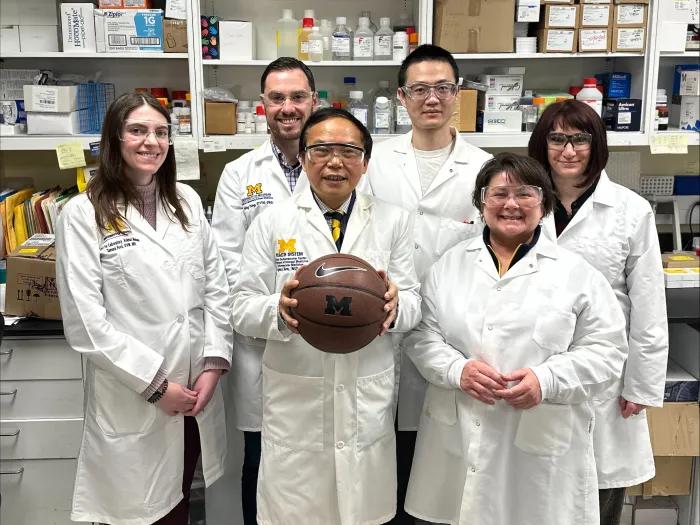
A night of two national titles for U-M, as scientists and basketball players both triumph

After 25 procedures and constant fainting, patient finds long term relief

Longtime Michigan football announcer makes call on heart health
Protecting your lungs during wildfires

Greenspace and Late-Life Cognitive Decline