
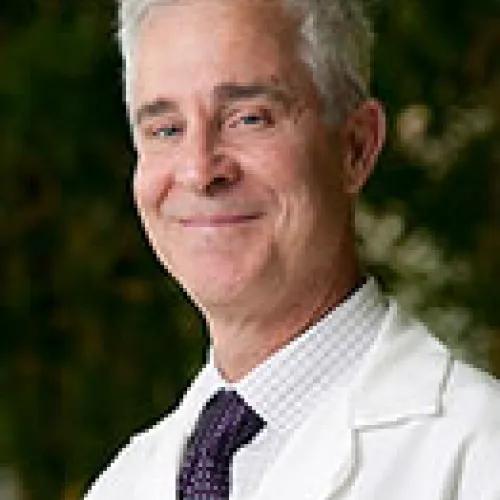
Jeffrey S Warren, MD
To request an appointment call
Manage Your Profile
About
Jeffrey Warren, M.D. is the Aldred S. Warthin Endowed Professor in the Department of Pathology at the University of Michigan. Dr. Warren graduated from Miami University (Oxford, Ohio) (A.B. Zoology, 1976) and from The Ohio State University College of Medicine (M.D., 1980). Dr. Warren’s postgraduate training included an internship in Internal Medicine at Indiana University Medical Center (1980-1981), Pathology residency training at Indiana University (Anatomic and Clinical Pathology, 1981-1985), and an Immunopathology research fellowship at the University of Michigan (1985-1987). He joined the University of Michigan faculty as an Instructor in the Department of Pathology in 1987.
Dr. Warren became an Assistant Professor in 1988 and was promoted to Associate Professor in 1993 and Professor in 1999. In 1997, he was named the Aldred Scott Warthin-Carl Vernon Weller Endowed Professor of Pathology (renamed the Aldred Scott Warthin Endowed Professor of Pathology in 2006). Dr. Warren has served as Director of the Clinical Immunology Laboratory since 1989 and served as Director of the Division of Clinical Pathology/Clinical Laboratories from 1993-2013. He has served in many leadership positions within the Department of Pathology, the University of Michigan Medical School and the UMHS as well as within state and national professional organizations.
Dr. Warren’s academic interests are described in the preceding section. Formal and informal teaching as well as research mentorship have been an important focus. In addition to curricular and clinical medical student, resident and fellow training, Dr. Warren has mentored more than 30 students (undergraduate, medical, postdoctoral and fellowship) in laboratory-based research training. He received the 1994-95 and 2004-05 University of Michigan Pathology Resident Teaching Awards.
Areas of Practice
Clinical Immunopathology, complement, immunodeficiency disorders.
Locations
-
U of M Pathology 1500 E Medical Center Dr
Ann Arbor, MI 48109-5000
Insurance Accepted
University of Michigan Health participates with most health insurance plans.
Education & Training
Medical School or Training
Residency
Fellowships
Board Certifications
Research Overview
Much of Dr. Warren’s career has focused on study of pathophysiologic mechanisms of immune complex vasculitis, granulomatous vasculitis and the role of iron in atherogenesis. These studies have been carried out using in vitro endothelial cell-based and in vivo murine and rat model systems. This work has been largely funded by the NIH and the American Heart Association and led to more than one hundred publications.
In the past several years, Dr. Warren has directed his research to the development of a laboratory-driven systems approach to the ascertainment of patients who may harbor yet-to-be-recognized or defined primary immunodeficiency disorders (PIDDs) and the study of more effective utilization of clinical laboratory testing resources in patient care. The former includes the development of a “scan, flag and filter” algorithm in which selected demographic variables, pathology result report key words, quantitative lab test results and discharge diagnosis codes (ICD-10) are used to scan sets of patient data in order to identify individuals with not yet diagnosed PIDDs – in a maximally sensitive and specific manner. In addition, this work has entailed the development of mock patient data sets that allow for testing and optimal algorithm development. The latter work has entailed the creation of a laboratory formulary and the study of effective lab test utilization.
