Study outlines a new framework for direct cell reprogramming
The approach, if successful, could be useful in treatments for patients with blood cancers and more
5:00 AM
Author |
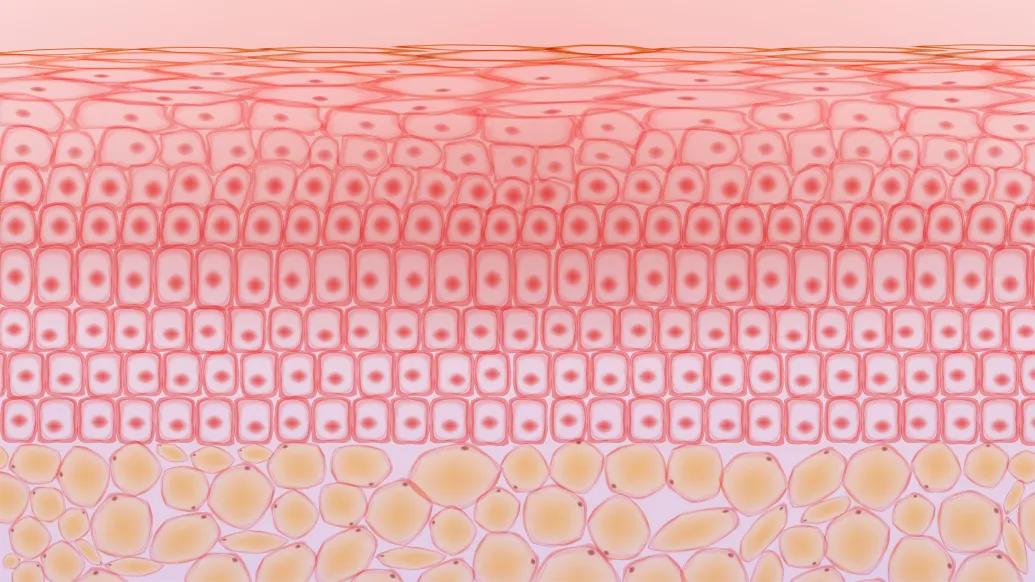
Our bodies may seem like an endlessly renewing collection of cells, but some cell types are finite resources that can be depleted in illness and during treatment.
To regain depleted cells, scientists are testing cell reprogramming: taking a cell and turning it into a different cell type.
But finding the correct pathway to reprogram a cell can be a massive challenge.
In a new paper published in the journal iScience, Lindsey Muir, Ph.D., and her lab propose a framework for direct cell reprogramming.
For example, skin cells can, in principle, be reprogrammed into hematopoietic stem cells, the blood-forming cells that reside in bone marrow and support a healthy immune system.
This would be a useful treatment for patients with blood cancers.
Chemotherapy kills cancer cells but can also wipe out the immune system. Bone marrow cells are needed to rebuild it.
Typically, physicians would rely on bone marrow from a donor, but a matching donor can be hard to find.
Reprogramming a patient’s own skin cells would negate the need for a donor.
A similar method, indirect cell reprogramming, has been used for the same purpose but presents its own challenges.
This process is done in a lab, taking cells from the host and returning them to a stem-cell-like state before pushing them to the target type.
This can take months, while direct reprogramming skips the intermediate step and only takes weeks.
“We understand indirect reprogramming much better than we do direct reprogramming,” said Jillian Cwycyshyn, a Ph.D. student in biomedical engineering and co-first author of the paper.
“There's still a lot we don’t know about how direct reprogramming works, and we need to better understand the mechanisms in order to make it work better and more accurately.”
The challenge of direct cell reprogramming is finding the correct path to take.
The framework proposed in this paper removes most of the guesswork from this process.
Transcription factors are proteins that switch genes on and off, and in doing so they set a cell’s identity.
The human genome encodes roughly 1,500 to 1,800 of them, and reprogramming a cell takes four or five.
The possible combinations run well into the trillions.
“If we can narrow that search space to a reasonable set, then we can screen from that set,” said Muir, Research Assistant Professor in the Department of Computational Medicine & Bioinformatics.
“Or even better, we may be able to computationally predict the exact set that's most likely to promote this conversion.”
The research was performed in partnership with iReprogram, Inc., a company founded by Muir and Indika Rajapakse, Ph.D., Professor of Computational Medicine & Bioinformatics, Mathematics, and Biomedical Engineering.
The team at iReprogram has built software that predicts transcription factor recipes, with the objective of producing the specified target cell type.
The new framework is one way to put those predictions to the test.
“It gives us a more standardized approach to testing out different recipes, hopefully increasing throughput,” Muir said.
“We want to get to the point where we can generate a cell type on demand and then have that be useful for therapeutic purposes.”
Future studies in the Muir lab will test more predictions from iReprogram.
Their goal is to apply this framework in collaboration with several other U-M labs to create cell types, such as pancreatic beta cells, that can cure and restore lost function in diabetes.
“If we can create a framework for the field that's useful, that other people can then take and test, we can expand the number of approaches we're testing in parallel,” Muir said.
“From there, we will be able to cycle through what might work much, much faster.”
Additional authors: Cooper Stansbury, Sarah Golts, Hyunsu Lee, Joshua Pickard, Walter Meixner, Indika Rajapakse
Conflict of Interest Disclosure: Indika Rajapakse and Lindsey Muir are founders of and shareholders in iReprogram, Inc., which may benefit financially from the subject matter or materials discussed in this story.
Michigan Research Core(s): University of Michigan Advanced Research Computing RRID:SCR_027337, University of Michigan BRCF Advanced Genomics Core RRID:SCR_025788, University of Michigan BRCF Flow Cytometry RRID:SCR_026697, University of Michigan BRCF Vector Core RRID:SCR_026696
Paper cited: “Transcriptional landscape of direct reprogramming toward the hematopoietic lineage,” iScience. DOI: 10.1016/j.isci.2026.117266
Sign up for Health Lab newsletters today. Get medical tips from top experts and learn about new scientific discoveries every week
Sign up for the Health Lab Podcast. Add us wherever you listen to your favorite shows

Health Lab
Explore thousands of health news & research stories by visiting the Health Lab homepage for more.
Media Contact
Public Relations
Department of Communication at Michigan Medicine
In This Story
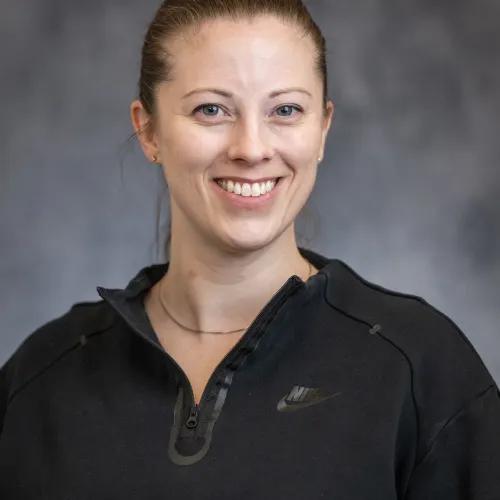
Lindsey A Muir, PhD
Research Assistant Professor
Stay Informed
Want top health & research news weekly? Sign up for Health Lab’s newsletters today!
Featured News & Stories
Applying engineering principles to biological studies could identify disease biomarkers more quickly

New insight into how lipodystrophy can affect overall health
FDA-approved drug offers hope for patients with polycythemia vera, a rare bone marrow disorder
Engineered nanoparticles sensitize gliomas to radiotherapy

Who’s at risk for painful periods?