Kidney & Pancreas Transplant
Kidney & Pancreas Transplant
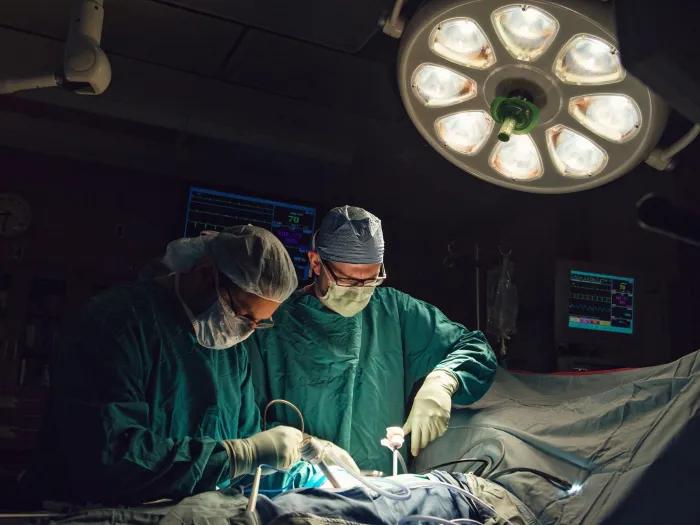
Kidney transplantation allows people with end stage kidney failure to avoid or eliminate the need for dialysis and prolong life. Pancreas transplantation is most often performed to improve the quality of life for people with Type 1 diabetes mellitus. Because severe Type 1 diabetes is often associated with chronic kidney failure, many people who could receive a pancreas transplant also need a kidney transplant, which is why we group kidney transplant and pancreas transplant together.
Our Approach
The University of Michigan Health Transplant Center is home to the first, largest and most advanced kidney transplant program in the state - and among the leading programs in the nation. We also have one of the oldest and most active pancreas programs in the country. Our transplant doctors have performed more than 5,400 kidney transplants since 1964, and more than 400 pancreas transplants since 1984. In addition, we offer services that are not widely available elsewhere, including a Paired Kidney Donation Program that uses organ-matching software developed at U-M Health to pair kidney donors with hard-to-match recipients. Learn more about our Living Donor Program.
Our outcomes for kidney and pancreas transplantation are in compliance with the Scientific Registry of Transplant Recipients. Our overall patient survival rate at one year is 98%, our kidney transplant survival for one year is 95%, and our pancreas graft survival for one year is 85-90%.
Are you interested in donating a kidney?
Begin the kidney donor process by submitting our Kidney Donor Interest Form (for donors).
Appointment Information
To make an appointment to evaluate your need for a kidney transplant or kidney-pancreas transplant, call a patient care representative at 1-800-333-9013.
You can also select to self-refer by completing our online form.
About the Transplant Center
The opportunity for a new life occurs every day at the University of Michigan Health Transplant Center. And since 1964, more than 13,000 patients have benefited from our devotion to the individual.
What To Expect
If you would like to be considered for a kidney or pancreas transplant, you will receive a comprehensive evaluation. The process includes patient education, medical records review, patient examination, and often additional medical testing. You will meet with several members of the transplant team, including a transplant coordinator, nephrologist, surgeon, and social worker, and also attend an education class on transplantation. The evaluation appointment involves blood work, a chest x-ray, and an EKG.
Our multidisciplinary transplant team then reviews your case and decides whether you are a good candidate for transplant, and whether any additional testing may be required to establish your candidacy. If you are eligible, our goal is to list you within 90 days of your evaluation. Watch our video to learn more about the financial and insurance aspects of kidney transplants.
Each member of the multidisciplinary team is a specialized expert dedicated to transplant patients. That includes our subspecialist radiologists. Our Biopsy Clinic is open five days a week, and we perform approximately 20 kidney biopsies per week. All biopsies are read on the same day they are performed by specialized renal pathologists. Specialists working in our Histocompatibility Laboratory deal with tissue typing and detection of antibodies, which is very important in not only determining which donors are compatible for potential recipients but also in managing transplants.
Our dedicated transplant coordinators are the first contact for patients. You are assigned a specific coordinator who will be your point person for anything regarding your care, all the way from pre- to post-transplant. Their responsibilities include answering questions, completing everything needed for you to be listed, ensuring all periodic testing is scheduled, helping with medications, and alerting your medical team if you are having treatment for any other health issue. They also serve as your liaison to the doctors.
One of our greatest priorities is to provide education and support to you and the people who will be supporting you before and after transplant, as well as to our live donors. We provide Patient Education Guides, Videos, our free Kidney Transplant Education App, a transplant newsletter, and host family education classes.
For potential patients, donors, and their families, we offer a Kidney Peer Mentor Program, which provides information, guidance, and emotional support from a trained mentor who is either a kidney recipient or donor and familiar with the experience and process. The peer mentor program is run by the Transplant Center and partners with the Office of Patient Experience and the National Kidney Foundation of Michigan for additional resources and opportunities for patients and families. We also have an initiative called Explore Transplant for Dialysis Unit personnel, training the staff about kidney transplant so they can be a first line of contact for patients who may need to consider this option.
Once you’ve been listed, our team will provide ongoing monitoring of your medical care and health to ensure that you are as healthy as possible for your transplant. This care is individualized to your specific needs and includes testing as needed and communicating with your local nephrologist.
When a donor organ becomes available, you will head to the hospital. The surgery is performed the same day you check in. The vast majority of the time, your own kidneys are not removed as it’s typically not necessary. The new kidney is placed in the lower abdomen or pelvis, and the pancreas is also placed in the pelvis. If you are getting a kidney and a pancreas, the transplants happen at the same time.
Following the operation, you will go to the recovery room for four hours and then to the hospital room. Ambulation is important for a quicker recovery, so we will get you up and walking, usually the same day as the surgery. Much of the patient and family education takes place while you are still an inpatient. You may be discharged between two and four days after the procedure, depending on how smoothly you recover from the operation. You will most likely go home on the third or fourth day following the transplant surgery.
You will be seen frequently in the clinic on the third floor of Taubman Center for the first three months following transplant. An individual plan will be developed for you, which may require you to come to the clinic weekly. Eventually, you will be transitioned to the care of your local nephrologist, who was caring for you before your transplant. At that point, you will still need a transplant clinic visit every three or four months at University Hospital, but eventually, these visits will only be needed once or twice per year. Taking your anti-rejection medicine is critical to the success of the transplant.
During your clinic visits, we will draw blood to check your blood chemistries and drug levels to ensure you are getting the proper medication and that the transplant is performing well. Kidney rejection is often silent and can only be picked up through a blood test. If we pick it up early, we can usually reverse the rejection with treatment. We will also talk about other types of medications you may need due to conditions that can develop from the transplant, along with verifying if medications you were taking before transplant are still required or need to be modified. Watch After Kidney Transplant to learn more about post-transplant care and follow-up.
Public Notice - CMS IOTA Model
This kidney transplant hospital has been selected by the Centers for Medicare & Medicaid Services (CMS) to participate in the Increasing Organ Transplant Access (IOTA) Model. The IOTA Model aims to increase access to life-saving transplants for patients living with end-stage renal disease (ESRD) and reduce Medicare expenditures.
Patient Selection Criteria
Kidney transplant candidates may have other medical conditions that can affect the risks and benefits of transplant. The transplant team carefully evaluates each patient’s overall health, medical history, and ability to safely undergo transplant and manage their care afterward.
The following considerations are used as part of the evaluation of potential adult kidney transplant candidates. These considerations are intended to guide the evaluation and do not replace the clinical judgment of the transplant team. Additional policies or guidelines may apply to medical conditions or circumstances not listed below.
Overall health and medical conditions: The transplant team evaluates each patient’s overall clinical condition and whether transplant is medically appropriate. This evaluation may include:
- Functional status and ability to perform daily activities
- History of cancer, including the type of cancer, treatment received, and current status
- Ischemic heart disease and other cardiovascular conditions
- Obesity and its potential impact on transplant risks
- Peripheral and other vascular disease that may affect the transplant procedure
- Conditions that increase the risk of blood clots (hypercoagulability)
- Bladder or urinary tract conditions that may affect the transplant
- Significant protein loss in the urine (nephrotic-range proteinuria)
- Whether the patient will accept blood products if they are needed during or after surgery
- Higher risk of infections or unable to tolerate transplant medications
Understanding of transplant and medications: The patient, or the patient’s legal guardian when applicable, must understand the potential risks and benefits of kidney transplant, including the need to take anti-rejection medications for the life of the transplant. The patient should also have realistic expectations about the potential outcomes of transplant as well as follow up care required. The patient must be able to follow and adhere to their medication regimen and partner constructively with the transplant care team.
Social and financial support: The patient should have an adequate support system and the resources needed to participate in transplant care. This may include reliable support for transportation, appointments, medications, and recovery after transplant.
Primary care: Having an established primary care provider is recommended but is not required for transplant evaluation.
Absolute Contraindications for Kidney Transplant are as follows:
- Severe disabling cardiovascular, pulmonary or hepatic disease not amenable to treatment.
- Active infection with tuberculosis.
- Chronic infection unresponsive to treatment.
- Active substance abuse.
- Inability to manage transplant medications or adhere to the medical plan.
- Inability to form and maintain a therapeutic partnership with the care team.
- Poor functional status and routine oxygen use
Research
Research is an important component of the U-M Health Transplant Center, where we are committed to cutting-edge studies that will benefit today's patient and patients of the future. As the site of the Kidney Epidemiology and Cost Center, our team annually collects and analyzes data on dialysis patients worldwide, and on all transplant recipients in the U.S. This makes us the world's leader in dialysis and transplant outcomes research. Current research studies include looking at patient frailty and conditioning and how that relates to outcome and possibility of intervention; and researching antibody-mediated rejection. Furthermore, comprehensive multi-disciplinary clinics and extensive clinical and basic science research programs assure you access to the newest medications and technologies.
Patient Resources
Below is an education resource provided to all patients at their evaluation appointment. This contains helpful information for patients as they start their transplant journey.
Peer Mentor Program
Learn about the Kidney Transplant Peer Mentor Program at U-M Health.
Locations
-
Kidney & Pancreas Transplant Clinic | Detroit Riverview Center Medical Pavilion II 7633 E Jefferson Ave Ste 180
Detroit, MI 48214-2513Get Directions -
Kidney Transplant Clinic | MyMichigan Health Campus Ridge Building 4401 Campus Ridge Dr, Ste LL0130
Suite LL0130
Midland, MI 48640Get Directions -
Kidney Transplant Clinic | Fresenius Kidney Care 527 E Michigan Ave
Kalamazoo, MI 49007-3889Get Directions -
Kidney Transplant Clinic | Wellpointe Medical Center 1701 East South Blvd, Ste 320
Rochester Hills, MI 48307-5665Get Directions -
Transplant Clinic | Fresenius Kidney Care 527 E Michigan Avenue
Kalamazoo, MI 49007Get Directions -
Transplant Clinic | Taubman Center 1500 E Medical Center Dr
Floor 1 Reception G
Ann Arbor, MI 48109-5334Get Directions -
Transplant Clinic | UM Health-West Park East Health Center 4055 Cascade Rd SE
Metro Health Park East
Grand Rapids, MI 49546-2149Get Directions
Doctors

Michael Joseph Englesbe, MD
Professor
Surgery
Daniel Richard Kaul, MD
Clinical Professor
Infectious Diseases, Internal Medicine

David Berrey Kershaw, MD
Professor
Pediatric Nephrology, Pediatrics

John C Magee, MD
Professor
Surgery, Transplant Surgery

Laura Heyns Mariani, MD
Associate Professor
Nephrology, Internal Medicine

Silas Prescod Norman, MD
Clinical Professor
Nephrology, Internal Medicine

Paul Picton, MD
Clinical Professor
Anesthesiology

Jeffrey D Punch, MD
Professor
Surgery, Surgical Critical Care, Transplant Surgery
Vahakn Bedig Shahinian, MD
Professor
Nephrology, Internal Medicine

Kyle Hershey Sheetz, MD
Assistant Professor
Transplant Surgery, Surgery

Providers

Darren Patrick Freeland, PA-C
Physician Assistant
Physician Assistant
Crystal L Johnson, PA-C
Physician Assistant
Physician Assistant
Suzanne Cherise White Mielock, NP
Advanced Practice Nurse
Nurse Practitioner - Family, Nurse Practitioner

Michele Mills, NP
Advanced Practice Nurse
Nurse Practitioner - Pediatrics, Nurse Practitioner
Lavinia Adela Pacurar, NP
Advanced Practice Nurse
Nurse Practitioner
Shelly Riddell, PA-C
Physician Assistant
Physician Assistant
Irina Nikolaievna Sadovskaya, PA-C
Physician Assistant
Physician Assistant
Jennifer Marie Sharp, NP
Advanced Practice Nurse
Nurse Practitioner - Acute Care, Nurse Practitioner
John Hertler Tallman, NP
Advanced Practice Nurse
Nurse Practitioner

Karla Jean Willson, NP
Advanced Practice Nurse
Nurse Practitioner
News & Stories

Kidney transplant recipient celebrates 10 year anniversary at Transplant Games
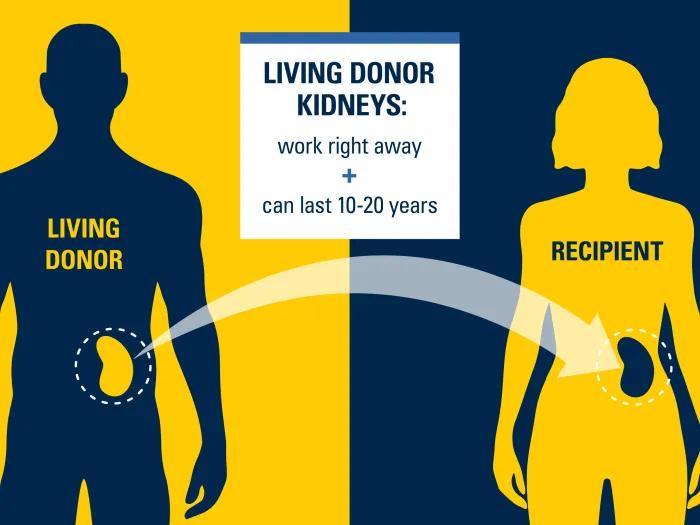
Making a difference with living donor kidney organs
A physician discusses the future of kidney transplantation

Supporting Patient Experience and Caregiver Well-Being

Celebrating a kidney donation, to his best friend, a decade later