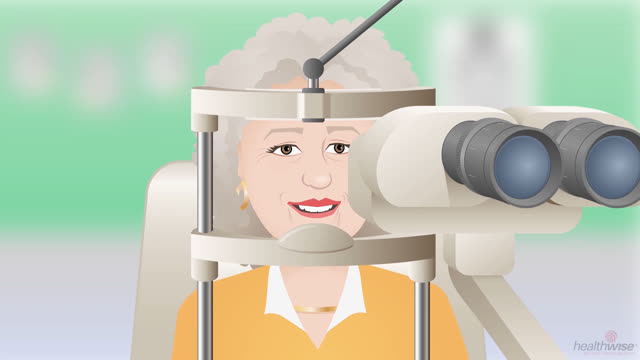
Early Disease Detection

NOTICE: This health information was not created by the University of Michigan Health System (UMHS) and may not necessarily reflect specific UMHS practices. For medical advice relating to your personal condition, please consult your doctor. Complete disclaimer

Early Disease Detection

Overview

What is early disease detection?

Early disease detection is the use of:

  • Screening tests to find health problems before symptoms appear.
  • Diagnostic tests, medical exams, and self-exams to find a disease or other health problem early in its course.

Why should you think about early disease detection?

Often, the earlier a disease is diagnosed, the more likely it is that it can be cured or successfully managed. Managing a disease, especially early in its course, may lower its impact on your life or prevent or delay serious complications.

Who develops recommendations for early disease detection?

Expert panels of health professionals develop screening recommendations and publish them as guidelines for all health professionals to use. For example, the U.S. Preventive Services Task Force and the American College of Physicians both have guidelines for cholesterol screening, and the American Academy of Pediatrics has guidelines on early childhood screening for many different conditions.

Sometimes different panels make different recommendations. In these situations, talk with your doctor to decide which guidelines best meet your health needs.

How do you know what tests to have?

The tests suggested for you depend on your age, health, and gender. Often, they depend on your risk factors too. Risk factors might include family history, such as having a close relative with cancer, and lifestyle habits, such as smoking. Cholesterol screening, for example, is recommended for people who have a family history of early coronary artery disease.

Women who are pregnant or trying to become pregnant may be screened for genetic conditions, sexually transmitted infections, and other conditions that may affect themselves or their baby.

When you are thinking about getting a screening test, talk with your doctor. Find out about the disease, what the test is like, the risks and benefits of the test, and the cost. Think about what action you are willing to take if you have the condition. For example, if you are at risk for osteoporosis and want to get tested, think about your willingness to take medicine or make lifestyle changes if you test positive for this condition. When you get a test for cancer, you can ask your doctor how likely it is that the test would miss some cancers (false negative), show something that looks like a tumor when it’s not one (false positive), or find a cancer that will never cause a problem. Tests are important tools, but they have limits.

To learn more about suggested tests, review the medical test information (What is a PDF document?) form with your doctor.

When should you be tested?

When and how often you get screening tests may depend on your age, gender, family history, lifestyle, health status, and the cost of testing. Your doctor may suggest certain screening times based on expert guidelines. In some cases, testing is done as part of a routine checkup.

Health Tools Health Tools help you make wise health decisions or take action to improve your health.

Health Tools help you make wise health decisions or take action to improve your health.


Interactive tools help people determine health risks, ideal weight, target heart rate, and more. Interactive tools are designed to help people determine health risks, ideal weight, target heart rate, and more.
  Interactive Tool: Is Your BMI Increasing Your Health Risks?
  Interactive Tool: Which Health Screenings Do You Need?

Screening, Birth to 12 Months

It's important for your baby to have regularly scheduled checkups, often called well-baby visits, starting shortly after birth. During these visits, the doctor examines your baby for possible problems and asks you questions about your baby's growth and development.

At each well-baby visit, the doctor or nurse will check your baby's:

It's also recommended that your baby have developmental delay screening and a blood test for iron-deficiency anemia.

All states require newborn screening, although the tests required vary from state to state. These tests can help detect serious problems that could affect your baby's long-term health. They may include:

A hematocrit test may be done if your doctor is concerned about your baby's red blood cell count.

If the doctor is concerned that your child has been exposed to certain substances or diseases, tests may include:

For more information on important markers (milestones) of infant growth and development, see the topics Growth and Development, Newborn and Growth and Development, Ages 1 to 12 Months.

Screening, 13 Months to 5 Years

It's important for your child to continue to have regularly scheduled checkups, often called well-child visits. During these visits, your child's doctor will check your child's growth and development and examine your child for possible problems.

Checks at well-child visits include:

If risk factors are present, other tests may include:

A hematocrit test may be done if your doctor is concerned about your child's red blood cell count.

Regular dental checkups are recommended for all children.

For more information on the milestones of early childhood growth and development, see the topics Growth and Development, Ages 12 to 24 Months and Growth and Development, Ages 2 to 5 Years.

Screening, 6 to 10 Years

It's important for your child to continue to have regularly scheduled checkups (usually once a year). At each well-child visit, your child's doctor will check to see whether your child is growing and developing as expected. The goal is to find out early if your child has any problems that could affect his or her health and well-being.

Checks at well-child visits include:

  • Behavioral concerns, such as temper tantrums and aggressive behavior that hurts others emotionally or physically (bullying).
  • Blood pressure screening. It is important for your child to have his or her blood pressure checked every year.
  • Hearing.
  • Height, weight, and body mass index (BMI).
  • School concerns, such as grades, favorite subjects, and the teacher's idea of how your child is doing at school.
  • Scoliosis.
  • Vision.

Other tests may include:

Regular dental checkups are recommended for all children.

For more information on the milestones of early childhood growth and development, see the topic Growth and Development, Ages 6 to 10 Years.

Screening, 11 to 24 Years

It's important for your child to continue to have regularly scheduled checkups (usually once a year) through the teen years. At each well-child visit, the doctor will check your child's growth and development and examine your child for possible problems.

Checks at well-child visits include:

Other tests may include:

Pregnant women or those trying to become pregnant may be screened for genetic conditions, sexually transmitted infections, and other conditions. For more information, see the topic Pregnancy.

Dental checkups are recommended for all children, teens, and young adults once or twice a year.

For more information on the milestones of teen growth and development, see the topics Growth and Development, Ages 11 to 14 Years and Growth and Development, Ages 15 to 18 Years.

Screening, 25 to 49 Years

Early disease detection during adulthood is intended to identify diseases that may develop as you age. Routine checkups and screening are important to stay in good health.

How often you have the following tests depends on your age, your health, and things that increase your risk for specific diseases. Tests that may be done at your routine checkups include:

Monitor your weight, and see your doctor if you suddenly or consistently gain or lose weight. For more information, see the topics Weight Management and Obesity.

Women who are pregnant or trying to become pregnant may be screened for genetic conditions, sexually transmitted infections, and other conditions. For more information, see the topic Pregnancy.

Sometimes doctors automatically schedule routine tests because they think that's what patients expect. But sometimes research shows that testing may not be useful or worth the risks or costs. For example, experts say that routine heart tests can be a waste of time and money. For more information, see Heart Tests: When Do You Need Them?

Screening, 50 to 64 Years

As you age, the risk of developing some diseases increases. Routine checkups and screening tests are important for you to stay in good health.

For a screening checklist, see www.ahrq.gov/ppip/men50.htm if you are a man and www.ahrq.gov/ppip/women50.htm if you are a woman.

How often you have the following tests depends on your age, your health, and things that increase your risk for specific diseases. Tests that may be done at your routine checkups include:

After reviewing all of the research, the U.S. Preventive Services Task Force has not recommended for or against routine screening for dementia in older adults.1

Monitor your weight, and see your doctor if you suddenly or consistently gain or lose weight. For more information, see the topics Weight Management and Obesity.

Sometimes doctors automatically schedule routine tests because they think that's what patients expect. But sometimes research shows that testing may not be useful or worth the risks or costs. For example, experts say that routine heart tests can be a waste of time and money. For more information, see Heart Tests: When Do You Need Them?

Screening, 65 Years and Older

As you age, the risk of developing some diseases increases. Routine checkups and screening tests are important for you to maintain good health.

How often you have the following tests depends on your age, your health, and things that increase your risk for specific diseases. Tests that may be done at your routine checkups include:

After reviewing all of the research, the U.S. Preventive Services Task Force has not recommended for or against routine screening for dementia in older adults.1

Monitor your weight, and see your doctor if you suddenly or consistently gain or lose weight. For more information, see the topics Weight Management and Obesity.

Sometimes doctors automatically schedule routine tests because they think that's what patients expect. But sometimes research shows that testing may not be useful or worth the risks or costs. For example, experts say that routine heart tests can be a waste of time and money. For more information, see Heart Tests: When Do You Need Them?

Other Places To Get Help

Organizations

Agency for Healthcare Research and Quality
540 Gaither Road
Suite 2000
Rockville, MD  20850
Phone: (301) 427-1104
Web Address: www.ahrq.gov
 

The Agency for Healthcare Research and Quality (AHRQ) is one agency within the U.S. Department of Health and Human Services. AHRQ supports research initiatives that seek to improve the quality of health care in America. AHRQ's mission is to improve the quality, safety, efficiency, effectiveness, and cost-effectiveness of health care for all Americans. The website provides evidence-based information to help people make decisions about health care services.


American Academy of Family Physicians
P.O. Box 11210
Shawnee Mission, KS  66207-1210
Web Address: www.familydoctor.org
 

The American Academy of Family Physicians offers information on adult and child health conditions and healthy living. Its Web site has topics on medicines, doctor visits, physical and mental health issues, parenting, and more.


American Academy of Pediatrics
141 Northwest Point Boulevard
Elk Grove Village, IL  60007-1098
Phone: (847) 434-4000
Fax: (847) 434-8000
Web Address: www.aap.org
 

The American Academy of Pediatrics (AAP) offers a variety of educational materials about parenting, general growth and development, immunizations, safety, disease prevention, and more. AAP guidelines for various conditions and links to other organizations are also available.


Centers for Disease Control and Prevention (CDC)
1600 Clifton Road
Atlanta, GA  30333
Phone: 1-800-CDC-INFO (1-800-232-4636)
TDD: 1-888-232-6348
Email: cdcinfo@cdc.gov
Web Address: www.cdc.gov
 

The Centers for Disease Control and Prevention (CDC) is an agency of the U.S. Department of Health and Human Services. The CDC works with state and local health officials and the public to achieve better health for all people. The CDC creates the expertise, information, and tools that people and communities need to protect their health—by promoting health, preventing disease, injury, and disability, and being prepared for new health threats.


KidsHealth for Parents, Children, and Teens
10140 Centurion Parkway North
Jacksonville, FL  32256
Phone: (904) 697-4100
Fax: (904) 697-4220
Web Address: www.kidshealth.org
 

This website is sponsored by the Nemours Foundation. It has a wide range of information about children's health, from allergies and diseases to normal growth and development (birth to adolescence). This website offers separate areas for kids, teens, and parents, each providing age-appropriate information that the child or parent can understand. You can sign up to get weekly emails about your area of interest.


References

Citations

  1. U.S. Preventive Services Task Force (2003). Screening for dementia: Recommendation and rationale. Annals of Internal Medicine, 139(11): 925–926.

Other Works Consulted

  • Agency for Healthcare Research and Quality (2010). Guide to Clinical Preventive Services, 2010-2011: Recommendations of the U.S. Preventive Services Task Force (AHRQ Publication No. 10-05145). Rockville, MD: Agency for Healthcare Research and Quality. Also available online: http://www.ahrq.gov/clinic/pocketgd.htm.
  • American Academy of Pediatrics (2008). Bright Futures: Guidelines for Health Supervision of Infants, Children, and Adolescents, 3rd ed. Elk Grove Village, IL: American Academy of Pediatrics.
  • American Academy of Pediatrics (2010). Diagnosis and prevention of iron deficiency and iron-deficiency anemia in infants and young children (0–3 years of age). Pediatrics, 126(5): 1040–1050. Available online: http://pediatrics.aappublications.org/cgi/content/full/126/5/1040.
  • Tarini BA (2007). The current revolution in newborn screening. Archives of Pediatric and Adolescent Medicine, 161(8): 767–772.

Credits

By Healthwise Staff
Primary Medical Reviewer Anne C. Poinier, MD - Internal Medicine
Specialist Medical Reviewer E. Gregory Thompson, MD - Internal Medicine
Last Revised August 15, 2011

This information does not replace the advice of a doctor. Healthwise, Incorporated disclaims any warranty or liability for your use of this information. Your use of this information means that you agree to the Terms of Use. How this information was developed to help you make better health decisions.

© 1995-2012 Healthwise, Incorporated. Healthwise, Healthwise for every health decision, and the Healthwise logo are trademarks of Healthwise, Incorporated.