
Picrorhiza
Uses
Parts Used & Where Grown
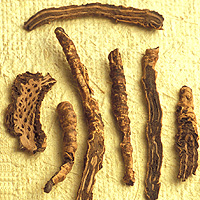
The herb originated in and continues to grow primarily in the Himalayan mountains. The rhizomes or underground stems of picrorhiza are used.
Our proprietary “Star-Rating” system was developed to help you easily understand the amount of scientific support behind each supplement in relation to a specific health condition. While there is no way to predict whether a vitamin, mineral, or herb will successfully treat or prevent associated health conditions, our unique ratings tell you how well these supplements are understood by the medical community, and whether studies have found them to be effective for other people.
For over a decade, our team has combed through thousands of research articles published in reputable journals. To help you make educated decisions, and to better understand controversial or confusing supplements, our medical experts have digested the science into these three easy-to-follow ratings. We hope this provides you with a helpful resource to make informed decisions towards your health and well-being.
3 StarsReliable and relatively consistent scientific data showing a substantial health benefit.
2 StarsContradictory, insufficient, or preliminary studies suggesting a health benefit or minimal health benefit.
1 StarFor an herb, supported by traditional use but minimal or no scientific evidence. For a supplement, little scientific support.
This supplement has been used in connection with the following health conditions:
| Used for | Why |
|---|---|
2 Stars Asthma 400 to 1,500 mg of powdered root per day | Two preliminary trials have shown picrorhiza to improve asthma symptoms. Two preliminary trials have shown to be of benefit in asthma. However, a follow-up double-blind trial did not confirm these earlier results. A range of 400 to 1,500 mg of powdered, encapsulated picrorhiza per day has been used in a variety of trials. It remains unclear how effective picrorhiza is for people with asthma. |
2 Stars Vitiligo 400 and 1,500 mg of powdered rhizome | In one trial, picrorhiza, in combination with the drug methoxsalen and sun exposure, speeded recovery in people with vitiligo. In preliminary trial, , in combination with the drug methoxsalen and sun exposure, was reported to hasten recovery in people with vitiligo compared with use of methoxsalen and sun exposure alone. Between 400 and 1,500 mg of powdered, encapsulated picrorhiza per day has been used in a variety of studies. |
1 Star Hepatitis 1,600 mg daily | A series of cases of acute viral hepatitis were reported by one group in India, showing picrorhiza, combined with a variety of minerals, to be helpful in hastening recovery. A series of cases of acute viral hepatitis were reported by one group in India, showing , combined with a variety of minerals, to be helpful in hastening recovery. A variety of similar reports have appeared in the Indian literature over the years, although no double-blind clinical trials have yet been published. Between 400 and 1,500 mg of powdered, encapsulated picrorhiza per day has been used in a variety of trials. Andrographis, another traditional Indian herb, has shown preliminary benefit for people with chronic viral hepatitis. |
1 Star Indigestion, Heartburn, and Low Stomach Acidity Refer to label instructions | Boldo has been used in South America for a variety of digestive conditions. Bitter herbs are thought to stimulate digestive function by increasing saliva production and promoting both stomach acid and digestive enzyme production. As a result, they are particularly used when there is low stomach acid but not in heartburn (where too much stomach acid could initially exacerbate the situation). These herbs literally taste bitter. Some examples of bitter herbs include greater celandine, wormwood, gentian,dandelion, blessed thistle, yarrow, devil’s claw, bitter orange, bitter melon, juniper, andrographis, prickly ash, and centaury.. Bitters are generally taken either by mixing 1–3 ml tincture into water and sipping slowly 10–30 minutes before eating, or by making tea, which is also sipped slowly before eating. Boldo has been used in South America for a variety of digestive conditions, although this may have stemmed from its impact on intestinal infections or liver function. Studies specifically showing a benefit from taking boldo in people with indigestion and heartburn have not been performed. , from India, has a similar story to that of boldo. While it is clearly a bitter digestive stimulant, human studies to confirm this have not yet been completed. |
1 Star Infection Refer to label instructions | Picrorhiza supports the immune system and protects against microbes. Herbs that support a person’s immune system in the fight against microbes include the following: American ginseng, andrographis, Asian ginseng, astragalus, coriolus, eleuthero, ligustrum, maitake, , reishi, schisandra, and shiitake. |
1 Star Rheumatoid Arthritis Refer to label instructions | Studies conducted in India with the herb picrorhiza show a benefit for people with rheumatoid arthritis. Preliminary studies conducted in India with the herb show a benefit for people with RA. Currently, this therapeutic effect remains weakly supported and therefore unproven. |
Traditional Use (May Not Be Supported by Scientific Studies)
The bitter rhizomes of picrorhiza have been used for thousands of years in India to treat people with indigestion.1 It is also used to treat people with constipation due to insufficient digestive secretion and for fever due to all manner of infections.2
How It Works
How It Works
The major constituents in picrorhiza are the glycosides picroside I, kutkoside, androsin, and apocynin. They have been shown in animal studies to be antiallergic, to inhibit platelet-activating factor (an important pro-inflammatory molecule),3 and to decrease joint inflammation.4 According to test tube and animal studies, picrorhiza has antioxidant actions, particularly in the liver.5, 6 Picroliv (a commercial mixture containing picroside I and kutkoside) has been shown to have an immunostimulating effect in hamsters, helping to prevent infections.7 Picrorhiza increases bile production in the liver, according to rat studies.8 It has also been shown to protect animals from damage by several potent liver toxins, offering protection as good as or better than silymarin (the flavonoids found in milk thistle).9, 10 However, it does not have the amount of human research as silymarin. Picrorhiza has also shown to reduce formation of liver cancer due to chemical exposures in animal studies.11
Human studies on this plant are not prolific. A series of cases of acute viral hepatitis in India were reportedly treated successfully by a combination of picrorhiza with a variety of minerals.12 A number of similar reports have appeared in Indian literature over the years. No double-blind clinical trials have yet been published, however.
Two preliminary trials suggest that picrorhiza may improve breathing in asthma patients and reduce the severity of asthma.13, 14 Although, a follow-up double-blind trial did not confirm these earlier trials.15
A preliminary trial conducted in India found a small benefit for people with arthritis (primarily rheumatoid arthritis).16
Picrorhiza in combination with the drug methoxsalen was found in a preliminary trial to hasten recovery in people with vitiligo faster than those receiving methoxsalen and sun exposure alone.17
How to Use It
Between 400 and 1,500 mg of powdered, encapsulated picrorhiza per day has been recommended. One author considers this equivalent to the use of 1–2 ml of fluid extract twice per day.18 Picrorhiza tastes quite bitter. Combining with ginger root powder capsules or taking as tea can improve palatability.
Interactions
Interactions with Supplements, Foods, & Other Compounds
Interactions with Medicines
Certain medicines interact with this supplement.
Replenish Depleted Nutrients
none
Reduce Side Effects
- Isoniazid
Picrorhiza (Picrorhiza kurroa) is an herb from India with well-established anti-inflammatory and liver protective actions. Use of a combination formula known as Liv.100 that contains picrorhiza protected animal livers against damage caused by isoniazid and other antituberculosis antibiotics.
Support Medicine
none
Reduces Effectiveness
none
Potential Negative Interaction
none
Explanation Required
none
Side Effects
Side Effects
Loose stools and colic have been reported when unprepared picrorhiza rhizomes are used as medicine. However, extracts in alcohol have shown much less tendency to cause such effects.19 No other adverse effects have been reported with picrorhiza. Although the use of the herb is not discouraged in India during pregnancy and breast-feeding, there is little information to determine the safety of the herb during these times.
References
1. Krishnamurthy A. The Wealth of India vol VIII. New Delhi, Publication and Information Directorate, Council of Scientific and Industrial Research, 1969, 49.
2. Nadkarni KM, Nadkarni AK. Indian Materia Medica. Bombay, Popular Prakashan, 1976, 953-5.
3. Dorsch W, Stuppner H, Wagner H, et al. Antiasthmatic effects of Picrorhiza kurroa: Androsin prevents allergen- and PAF-induced bronchial obstruction in guinea pigs. Int Arch Allergy Appl Immunol 1991;95:128-33.
4. ‘t Hart BA, Simons JM, Knaan-Shanzer S, et al. Antiarthritic activity of the newly developed neutrophil oxidative burst antagonist apocynin. Free Rad Biol Med 1990;9:127-31.
5. Anandan R, Devaki T. Hepatoprotective effect of Picrorrhiza [sic] kurroa on tissue defense system in D-galactosamine-induced hepatitis in rats. Fitoterapia 1999;70:54-7.
6. Chander R, Kapoor NK, Dhawan BN. Picroliv, picroside-I and kutkoside from Picrorhiza kurroa are scavengers of superoxide anions. Biochem Pharmacol 1992;44:180-3.
7. Puri A, Saxena RP, Sumati, et al. Immunostimulant activity of Picroliv, the iridoid glycoside fraction of Picrorhiza kurroa, and its protective action against Leishmania donovani infection in hamsters. Planta Med 1992;58:528-32.
8. Shukla B, Visen PKS, Patnaik GK, Dhawan BN. Choleretic effect of Picroliv, the hepatoprotective principle of Picrorhiza kurroa. Planta Med 1991;57:29-33.
9. Floersheim GL, Bieri A, Koenig R, Pletscher A. Protection against Amantia phalloides by the iridoid glycoside mixture of Picrorhiza kurroa (kutkin). Agents Actions 1990;29:386-7.
10. Dwivedi Y, Rastogi R, Mehrotra R, et al. Picroliv protects against aflatoxin B1 acute hepatotoxicity in rats. Pharmacol Res 1993;27:189-99.
11. Jeena KJ, Joy KL, Kuttan R. Effect of Emblica officinalis, Phyllanthus amarus and Picrorrhiza [sic] kurroa on N-nitrosodiethylamine induced hepatocardinogenesis. Cancer Lett 1999;136:11-6.
12. Chaturvedi GN, Singh RH. Jaundice of infectious hepatitis and its treatment with an indigenous drug, Picrorhiza kurrooa [sic]. J Res Ind Med 1966;1:1-13.
13. Rajaram D. A preliminary clinical trial of Picrorrhiza kurroa in bronchial asthma. Indian J Pharmacol 1975;7:95-6.
14. Shan BK, Kamat SR, Sheth UK. Preliminary report of use of Picrorrhiza kurroa root in bronchial asthma. J Postgrad Med 1977;23:118-20.
15. Doshi VB, Shetye VM, Mahashur AA, Kamat SR. Picrorrhiza kurroa in bronchial asthma. J Postgrad Med 1983;29:89-95.
16. Langer JG, Gupta OP, Atal CK. Clinical trials on Picrorhiza kurroa.Ind J Pharmacol 1981;13:98-103 [review].
17. Bedi KL, Zutshi U, Chopra CL, Amla V. Picrorhiza kurroa, an Ayurvedic herb, may potentiate photochemotherapy in vitiligo. J Ethnopharmacol 1989;27:347-52.
18. Bone K. Picrorrhiza [sic]: Important modulator of immune function. Townsend Letter for Doctors 1995;May:88-94 [review].
19. Chaturvedi GN, Singh RH. Jaundice of infectious hepatitis and its treatment with an indigenous drug, Picrorhiza kurrooa [sic]. J Res Ind Med 1966;1:1-13.
Last Review: 05-24-2015

Copyright © 2024 TraceGains, Inc. All rights reserved.
Learn more about TraceGains, the company.
The information presented by TraceGains is for informational purposes only. It is based on scientific studies (human, animal, or in vitro), clinical experience, or traditional usage as cited in each article. The results reported may not necessarily occur in all individuals. For many of the conditions discussed, treatment with prescription or over the counter medication is also available. Consult your doctor, practitioner, and/or pharmacist for any health problem and before using any supplements or before making any changes in prescribed medications. Information expires December 2024.
This information does not replace the advice of a doctor. Healthwise, Incorporated, disclaims any warranty or liability for your use of this information. Your use of this information means that you agree to the Terms of Use. Learn how we develop our content.