
Ligustrum
Uses
Parts Used & Where Grown
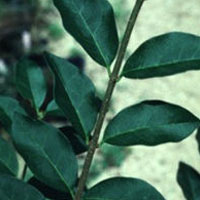
This shrub is native to China and eastern Asia and is now grown ornamentally in the United States. The berry of ligustrum is used medicinally.
Our proprietary “Star-Rating” system was developed to help you easily understand the amount of scientific support behind each supplement in relation to a specific health condition. While there is no way to predict whether a vitamin, mineral, or herb will successfully treat or prevent associated health conditions, our unique ratings tell you how well these supplements are understood by the medical community, and whether studies have found them to be effective for other people.
For over a decade, our team has combed through thousands of research articles published in reputable journals. To help you make educated decisions, and to better understand controversial or confusing supplements, our medical experts have digested the science into these three easy-to-follow ratings. We hope this provides you with a helpful resource to make informed decisions towards your health and well-being.
3 StarsReliable and relatively consistent scientific data showing a substantial health benefit.
2 StarsContradictory, insufficient, or preliminary studies suggesting a health benefit or minimal health benefit.
1 StarFor an herb, supported by traditional use but minimal or no scientific evidence. For a supplement, little scientific support.
This supplement has been used in connection with the following health conditions:
| Used for | Why |
|---|---|
1 Star Immune Function Refer to label instructions | Ligustrum appears to stimulate the immune system and is often combined with astragalus in traditional Chinese medicine. The main active compound in is ligustrin (oleanolic acid). Studies, mostly conducted in China, suggest that ligustrum stimulates the immune system. Ligustrum is often combined with astragalus in traditional Chinese medicine. Although used for long-term support of the immune system in people with depressed immune function or cancer, more research is needed to demonstrate the optimal length of time to use ligustrum. |
1 Star Infection Refer to label instructions | Ligustrum supports the immune system and protects against microbes. Herbs that support a person’s immune system in the fight against microbes include the following: American ginseng, andrographis, Asian ginseng, astragalus, coriolus, eleuthero, , maitake, picrorhiza, reishi, schisandra, and shiitake. |
Traditional Use (May Not Be Supported by Scientific Studies)
Since ancient times, ligustrum berries have been employed as a “yin” tonic in Traditional Chinese Medicine.1 Ligustrum was used for a wide range of conditions, including premature aging and ringing in the ears.2
How It Works
How It Works
The major constituent in ligustrum is ligustrin (oleanolic acid). Preliminary studies, mostly conducted in China, suggest that ligustrum stimulates the immune system, decreases inflammation, and protects the liver.3 Ligustrum is often combined with astragalus in Traditional Chinese Medicine. Although used for long-term support of the immune system in people with depressed immune function or cancer, more research is needed to demonstrate the optimal length of time to use ligustrum.
How to Use It
Powdered, encapsulated berries, 1–3 teaspoons (5–15 grams) per day, are sometimes recommended.4 A similar amount of berries can be made into tea by adding 1/2–1 teaspoon (2–5 grams) of powdered or crushed berries to 1 cup (250 ml) of boiling water and steeping for ten to fifteen minutes. Alternatively, 3/4–1 teaspoon (3–5 ml) of tincture three times per day can be taken.
Interactions
Interactions with Supplements, Foods, & Other Compounds
Interactions with Medicines
Side Effects
Side Effects
References
1. Benksy D, Gamble A, Kaptchuk T. Chinese Herbal Medicine: Materia Medica. Seattle: Eastland Press, 1993, 366.
2. Leung AY, Foster S. Encyclopedia of Common Natural Ingredients Used in Foods, Drugs, and Cosmetics, 2d ed. New York: John Wiley & Sons, 1996, 350-2.
3. Leung AY, Foster S. Encyclopedia of Common Natural Ingredients Used in Foods, Drugs, and Cosmetics, 2d ed. New York: John Wiley & Sons, 1996, 350-2.
4. Foster S, Yue CX. Herbal Emissaries: Bringing Chinese Herbs to the West. Rochester, VT: Healing Arts Press, 1992, 227-32.
Last Review: 05-24-2015

Copyright © 2024 TraceGains, Inc. All rights reserved.
Learn more about TraceGains, the company.
The information presented by TraceGains is for informational purposes only. It is based on scientific studies (human, animal, or in vitro), clinical experience, or traditional usage as cited in each article. The results reported may not necessarily occur in all individuals. For many of the conditions discussed, treatment with prescription or over the counter medication is also available. Consult your doctor, practitioner, and/or pharmacist for any health problem and before using any supplements or before making any changes in prescribed medications. Information expires December 2024.
This information does not replace the advice of a doctor. Healthwise, Incorporated, disclaims any warranty or liability for your use of this information. Your use of this information means that you agree to the Terms of Use. Learn how we develop our content.