Benign Prostatic Hyperplasia
Benign Prostatic Hyperplasia
What is Benign Prostatic Hyperplasia?
As a man ages, his prostate enlarges, and sometimes it can squeeze his urethra, which is the tube that urine flows through. When this happens and there is no cancer in the prostate, the most common cause is benign prostatic hyperplasia, or BPH.
Appointment Information
If you are a patient looking to receive kind and compassionate care at the leading urologic practice in Michigan, call 734–936–7030 to make an appointment. If you are a provider looking to refer a patient, please call M-Line: 800-962-3555.
What are the symptoms of Benign Prostatic Hyperplasia?
BPH affects half of men 70-79 years old and 90% of men older than age 80. It is marked by bothersome lower urinary tract symptoms, including:
- Difficulty starting urine stream
- Straining to urinate
- Waking multiple times at night to urinate
- Feeling the need to urinate every 2 hours during the day
- Needing to start and stop stream several times until bladder is emptied
- A feeling of incomplete emptying
- Inability to delay urination once the urge arises, known as urgency
- Incontinence
- Pain while urinating
- Weakness of stream
How is Benign Prostatic Hyperplasia diagnosed?
Your doctor can diagnose BPH by asking about your symptoms and past health and by doing a physical exam. Your doctor may ask you how often you have symptoms of BPH, how severe they are, and how much they affect your life.
Tests may include a urine test (urinalysis) and a digital rectal exam. The exam lets your doctor feel the size of your prostate. In some cases, a prostate-specific antigen (PSA) test is done to help rule out prostate cancer. (Prostate cancer and BPH are not related, but they can cause some of the same symptoms.)
Your doctor may do other tests to check things such as your kidney and bladder function.
How is Benign Prostatic Hyperplasia treated?
At the U-M Health Urology clinic, we treat patients individually, so type and timing varies for each patient. Typically, treatment is recommended if the urinary symptoms of BPH are moderate to severe, or if they have become bothersome to the patient. BPH can be treated through a variety of medical therapies which are meant to prevent the prostate and bladder from contracting, shrink the prostate to allow urine to flow more easily, or relax your muscles. Depending on your treatment plan, they can be administered individually or as a combination.
If medicine isn’t the best option, then surgery is an option. We offer patients the latest HoLEP to help with removal of excess tissue around or near the prostate.
Locations
-
Urology Clinic | Brighton Center for Specialty Care 7500 Challis Rd
Entrance 1, Level 2
Brighton, MI 48116-9416Get Directions -
Urology Clinic | Chelsea Professional Office Building Floor 1 Ste 101
Chelsea Multispecialty Clinic
Chelsea, MI 48118-1801Get Directions -
Urology Clinic | Taubman Center 1500 E Medical Center Dr
Floor 2 Reception C
Ann Arbor, MI 48109-5330Get Directions
Doctors

Anne Pelletier Cameron, MD
Clinical Professor
Female Pelvic Medicine & Reconstructive Surg, Urology, Female Pelvic Medicine & Reconstructive Surgery

James Quentin Clemens, MD
Professor
Female Pelvic Medicine & Reconstructive Surg, Urology

Casey Andrew Dauw, MD
Clinical Associate Professor
Urology

Jeffrey Scott Montgomery, MD
Clinical Professor
Urology

Dana Alan Ohl, MD
Professor
Urology

William Woodruff Roberts, MD
Professor
Urology

Wilson Sui, MD
Clinical Assistant Professor
Urology

John Thomas Wei, MD
Professor
Urology
Providers

Diane Marie Lockhart, PA-C
Physician Assistant
Physician Assistant

Stanley Gitau Mukundi, PA-C
Physician Assistant
Physician Assistant

Susanne Anne Quallich, NP
Advanced Practice Nurse
Nurse Practitioner - Adult Health, Nurse Practitioner
News & Stories

Meet the interventional radiologist who wants you to have his cell phone number
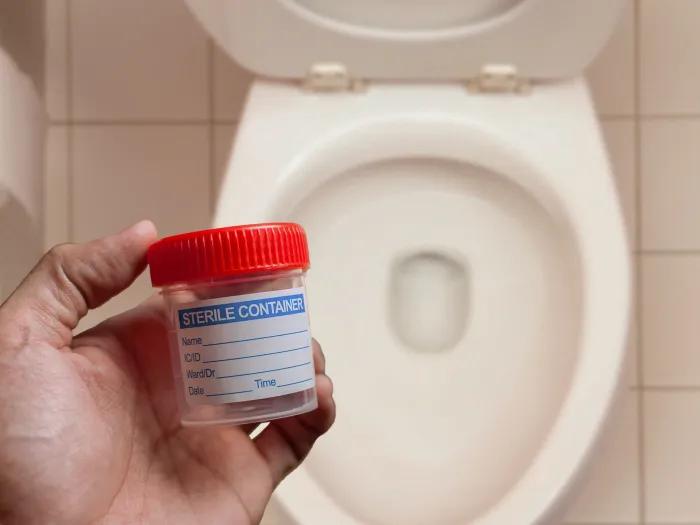
Urine-based test detects aggressive prostate cancer

How donor eggs helped one couple build the family they always hoped for
What causes infertility? A doctor answers common questions and clears up misconceptions