
Asian Ginseng
Uses
Parts Used & Where Grown
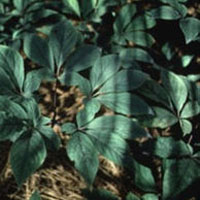
Asian ginseng is a member of the Araliaceae family, which also includes the closely related American ginseng(Panax quinquefolius) and less similar Siberian ginseng (Eleutherococcus senticosus), also known as eleuthero. Asian ginseng commonly grows on mountain slopes and is usually harvested in the fall. The root is used, preferably from plants older than six years of age.
Our proprietary “Star-Rating” system was developed to help you easily understand the amount of scientific support behind each supplement in relation to a specific health condition. While there is no way to predict whether a vitamin, mineral, or herb will successfully treat or prevent associated health conditions, our unique ratings tell you how well these supplements are understood by the medical community, and whether studies have found them to be effective for other people.
For over a decade, our team has combed through thousands of research articles published in reputable journals. To help you make educated decisions, and to better understand controversial or confusing supplements, our medical experts have digested the science into these three easy-to-follow ratings. We hope this provides you with a helpful resource to make informed decisions towards your health and well-being.
3 StarsReliable and relatively consistent scientific data showing a substantial health benefit.
2 StarsContradictory, insufficient, or preliminary studies suggesting a health benefit or minimal health benefit.
1 StarFor an herb, supported by traditional use but minimal or no scientific evidence. For a supplement, little scientific support.
This supplement has been used in connection with the following health conditions:
| Used for | Why |
|---|---|
3 Stars Erectile Dysfunction 900 mg of a concentrated herbal extract two or three times daily | Asian ginseng may improve libido and ability to maintain erection. (Panax ginseng) has traditionally been used as a supportive herb for male potency. A double-blind trial found that 1,800 mg per day of Asian ginseng extract for three months helped improve libido and the ability to maintain an erection in men with ED. The benefit of Asian ginseng confirmed in another double-blind study, in which 900 mg three times a day was given for eight weeks. |
2 Stars Athletic Performance, Endurance Exercise, and Muscle Strength 2 grams of powdered root daily or 200 to 400 mg daily of an herbal extract standardized for 4% ginsenosides | Some early studies suggested there might be benefits of using Asian ginseng to improve athletic performance. One study reported increased pectoral and quadricep muscle strength in non-exercising men and women after supplementing with the herb. Extensive but often poorly designed studies have been conducted on the use of Asian ginseng (Panax ginseng) to improve athletic performance. While some early controlled studies suggested there might be benefits, several recent double-blind trials have found no significant effects of Asian ginseng on endurance exercise. In many studies, it is possible that ginseng was used in insufficient amounts or for an inadequate length of time; a more effective regimen for enhancing endurance performance may be 2 grams of powdered root per day or 200 to 400 mg per day of an extract standardized for 4% ginsenosides, taken for eight to twelve weeks. Short-term intense exercise has also not been helped by Asian ginseng according to double-blind trials, but one controlled study reported increased pectoral and quadricep muscle strength in non-exercising men and women after taking 1 gram per day of Asian ginseng for six weeks. An extract of a related plant, American ginseng (Panax quinquefolius), was found ineffective at improving endurance exercise performance in untrained people after one week’s supplementation in a double-blind study.[REF] |
2 Stars Epilepsy (Bupleurum, Cassia Bark, Chinese Scullcap, Ginger, Jujube, Licorice, Peony, Pinellia) 2.5 grams a day of sho-saiko-to or saiko-keishi-to in tea or capsules | The Chinese herb bupleurum is included in two herbal formulas, sho-saiko-to and saiko-keishi-to. Both have been shown to be helpful for epilepsy. The Chinese herb bupleurum is included in two similar Chinese herbal formulae known as sho-saiko-to and saiko-keishi-to; these combinations contain the same herbs but in different proportions. The other ingredients are peony root, pinellia root, cassia bark, ginger root, jujube fruit, root, Asian scullcap root, and licorice root. Both formulas have been shown in preliminary trials to be helpful for people with epilepsy. No negative interactions with a variety of anticonvulsant drugs were noted in these trials. The usual amount taken of these formulas is 2.5 grams three times per day as capsules or tea. People with epilepsy should not use either formula without first consulting with a healthcare professional. |
2 Stars Hepatitis (Bupleurum, Cassia Bark, Chinese Scullcap, Ginger, Jujube, Licorice, Peony, Pinellia) Take 2.5 grams of sho-saiko-to three times per day | Trials have shown that the bupleurum-containing formula sho-saiko-to can help reduce symptoms and blood liver enzyme levels in people with chronic active viral hepatitis. Preliminary trials have shown that the bupleurum-containing formula sho-saiko-to can help reduce symptoms and blood liver enzyme levels in children and adults with chronic active viral hepatitis. Most of theses trials were in people with hepatitis B infection, though one preliminary trial has also shown a benefit in people with hepatitis C. Sho-saiko-to was also found, in a large preliminary trial to decrease the risk of people with chronic viral hepatitis developing liver cancer. However, people who had a sign of recent hepatitis B infection were not as strongly protected in this trial. The usual amount of sho-saiko-to used is 2.5 grams three times daily. Sho-saiko-to should not be used together with interferon drug therapy as it may increase risk of pneumonitis - a potentially dangerous inflammation in the lungs. |
2 Stars Immune Function 100 mg of a standardized extract twice per day | Asian ginseng has a long history of use in traditional herbal medicine for preventing and treating conditions related to the immune system. has a long history of use in traditional herbal medicine for preventing and treating conditions related to the immune system. A double-blind study of healthy people found that taking 100 mg of a standardized extract of Asian ginseng twice per day improved immune function. |
2 Stars Liver Cirrhosis (Bupleurum, Cassia Bark, Chinese Scullcap, Ginger, Jujube, Licorice, Peony, Pinellia) 2.5 grams of the Chinese herbal formula sho-saiko-to three times daily | The Chinese herb bupleurum is a component of the formula sho-saiko-to, which was shown in one preliminary trial to liver cancer risk in people with liver cirrhosis. The Chinese herb bupleurum is an important component of the formula known as sho-saiko-to. Sho-saiko-to was shown in one preliminary trial to reduce the risk of liver cancer in people with liver cirrhosis. The amount of this formula used was 2.5 grams three times daily. |
2 Stars Male Infertility 4 grams daily | One preliminary study found that men who took Asian ginseng had an improvement in sperm count and sperm motility. may prove useful for male infertility. One preliminary study found that 4 grams of Asian ginseng per day for three months led to an improvement in sperm count and sperm motility. |
2 Stars Menopause 200 mg per day of standardized extract | One trial found that Asian ginseng helped alleviate psychological symptoms of menopause, such as depression and anxiety. A double-blind trial found that (200 mg per day of standardized extract) helped alleviate psychological symptoms of menopause, such as depression and anxiety, but did not decrease physical symptoms, such as hot flashes or sexual dysfunction, in postmenopausal women who had not been treated with hormones. In another double-blind trial, supplementation with 3 grams per day of red ginseng (heated Asian ginseng) for 12 weeks significantly improved menopausal hot flashes, compared with a placebo. |
2 Stars Stress Take an extract supplying at least 1.6 mg daily of ginsenosides, along with a multivitamin | Supplementing with Asian ginseng has been shown to enhance feelings of well-being and improve quality of life in some studies. The herbs discussed here are considered members of a controversial category known as adaptogens, which are thought to increase the body's resistance to stress, and to generally enhance physical and mental functioning. Many animal studies have shown that various herbal adaptogens have protective effects against physically stressful experiences, but whether these findings are relevant to human stress experiences is debatable. Animal studies support the idea that is an adaptogen. Some studies have suggested that Asian ginseng can enhance feelings of well-being in elderly people with age-associated memory impairment, nurses working night shifts, or people with diabetes. In a double-blind trial, people taking a daily combination of a multivitamin-mineral supplement (MVM) with 40 mg of ginseng extract (standardized for 4% ginsenosides) for 12 weeks reported greater improvements in quality of life measured with a questionnaire compared with a group taking only MVM. The same MVM-ginseng combination was tested in a double-blind study of night-shift healthcare workers. Compared with a placebo group, the group receiving the MVM-ginseng combination improved on one out of four measures of mental performance, one out of three measures of mood (increased calmness, but no change in alertness or contentment), and a measure of reported fatigue. However, in another double-blind study, healthy adults given 200 or 400 mg per day of a standardized extract of Asian ginseng (equivalent to 1,000 or 2,000 mg of ginseng root) showed no significant improvement in any of several measures of psychological well-being after two months. |
2 Stars Type 2 Diabetes 5 grams of powdered root or an equivalent dose of Asian ginseng extract daily | Asian ginseng may help restore healthy insulin sensitivity and improve blood glucose and lipid levels in people with type 2 diabetes. Asian ginseng is commonly used in Traditional Chinese Medicine to treat diabetes. Asian ginseng extracts and constituents known as ginsenosides have demonstrated antidiabetic effects such as lowering glucose levels, improving insulin levels, reducing insulin resistance scores, and improving lipid levels in multiple clinical trials and laboratory studies. In one placebo-controlled trial, taking 5 grams of Asian ginseng per day for 12 weeks led to better blood glucose response to glucose ingestion in participants with type 2 diabetes. A placebo-controlled trial using various doses of a vinegar extract of Asian ginseng noted 1.5 grams per day was associated with greater reduction in HgbA1c and fasting glucose levels than either 2 or 3 grams per day. Another trial found, in subjects with well controlled type 2 diabetes, 6 grams per day of crude Asian ginseng rootlets improved the response to a glucose load, lowered fasting insulin levels, and increased insulin sensitivity scores, but did not improve HgbA1c. |
1 Star Alzheimer’s Disease 4.5 grams per day for 12 weeks | A preliminary trial suggests that taking Panax ginseng may significantly improve a measure of cognitive function in the short term, though long-term use has not been established. In a preliminary trial, supplementation with 4.5 grams per day of Asian (Panax) ginseng for 12 weeks resulted in a statistically significant 15% improvement in a measure of cognitive function. This improvement waned after the treatment was discontinued. |
1 Star Chronic Fatigue Syndrome Refer to label instructions | Adaptogenic herbs such as Asian ginseng have an immunomodulating effect and help support the normal function of the body’s hormonal stress system. Adaptogenic herbs such as and eleuthero may also be useful for CFS patients—the herbs not only have an immunomodulating effect but also help support the normal function of the hypothalamic-pituitary-adrenal axis, the hormonal stress system of the body. These herbs are useful follow-ups to the six to eight weeks of taking licorice root and may be used for long-term support of adrenal function in people with CFS. However, no controlled research has investigated the effect of adaptogenic herbs on CFS. |
1 Star Common Cold and Sore Throat Refer to label instructions | Adaptogens such as Asian ginseng are thought to help keep various body systems—including the immune system—functioning optimally. Herbal supplements can help strengthen the immune system and fight infections. Adaptogens, which include eleuthero, , astragalus, and schisandra, are thought to help keep various body systems—including the immune system—functioning optimally. They have not been systematically evaluated as cold remedies. However, one double-blind trial found that people who were given 100 mg of Asian ginseng extract in combination with a flu vaccine experienced a lower frequency of colds and flu compared with people who received only the flu vaccine. |
1 Star HIV and AIDS Support (Bupleurum, Cassia Bark, Chinese Scullcap, Ginger, Jujube, Licorice, Peony, Pinellia) Refer to label instructions | The herbal formula sho-saiko-to has been shown to have beneficial immune effects on white blood cells in people infected with HIV. The Chinese herb bupleurum, as part of the herbal formula sho-saiko-to, has been shown to have beneficial immune effects on white blood cells taken from people infected with HIV. Sho-saiko-to has also been shown to improve the efficacy of the anti-HIV drug lamivudine in the test tube. One preliminary study found that 7 of 13 people with HIV given sho-saiko-to had improvements in immune function. Double-blind trials are needed to determine whether bupleurum or sho-saiko-to might benefit people with HIV infection or AIDS. Other herbs in sho-saiko-to have also been shown to have anti-HIV activity in the test tube, most notably Asian scullcap. Therefore studies on sho-saiko-to cannot be taken to mean that bupleurum is the only active herb involved. The other ingredients are peony root, pinellia root, cassia bark, ginger root, jujube fruit, root, Asian scullcap root, and licorice root. |
1 Star HIV and AIDS Support Refer to label instructions | One study found that steamed then dried Asian ginseng had beneficial effects in people infected with HIV and increased the effectiveness of the anti-HIV drug AZT. Immune-modulating plants that could theoretically be beneficial for people with HIV infection include , eleuthero, and the medicinal mushrooms shiitake and reishi. One preliminary study found that steamed then dried Asian ginseng (also known as red ginseng) had beneficial effects in people infected with HIV, and increased the effectiveness of the anti-HIV drug, AZT. This supports the idea that immuno-modulating herbs could benefit people with HIV infection, though more research is needed. |
1 Star Infection Refer to label instructions | Asian ginseng supports the immune system and protects against microbes. Herbs that support a person’s immune system in the fight against microbes include the following: American ginseng, andrographis, , astragalus, coriolus, eleuthero, ligustrum, maitake, picrorhiza, reishi, schisandra, and shiitake. |
1 Star Influenza Refer to label instructions | Asian ginseng has immune-enhancing properties, which may play a role in preventing infection with the influenza virus. and eleuthero (Siberian ginseng) have immune-enhancing properties, which may play a role in preventing infection with the influenza virus. However, they have not yet been specifically studied for this purpose. One double-blind trial found that co-administration of 100 mg of Asian ginseng extract with a flu vaccine led to a lower frequency of colds and flu compared to people who just received the flu vaccine alone. |
1 Star Type 1 Diabetes Refer to label instructions | Asian ginseng is commonly used in traditional Chinese medicine to treat diabetes. Asian ginseng (Panax ginseng) is commonly used in Traditional Chinese Medicine to treat diabetes. It has been shown in test tube and animal studies to enhance the release of insulin from the pancreas and increase the number of insulin receptors. Asian ginseng and its active constituents have also been found to improve blood glucose control and reduce complications in animal models of type 1 diabetes. Clinical trials in people with type 1 diabetes are needed to confirm these findings. |
Traditional Use (May Not Be Supported by Scientific Studies)
Asian ginseng has been a part of Chinese medicine for over 2,000 years. The first reference to the use of Asian ginseng dates to the 1st century A.D. Ginseng is commonly used by elderly people in the Orient to improve mental and physical vitality.
How It Works
How It Works
Ginseng’s actions in the body are thought to be due to a complex interplay of constituents. The primary group are the ginsenosides, which are believed to counter the effects of stress and enhance intellectual and physical performance. Thirteen ginsenosides have been identified in Asian ginseng. Two of them, ginsenosides Rg1 and Rb1, have been closely studied.1 Other constituents include the panaxans, which may help lower blood sugar, and the polysaccharides (complex sugar molecules), which are thought to support immune function.2, 3
Long-term intake of Asian ginseng may be linked to a reduced risk of some forms of cancer.4, 5 A double-blind trial found that 200 mg of Asian ginseng per day improved blood sugar levels in people with type 2 (non-insulin-dependent) diabetes.6 Human trials have mostly failed to confirm the purported benefit of Asian ginseng for the enhancement of athletic performance.7, 8 One preliminary trial suggests it may help those in poor physical condition to tolerate exercise better.9 In combination with some vitamins and minerals, 80 mg of ginseng per day was found to effectively reduce fatigue in a double-blind trial.10 Another double-blind trial also found it helpful for relief of fatigue and, possibly, stress.11 Although there are no human clinical trials, adaptogenic herbs such as Asian ginseng may be useful for people with chronic fatigue syndrome. This may be because these herbs are thought to have an immuno-modulating effect and also help support the normal function of the hypothalamic-pituitary-adrenal axis, the hormonal stress system of the body.12
Asian ginseng may also prove useful for male infertility. A double-blind trial with a large group of infertile men found that 4 grams of Asian ginseng per day for three months led to an improvement in sperm count and sperm motility.13
Asian ginseng may also help men with erectile dysfunction. A double-blind trial in Korea found that 1,800 mg per day of Asian ginseng extract for three months helped improve libido and the ability to maintain an erection in men with erectile dysfunction.14 This finding was confirmed in another double-blind study, in which 900 mg three times a day was given for eight weeks.15
How to Use It
The most researched form of ginseng, standardized herbal extracts, supply approximately 5–7% ginsenosides.16 Ginseng root extracts are sometimes recommended at 200–500 mg per day. Non-standardized extracts require a higher intake, generally 1–4 grams per day for tablets or 2–3 ml for dried root tincture three times per day. Ginseng is traditionally used for two to three weeks continuously, followed by a one- to two-week “rest” period before resuming.
Interactions
Interactions with Supplements, Foods, & Other Compounds
Consuming caffeine with ginseng increases the risk of over-stimulation and gastrointestinal upset.
Interactions with Medicines
Certain medicines interact with this supplement.
Replenish Depleted Nutrients
none
Reduce Side Effects
none
Support Medicine
- Chlorphen-Pyrilamine-PE Tannts
Laboratory studies have shown that compounds found in Panax ginseng enhance the ability of phenylephrine to constrict blood vessels. Controlled studies are necessary to determine whether taking Panax ginseng at the same time as phenylephrine will enhance the beneficial effects of the drug.
- Influenza Virus Vaccine
In a randomized, double-blind study, 227 people received influenza vaccine plus 100 mg of standardized extract of Asian ginseng (Panax ginseng) or placebo two times per day for four weeks before and eight weeks after influenza vaccination. Compared with placebo, Asian ginseng extract was reported to prevent colds and flu, improve immune cell activity, and increase antibody levels after vaccination.
- Lamivudine
Test tube studies show that the herbal combination sho-saiko-to enhances the antiviral activity of lamivudine. Sho-saiko-to contains extracts of seven herbs, including Bupleuri radix, Pinelliae tuber, Scutellariae radix, Zizyphi fructus, ginseng (Ginseng radix),licorice(Glycyrrhizae radix), and ginger(Zingibers rhizoma). Controlled studies are needed to determine whether taking sho-saiko-to might enhance the beneficial effects of lamivudine.
Reduces Effectiveness
none
Potential Negative Interaction
- Imatinib
A case report suggested that Panax ginseng may inhibit the metabolism of imatinib, potentially increasing the toxicity of the drug. People taking imatinib should therefore not take Panax ginseng.
- Ticlopidine
Ginseng (Panax ginseng) was associated with a decrease in warfarin activity in a case study. This report suggests that ginseng may affect parameters of bleeding. Therefore, people taking ticlopidine should consult with a physician knowledgeable about botanical medicines before taking Asian ginseng or eleuthero/Siberian ginseng (Eleutherococcus senticosus).
- Warfarin
Asian ginseng was associated with a decrease in warfarin activity in a case report. However, in a clinical trial, no interaction was seen between Asian ginseng and warfarin. An animal study also found no significant interaction between warfarin and pure ginseng extract. Nevertheless, persons taking warfarin should consult with a physician knowledgeable about botanical medicines if they are considering taking Asian ginseng or eleuthero/Siberian ginseng (Eleutherococcus senticosus). A 1999 animal study did not reveal any significant interaction between warfarin and pure ginseng extract.
Explanation Required
none
Side Effects
Side Effects
Used in the recommended amounts, ginseng is generally safe. In rare instances, it may cause over-stimulation and possibly insomnia.17 People with uncontrolled high blood pressure should use ginseng cautiously. Long-term use of ginseng may cause menstrual abnormalities and breast tenderness in some women. Ginseng is not recommended for pregnant or breast-feeding women.
References
1. Shibata S, Tanaka O, Shoji J, Saito H. Chemistry and pharmacology of Panax. In Economic and Medicinal Plant Research, vol 1, Wagner H, Hikino H, Farnsworth NR (eds). London: Academic Press, 1985, 217-84.
2. Tomoda M, Hirabayashi K, Shimizu N, et al. Characterization of two novel polysaccharides having immunological activities from the root of Panax ginseng. Biol Pharm Bull 1993;16:1087-90.
3. See DM, Broumand N, Sahl L, Tilles JG. In vitro effects of echinacea and ginseng on natural killer and antibody-dependent cell cytotoxicity in healthy subjects and chronic fatigue syndrome or acquired immunodeficiency syndrome patients. Immunopharmacology 1997;35:229-35.
4. Yun TK, Choi Y. Non-organ specific cancer prevention of ginseng: A prospective study in Korea. Int J Epidemiol 1998;27:359-64.
5. Shin HR, Kim JY, Yun TK, et al. The cancer-preventive potential of Panax ginseng: a review of human and experimental evidence. Cancer Causes Control 2000;11:565-76 [review].
6. Sotaniemi EA, Haapakoski E, Rautio A. Ginseng therapy in non-insulin-dependent diabetic patients. Diabetes Care 1995;18:1373-5.
7. Teves MA, Wright JE, Welch MJ, et al. Effects of ginseng on repeated bouts of exhaustive exercise. Med Sci Sports Exerc 1983;15:162.
8. Allen JD, McLung J, Nelson AG, Welsch M. Ginseng supplementation does not enhance healthy young adults' peak aerobic exercise performance. J Am Coll Nutr 1998;17:462-6.
9. Pieralisi G, Ripari P, Vecchiet L. Effects of a standardized ginseng extract combined with dimethylaminoethanol bitartrate, vitamins, minerals and trace elements on physical performance during exercise. Clin Ther 1991;13:373-82.
10. Le Gal M, Cathebras P, Struby K. Pharmaton capsules in the treatment of functional fatigue: A double-blind study versus placebo evaluated by a new methodology. Phytother Res 1996;10:49-53.
11. Caso Mardsco A, Vargas Ruiz R, Salas Villagomez A, Begona Infante C. Double-blind study of a multivitamin complex supplemented with ginseng extract. Drugs Exp Clin Res 1996;22:323-9.
12. Brown D. Licorice root - potential early intervention for chronic fatigue syndrome. Quart Rev Natural Med 1996;Summer:95-7.
13. Salvati G, Genovesi G, Marcellini L, et al. Effects of Panax ginseng C.A. Meyer saponins on male fertility. Panmineva Med 1996;38:249-54.
14. Choi HK, Seong DH, Rha KH. Clinical efficacy of Korean red ginseng for erectile dysfunction. Int J Impotence Res 1995;7:181-6.
15. Hong B, Ji YH, Hong JH, et al. A double-blind crossover study evaluating the efficacy of Korean red ginseng in patients with erectile dysfunction: a preliminary report. J Urol 2002;168:2070-3.
16. Brown DJ. Herbal Prescriptions for Better Health. Rocklin, CA: Prima Publishing, 1996, 129-38.
17. Newall CA, Anderson LA, Phillipson JD. Herbal Medicines: A Guide for Healthcare Professionals. London: Pharmaceutical Press, 1996, 145-50.
Last Review: 05-24-2015

Copyright © 2024 TraceGains, Inc. All rights reserved.
Learn more about TraceGains, the company.
The information presented by TraceGains is for informational purposes only. It is based on scientific studies (human, animal, or in vitro), clinical experience, or traditional usage as cited in each article. The results reported may not necessarily occur in all individuals. For many of the conditions discussed, treatment with prescription or over the counter medication is also available. Consult your doctor, practitioner, and/or pharmacist for any health problem and before using any supplements or before making any changes in prescribed medications. Information expires December 2024.
This information does not replace the advice of a doctor. Healthwise, Incorporated, disclaims any warranty or liability for your use of this information. Your use of this information means that you agree to the Terms of Use. Learn how we develop our content.