
Eleuthero
Uses
Parts Used & Where Grown
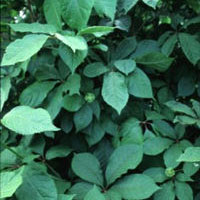
Eleuthero belongs to the Araliaceae family and is a distant relative of Asian ginseng(Panax ginseng). Also known commonly as touch-me-not and devil’s shrub, eleuthero has been most frequently nicknamed Siberian ginseng in this country. Eleuthero is native to the Taiga region of the Far East (southeastern part of Russia, northern China, Korea, and Japan). The root and the rhizomes (underground stem) are used medicinally.
Our proprietary “Star-Rating” system was developed to help you easily understand the amount of scientific support behind each supplement in relation to a specific health condition. While there is no way to predict whether a vitamin, mineral, or herb will successfully treat or prevent associated health conditions, our unique ratings tell you how well these supplements are understood by the medical community, and whether studies have found them to be effective for other people.
For over a decade, our team has combed through thousands of research articles published in reputable journals. To help you make educated decisions, and to better understand controversial or confusing supplements, our medical experts have digested the science into these three easy-to-follow ratings. We hope this provides you with a helpful resource to make informed decisions towards your health and well-being.
3 StarsReliable and relatively consistent scientific data showing a substantial health benefit.
2 StarsContradictory, insufficient, or preliminary studies suggesting a health benefit or minimal health benefit.
1 StarFor an herb, supported by traditional use but minimal or no scientific evidence. For a supplement, little scientific support.
This supplement has been used in connection with the following health conditions:
| Used for | Why |
|---|---|
2 Stars Athletic Performance Refer to label instructions | Eleuthero supplementation may improve athletic performance, according to preliminary research. The herb strengthens the immune system and thus might reduce the risk of post-exercise infection. (Eleutherococcus senticosus) supplementation may improve athletic performance, according to preliminary Russian research. Other studies have been inconclusive and two recent double-blind studies showed no beneficial effect on endurance performance in trained men. Eleuthero strengthens the immune system and thus might reduce the risk of post-exercise infection. Although some doctors suggest taking 1 to 4 ml (0.2 to 0.8 tsp) of fluid extract of eleuthero three times per day, evidence supporting the use of this herb to enhance athletic performance remains weak. |
2 Stars Fatigue Refer to label instructions | One study found that an eleuthero extract improved symptoms in patients suffering from mild-to-moderate chronic fatigue. One study found that an eleuthero extract improved symptoms in patients suffering from mild-to-moderate chronic fatigue. However, after one month of treatment, the benefit began to wane, and eleuthero was not more effective than a placebo after two months of treatment. These findings support the observation of herbalists that eleuthero is more effective when used in a pulsed manner (a few weeks at a time) than when used continuously. |
2 Stars Immune Function 10 ml of tincture three times per day | Eleuthero has historically been used to support the immune system. (Siberian ginseng) has also historically been used to support the immune system. Preliminary Russian research has supported this traditional use. A double-blind study has shown that healthy people who take 10 ml of eleuthero tincture three times per day had an increase in certain T lymphocytes important to normal immune function. These effects have not been studied in people with lowered immune function. The amount of eleuthero used in this trial is exceptionally high, though no side effects were seen. |
2 Stars Stress 2 to 3 grams per day of powdered root for 6 to 8 weeks, then stop 1 to 2 weeks, then resume if desired | Eleuthero appears to have antistress effects. Supplementing with an eleuthero extract led to higher quality-of-life measures in healthy elderly people, according to one study. The herbs discussed here are considered members of a controversial category known as adaptogens, which are thought to increase the body's resistance to stress, and to generally enhance physical and mental functioning. Many animal studies have shown that various herbal adaptogens have protective effects against physically stressful experiences, but whether these findings are relevant to human stress experiences is debatable. Animal research has reported antistress effects of (also known as Siberian ginseng), and Russian research not available in the English language reportedly describes human studies showing similar effects in humans. A double-blind study of healthy elderly people reported that those who took 60 drops per day of a eleuthero liquid extract (concentration not specified) scored higher in some quality-of-life measures after four weeks, but not after eight weeks, compared with a group taking a placebo. Athletes experiencing the stress of training who took an eleuthero extract equivalent to 4 grams per day had no changes in their blood levels of an adrenal stress hormone after six weeks. More research is needed to clarify the value of eleuthero for treating stress. |
1 Star Chronic Fatigue Syndrome Refer to label instructions | “Adaptogenic” herbs such as eleuthero have an immunomodulating effect and help support the normal function of the body’s hormonal stress system. Adaptogenic herbs such as Asian ginseng and may also be useful for CFS patients—the herbs not only have an immunomodulating effect but also help support the normal function of the hypothalamic-pituitary-adrenal axis, the hormonal stress system of the body. These herbs are useful follow-ups to the six to eight weeks of taking licorice root and may be used for long-term support of adrenal function in people with CFS. However, no controlled research has investigated the effect of adaptogenic herbs on CFS. One study found that an eleuthero extract improved symptoms in patients suffering from mild-to-moderate chronic fatigue. However, after one month of treatment, the benefit began to wane, and eleuthero was not more effective than a placebo after two months of treatment.These findings support the observation of herbalists that eleuthero is more effective when used in a pulsed manner (a few weeks at a time) than when used continuously. |
1 Star Common Cold and Sore Throat Refer to label instructions | Adaptogens such as eleuthero are thought to help keep various body systems—including the immune system—functioning optimally. Eleuthero contains eleutherosides that appear to have immune-enhancing effects according to preliminary studies. Human research, some of it double-blind, has shown benefits for treating the common cold using Kan Jang, a combination of andrographis extract (48 to 60 mg andrographolides per day) and an eleuthero extract containing 2.0 to 2.4 mg per day of eleutherosides. |
1 Star HIV and AIDS Support Refer to label instructions | Eleuthero is an immune-modulating plant that may be beneficial for people with HIV infection. Immune-modulating plants that could theoretically be beneficial for people with HIV infection include Asian ginseng, , and the medicinal mushrooms shiitake and reishi. One preliminary study found that steamed then dried Asian ginseng (also known as red ginseng) had beneficial effects in people infected with HIV, and increased the effectiveness of the anti-HIV drug, AZT. This supports the idea that immuno-modulating herbs could benefit people with HIV infection, though more research is needed. |
1 Star Infection Refer to label instructions | Eleuthero supports the immune system and protects against microbes. Herbs that support a person’s immune system in the fight against microbes include the following: American ginseng, andrographis, Asian ginseng, astragalus, coriolus, , ligustrum, maitake, picrorhiza, reishi, schisandra, and shiitake. Double-blind trials have shown that common cold symptoms improve and recovery is faster when andrographis extract containing 48 to 60 mg andrographolides is taken in three or four divided doses daily, beginning as soon as possible after symptoms appear. In addition, preliminary research in Russia suggests andrographis extract may be effective for the treatment of influenza. This extract was also tested for preventing colds in a double-blind study of teenagers. After three months, the group taking 5 mg of andrographolides twice daily had only half the number of colds experienced by the placebo group. Other preliminary and double-blind research has shown similar benefits for treating the common cold from a combination of andrographis extract and an eleuthero extract containing 2.0 to 2.4 mg per day eleutherosides. |
1 Star Influenza Refer to label instructions | Eleuthero has immune-enhancing properties, which may play a role in preventing infection with the influenza virus. Asian ginseng and (Siberian ginseng) have immune-enhancing properties, which may play a role in preventing infection with the influenza virus. However, they have not yet been specifically studied for this purpose. One double-blind trial found that co-administration of 100 mg of Asian ginseng extract with a flu vaccine led to a lower frequency of colds and flu compared to people who just received the flu vaccine alone. |
Traditional Use (May Not Be Supported by Scientific Studies)
Although not as popular as Asian ginseng, eleuthero use dates back 2,000 years, according to Chinese medicine records. Referred to as ci wu jia in Chinese medicine, it was used to prevent respiratory tract infections, colds and flu. It was also believed to provide energy and vitality. In Russia, eleuthero was originally used by people in the Siberian Taiga region to increase performance and quality of life and to decrease infections.
In more modern times, eleuthero has been used to increase stamina and endurance in Soviet Olympic athletes. Russian explorers, divers, sailors, and miners also used eleuthero to prevent stress-related illness. After the Chernobyl accident, many Russian and Ukrainian citizens were given eleuthero to counteract the effects of radiation.
How It Works
How It Works
The constituents in eleuthero that have been most studied are the eleutherosides.1 Seven primary eleutherosides have been identified, with most of the research attention focusing on eleutherosides B and E.2 Eleuthero also contains complex polysaccharides (complex sugar molecules).3 These constituents may play a critical role in eleuthero’s ability to support immune function.
Eleuthero is an “adaptogen” (an agent that helps the body adapt to stress). It is thought to help support adrenal gland function when the body is challenged by stress.4
Eleuthero has been shown to enhance mental acuity and physical endurance without the letdown that comes with caffeinated products.5 Research has shown that eleuthero improves the use of oxygen by the exercising muscle.6 This means that a person is able to maintain aerobic exercise longer and recover from workouts more quickly. Preliminary research from Russia indicates it may be effective for this purpose.7 Other trials have been inconclusive8 or have shown no beneficial effect.9
Eleuthero may also support the body by helping the liver detoxify harmful toxins. It has shown a protective action in animal studies against chemicals such as ethanol, sodium barbital, tetanus toxoid, and chemotherapeutic agents.10 According to a test tube study eleuthero also helps protect the body during radiation exposure.11 Preliminary research in Russia has suggested that eleuthero may help alleviate side effects and help the bone marrow recover more quickly in people undergoing chemotherapy and radiation therapy for cancer.12
Eleuthero has been shown to be effective as a treatment for the common cold when combined with andrographis in a formula sometimes referred to as Kan Jang.13, 14 Preliminary evidence also suggests that eleuthero may prove valuable in the long-term management of various diseases of the immune system, including HIV infection and chronic fatigue syndrome. Healthy people taking 2 teaspoons (10 ml) of tincture three times daily have been shown to have increased numbers of the immune cells (T4 lymphocytes) that have been found to decrease during HIV-infection and AIDS.15 Further human clinical trials are needed to confirm that eleuthero may be helpful for this disease.
How to Use It
Dried, powdered root and rhizomes, 2 to 3 grams per day, are commonly used.16 Alternatively, 300 to 400 mg per day of concentrated solid extract standardized on eleutherosides B and E can be used, as can alcohol-based extracts, 8 to 10 ml in two to three divided dosages. Kan Jang is a formula combining an andrographis extract with an eleuthero extract providing 2 to 2.4 mg eleutherosides daily. Historically, eleuthero is taken continuously for six to eight weeks, followed by a one- to two-week break before resuming.
Interactions
Interactions with Supplements, Foods, & Other Compounds
In one case report, a person taking eleuthero with digoxin developed dangerously high serum digoxin levels.17 Although a clear cause-and-effect relationship could not be established, it is wise for someone taking digoxin to seek the advise of a doctor before taking eleuthero.
Interactions with Medicines
Certain medicines interact with this supplement.
Replenish Depleted Nutrients
none
Reduce Side Effects
- Bicalutamide
Russian research has looked at using eleuthero (Eleutherococcus senticosus) with chemotherapy. One study of patients with melanoma found that chemotherapy was less toxic when eleuthero was given simultaneously. Similarly, women with inoperable breast cancer given eleuthero were reported to tolerate more chemotherapy. Eleuthero treatment was also associated with improved immune function in women with breast cancer treated with chemotherapy and radiation.
- Capecitabine
Russian research has looked at using eleuthero (Eleutherococcus senticosus) with chemotherapy. One study of patients with melanoma found that chemotherapy was less toxic when eleuthero was given simultaneously. Similarly, women with inoperable breast cancer given eleuthero were reported to tolerate more chemotherapy. Eleuthero treatment was also associated with improved immune function in women with breast cancer treated with chemotherapy and radiation.
- Cisplatin
Russian research has looked at using eleuthero (Eleutherococcus senticosus) with chemotherapy. One study of patients with melanoma found that chemotherapy was less toxic when eleuthero was given simultaneously. Similarly, women with inoperable breast cancer given eleuthero were reported to tolerate more chemotherapy. Eleuthero treatment was also associated with improved immune function in women with breast cancer treated with chemotherapy and radiation.
- Cladribine
Russian research has looked at using eleuthero (Eleutherococcus senticosus) with chemotherapy. One study of patients with melanoma found that chemotherapy was less toxic when eleuthero was given simultaneously. Similarly, women with inoperable breast cancer given eleuthero were reported to tolerate more chemotherapy. Eleuthero treatment was also associated with improved immune function in women with breast cancer treated with chemotherapy and radiation.
- Cyclophosphamide
Russian research has looked at using eleuthero (Eleutherococcus senticosus) with chemotherapy. One study of patients with melanoma found that chemotherapy was less toxic when eleuthero was given simultaneously. Similarly, women with inoperable breast cancer given eleuthero were reported to tolerate more chemotherapy. Eleuthero treatment was also associated with improved immune function in women with breast cancer treated with chemotherapy and radiation.
- Cytarabine
Russian research has looked at using eleuthero (Eleutherococcus senticosus) with chemotherapy. One study of patients with melanoma found that chemotherapy was less toxic when eleuthero was given simultaneously. Similarly, women with inoperable breast cancer given eleuthero were reported to tolerate more chemotherapy. Eleuthero treatment was also associated with improved immune function in women with breast cancer treated with chemotherapy and radiation.
- Docetaxel
Russian research has looked at using eleuthero (Eleutherococcus senticosus) with chemotherapy. One study of patients with melanoma found that chemotherapy was less toxic when eleuthero was given simultaneously. Similarly, women with inoperable breast cancer given eleuthero were reported to tolerate more chemotherapy. Eleuthero treatment was also associated with improved immune function in women with breast cancer treated with chemotherapy and radiation.
- Erlotinib
Russian research has looked at using eleuthero (Eleutherococcus senticosus) with chemotherapy. One study of patients with melanoma found that chemotherapy was less toxic when eleuthero was given simultaneously. Similarly, women with inoperable breast cancer given eleuthero were reported to tolerate more chemotherapy. Eleuthero treatment was also associated with improved immune function in women with breast cancer treated with chemotherapy and radiation.
- Etoposide
Russian research has looked at using eleuthero (Eleutherococcus senticosus) with chemotherapy. One study of patients with melanoma found that chemotherapy was less toxic when eleuthero was given simultaneously. Similarly, women with inoperable breast cancer given eleuthero were reported to tolerate more chemotherapy. Eleuthero treatment was also associated with improved immune function in women with breast cancer treated with chemotherapy and radiation.
- Floxuridine
Russian research has looked at using eleuthero (Eleutherococcus senticosus) with chemotherapy. One study of patients with melanoma found that chemotherapy was less toxic when eleuthero was given simultaneously. Similarly, women with inoperable breast cancer given eleuthero were reported to tolerate more chemotherapy. Eleuthero treatment was also associated with improved immune function in women with breast cancer treated with chemotherapy and radiation.
- Fludarabine
Russian research has looked at using eleuthero (Eleutherococcus senticosus) with chemotherapy. One study of patients with melanoma found that chemotherapy was less toxic when eleuthero was given simultaneously. Similarly, women with inoperable breast cancer given eleuthero were reported to tolerate more chemotherapy. Eleuthero treatment was also associated with improved immune function in women with breast cancer treated with chemotherapy and radiation.
- Fluorouracil
Russian research has looked at using eleuthero (Eleutherococcus senticosus) with chemotherapy. One study of patients with melanoma found that chemotherapy was less toxic when eleuthero was given simultaneously. Similarly, women with inoperable breast cancer given eleuthero were reported to tolerate more chemotherapy. Eleuthero treatment was also associated with improved immune function in women with breast cancer treated with chemotherapy and radiation.
- Hydroxyurea
Russian research has looked at using eleuthero (Eleutherococcus senticosus) with chemotherapy. One study of patients with melanoma found that chemotherapy was less toxic when eleuthero was given simultaneously. Similarly, women with inoperable breast cancer given eleuthero were reported to tolerate more chemotherapy. Eleuthero treatment was also associated with improved immune function in women with breast cancer treated with chemotherapy and radiation.
- Influenza Virus Vaccine
Some Russian studies suggest that eleuthero (Siberian ginseng) may reduce the risk of postvaccination reactions.
- Irinotecan
Russian research has looked at using eleuthero (Eleutherococcus senticosus) with chemotherapy. One study of patients with melanoma found that chemotherapy was less toxic when eleuthero was given simultaneously. Similarly, women with inoperable breast cancer given eleuthero were reported to tolerate more chemotherapy. Eleuthero treatment was also associated with improved immune function in women with breast cancer treated with chemotherapy and radiation.
- Mercaptopurine
Russian research has looked at using eleuthero (Eleutherococcus senticosus) with chemotherapy. One study of patients with melanoma found that chemotherapy was less toxic when eleuthero was given simultaneously. Similarly, women with inoperable breast cancer given eleuthero were reported to tolerate more chemotherapy. Eleuthero treatment was also associated with improved immune function in women with breast cancer treated with chemotherapy and radiation.
- Methotrexate
Russian research has looked at using eleuthero with chemotherapy. One study of patients with melanoma found that chemotherapy was less toxic when eleuthero was given simultaneously. Similarly, women with inoperable breast cancer given eleuthero were reported to tolerate more chemotherapy. Eleuthero treatment was also associated with improved immune function in women with breast cancer treated with chemotherapy and radiation.
- Paclitaxel
Russian research has looked at using eleuthero with chemotherapy. One study of patients with melanoma found that chemotherapy was less toxic when eleuthero was given simultaneously. Similarly, women with inoperable breast cancer given eleuthero were reported to tolerate more chemotherapy. Eleuthero treatment was also associated with improved immune function in women with breast cancer treated with chemotherapy and radiation.
- Thioguanine
Russian research has looked at using eleuthero (Eleutherococcus senticosus) with chemotherapy. One study of patients with melanoma found that chemotherapy was less toxic when eleuthero was given simultaneously. Similarly, women with inoperable breast cancer given eleuthero were reported to tolerate more chemotherapy. Eleuthero treatment was also associated with improved immune function in women with breast cancer treated with chemotherapy and radiation.
- Vinblastine
Russian research has looked at using eleuthero (Eleutherococcus senticosus) with chemotherapy. One study of patients with melanoma found that chemotherapy was less toxic when eleuthero was given simultaneously. Similarly, women with inoperable breast cancer given eleuthero were reported to tolerate more chemotherapy. Eleuthero treatment was also associated with improved immune function in women with breast cancer treated with chemotherapy and radiation.
- Vincristine
Russian research has looked at using eleuthero (Eleutherococcus senticosus) with chemotherapy. One study of patients with melanoma found that chemotherapy was less toxic when eleuthero was given simultaneously. Similarly, women with inoperable breast cancer given eleuthero were reported to tolerate more chemotherapy. Eleuthero treatment was also associated with improved immune function in women with breast cancer treated with chemotherapy and radiation.
Support Medicine
none
Reduces Effectiveness
none
Potential Negative Interaction
- Clopidogrel
Ginseng (Panax ginseng) was associated with a decrease in warfarin activity in a case study. This report suggests that ginseng may affect parameters of bleeding. Therefore, people taking ticlopidine should consult with a physician knowledgeable about botanical medicines before taking Asian ginseng or /Siberian ginseng (Eleutherococcus senticosus).
- Digoxin
People taking digoxin require regular monitoring of serum digoxin levels. In one report, addition of a product identified as Siberian ginseng to stable, therapeutic digoxin treatment was associated with dangerously high serum digoxin levels. The patient never experienced symptoms of digoxin toxicity. Laboratory analysis found the product was free of digoxin-like compounds but the contents were not further identified. This report may reflect an interaction of eleuthero with the laboratory test to cause a falsely elevated reading, rather than actually increasing digoxin levels.
- Dipyridamole
Ginseng (Panax ginseng) was associated with a decrease in warfarin activity in a case study. This report suggests that ginseng may affect parameters of bleeding. Therefore, people taking ticlopidine should consult with a physician knowledgeable about botanical medicines before taking Asian ginseng or /Siberian ginseng (Eleutherococcus senticosus).
- Ticlopidine
Ginseng (Panax ginseng) was associated with a decrease in warfarin activity in a case study. This report suggests that ginseng may affect parameters of bleeding. Therefore, people taking ticlopidine should consult with a physician knowledgeable about botanical medicines before taking Asian ginseng or /Siberian ginseng (Eleutherococcus senticosus).
- Warfarin
Asian ginseng was associated with a decrease in warfarin activity in a case report. However, in a clinical trial, no interaction was seen between Asian ginseng and warfarin. An animal study also found no significant interaction between warfarin and pure ginseng extract. Nevertheless, persons taking warfarin should consult with a physician knowledgeable about botanical medicines if they are considering taking Asian ginseng or /Siberian ginseng (Eleutherococcus senticosus). A 1999 animal study did not reveal any significant interaction between warfarin and pure ginseng extract.
Explanation Required
- Busulfan
Russian research has looked at using eleuthero (Eleutherococcus senticosus) with chemotherapy. One study of patients with melanoma found that chemotherapy was less toxic when eleuthero was given simultaneously. Similarly, women with inoperable breast cancer given eleuthero were reported to tolerate more chemotherapy. Eleuthero treatment was also associated with improved immune function in women with breast cancer treated with chemotherapy and radiation.
- Carboplatin
Russian research has looked at using eleuthero (Eleutherococcus senticosus) with chemotherapy. One study of patients with melanoma found that chemotherapy was less toxic when eleuthero was given simultaneously. Similarly, women with inoperable breast cancer given eleuthero were reported to tolerate more chemotherapy. Eleuthero treatment was also associated with improved immune function in women with breast cancer treated with chemotherapy and radiation.
- Carmustine
Russian research has looked at using eleuthero (Eleutherococcus senticosus) with chemotherapy. One study of patients with melanoma found that chemotherapy was less toxic when eleuthero was given simultaneously. Similarly, women with inoperable breast cancer given eleuthero were reported to tolerate more chemotherapy. Eleuthero treatment was also associated with improved immune function in women with breast cancer treated with chemotherapy and radiation.
- Chlorambucil
Russian research has looked at using eleuthero (Eleutherococcus senticosus) with chemotherapy. One study of patients with melanoma found that chemotherapy was less toxic when eleuthero was given simultaneously. Similarly, women with inoperable breast cancer given eleuthero were reported to tolerate more chemotherapy. Eleuthero treatment was also associated with improved immune function in women with breast cancer treated with chemotherapy and radiation.
- Ifosfamide
Russian research has looked at using eleuthero (Eleutherococcus senticosus) with chemotherapy. One study of patients with melanoma found that chemotherapy was less toxic when eleuthero was given simultaneously. Similarly, women with inoperable breast cancer given eleuthero were reported to tolerate more chemotherapy. Eleuthero treatment was also associated with improved immune function in women with breast cancer treated with chemotherapy and radiation.
- Lomustine
Russian research has looked at using eleuthero (Eleutherococcus senticosus) with chemotherapy. One study of patients with melanoma found that chemotherapy was less toxic when eleuthero was given simultaneously. Similarly, women with inoperable breast cancer given eleuthero were reported to tolerate more chemotherapy. Eleuthero treatment was also associated with improved immune function in women with breast cancer treated with chemotherapy and radiation.
- Mechlorethamine
Russian research has looked at using eleuthero (Eleutherococcus senticosus) with chemotherapy. One study of patients with melanoma found that chemotherapy was less toxic when eleuthero was given simultaneously. Similarly, women with inoperable breast cancer given eleuthero were reported to tolerate more chemotherapy. Eleuthero treatment was also associated with improved immune function in women with breast cancer treated with chemotherapy and radiation.
- Melphalan
Russian research has looked at using eleuthero (Eleutherococcus senticosus) with chemotherapy. One study of patients with melanoma found that chemotherapy was less toxic when eleuthero was given simultaneously. Similarly, women with inoperable breast cancer given eleuthero were reported to tolerate more chemotherapy. Eleuthero treatment was also associated with improved immune function in women with breast cancer treated with chemotherapy and radiation.
- Polifeprosan 20 with Carmustine
Russian research has looked at using eleuthero (Eleutherococcus senticosus) with chemotherapy. One study of patients with melanoma found that chemotherapy was less toxic when eleuthero was given simultaneously. Similarly, women with inoperable breast cancer given eleuthero were reported to tolerate more chemotherapy. Eleuthero treatment was also associated with improved immune function in women with breast cancer treated with chemotherapy and radiation.
- Thiotepa
Russian research has looked at using eleuthero (Eleutherococcus senticosus) with chemotherapy. One study of patients with melanoma found that chemotherapy was less toxic when eleuthero was given simultaneously. Similarly, women with inoperable breast cancer given eleuthero were reported to tolerate more chemotherapy. Eleuthero treatment was also associated with improved immune function in women with breast cancer treated with chemotherapy and radiation.
Russian research has looked at using eleuthero (Eleutherococcus senticosus) with chemotherapy. One study of patients with melanoma found that chemotherapy was less toxic when eleuthero was given simultaneously. Similarly, women with inoperable breast cancer given eleuthero were reported to tolerate more chemotherapy. Eleuthero treatment was also associated with improved immune function in women with breast cancer treated with chemotherapy and radiation.
Side Effects
Side Effects
Reported side effects have been minimal with use of eleuthero.18 Mild, transient diarrhea has been reported in a very small number of users. Eleuthero may cause insomnia in some people if taken too close to bedtime. Eleuthero is not recommended for people with uncontrolled high blood pressure. There are no known reasons to avoid eleuthero during pregnancy and breast-feeding. However, pregnant or breast-feeding women should be aware that some products may be adulterated with herbs that should not be taken in pregnancy, such as Asian ginseng. Only eleuthero from a trusted source should be used.
References
1. Collisson RJ. Siberian ginseng (Eleutherococcus senticosus). Brit J Phytother 1991;2:61-71 [review].
2. Farnsworth NR, Kinghorn AD, Soejarto DD, Waller DP. Siberian ginseng (Eleutherococcus senticosus): Current status as an adaptogen. In Economic and Medicinal Plant Research, vol 1, ed. Wagner H, Hikino HZ, Farnsworth NR. London: Academic Press, 1985, 155-215 [review].
3. Hikino H, Takahashi M, Otake K, konno C. Isolation and hypoglycemic activity of eleutherans A, B, C, D, E, F and G: glycans of Eleutherococcus senticosus roots. J Natural Prod 1986;49:293-7.
4. Wagner H, Nörr H, Winterhoff H. Plant adaptogens. Phytomedicine 1994;1:63-76.
5. Farnsworth NR, Kinghorn AD, Soejarto DD, Waller DP. Siberian ginseng (Eleutherococcus senticosus): Current status as an adaptogen. In Economic and Medicinal Plant Research, vol 1, ed. Wagner H, Hikino HZ, Farnsworth NR. London: Academic Press, 1985, 155-215 [review].
6. Asano K, Takahashi T, Miyashita M, et al. Effect of Eleutherococcus senticosus extract on human working capacity. Planta Medica 1986;37:175-7.
7. Asano K, Takahashi T, Miyashita M, et al. Effect of Eleutherococcus senticosus extract on human working capacity. Planta Medica 1986;37:175-7.
8. Kelly GS. Sports nutrition: A review of selected nutritional supplements for endurance athletes. Alt Med Rev 1997;2:282-95 [review].
9. McNaughton L. A comparison of Chinese and Russian ginseng as ergogenic aids to improve various facets of physical fitness. Int Clin Nutr Rev 1989;9:32-5.
10. Collisson RJ. Siberian ginseng (Eleutherococcus senticosus). Brit J Phytother 1991;2:61-71 [review].
11. Ben-Hur E, Fulder S. Effect of P. ginseng saponins and Eleutherococcus S. on survival of cultured mammalian cells after ionizing radiation. Am J Chin Med 1981;9:48-56.
12. Kupin VI, Polevaia EB. Stimulation of the immunological reactivity of cancer patients by eleutherococcus extract. Vopr Onkol 1986;32:21-6 [in Russian].
13. Poolsup N, Suthisisang C, Prathanturarug S, et al. Andrographis paniculata in the symptomatic treatment of uncomplicated upper respiratory tract infection: systematic review of randomized controlled trials. J Clin Pharm Ther 2004;29:37-45.
14. Coon JT, Ernst E. Andrographis paniculata in the treatment of upper respiratory tract infections: a systematic review of safety and efficacy. Planta Med 2004;70:293-98.
15. Bohn B, Nebe CT, Birr C. Flow cytometric studies with Eleutherococcus senticosus extract as an immunomodulating agent. Arzneim-Forsch Drug Res 1987;37:1193-6.
16. Brown DJ. Herbal Prescriptions for Better Health. Rocklin, CA: Prima Publishing, 1996, 69-77.
17. McRae S. Elevated serum digoxin levels in a patient taking digoxin and Siberian ginseng. Can Med Assoc J 1996;155:293-5.
18. McGuffin M, Hobbs C, Upton R, Goldberg A. American Herbal Products Association's Botanical Safety Handbook. Boca Raton, FL: CRC Press, 1997, 45.
Last Review: 06-08-2015

Copyright © 2024 TraceGains, Inc. All rights reserved.
Learn more about TraceGains, the company.
The information presented by TraceGains is for informational purposes only. It is based on scientific studies (human, animal, or in vitro), clinical experience, or traditional usage as cited in each article. The results reported may not necessarily occur in all individuals. For many of the conditions discussed, treatment with prescription or over the counter medication is also available. Consult your doctor, practitioner, and/or pharmacist for any health problem and before using any supplements or before making any changes in prescribed medications. Information expires December 2024.
This information does not replace the advice of a doctor. Healthwise, Incorporated, disclaims any warranty or liability for your use of this information. Your use of this information means that you agree to the Terms of Use. Learn how we develop our content.